
JOHANNESBURG –
Across two days of fast‑moving events, photographs from Johannesburg to Istanbul, Kampala to Los Angeles captured a world negotiating protest and power, grief and celebration, climate strain and mass mobility. Together they sketch an uncompromising portrait of how politics, security, culture and the environment are colliding in early February 2026.
The images are not decorative. They document contested elections spilling into the streets, courtrooms reshaping political futures, ceasefire violations alleged amid a grinding war, and climate‑linked shocks buffeting cities from Ankara to Charlotte. They also show the rituals and spectacles that, even in unsettled times, draw people together-whether to honor a sea goddess in Salvador, trade cheers at a polo final in Nairobi, or watch aviation pyrotechnics arc over San Salvador.
Protest, power and the public square
In Kampala on February 2, Ugandan police moved to arrest an opposition supporter during a demonstration against alleged election fraud and in support of opposition figures, days after the January 15 vote returned President Yoweri Museveni, 81, to office for a seventh term. Fugitive opposition leader Bobi Wine remained in hiding and denounced the result as,
“blatant theft.”
The confrontation unfolded against the backdrop of Uganda’s tightly controlled political space, where repeated amendments to the national constitution have helped entrench long‑serving incumbents.
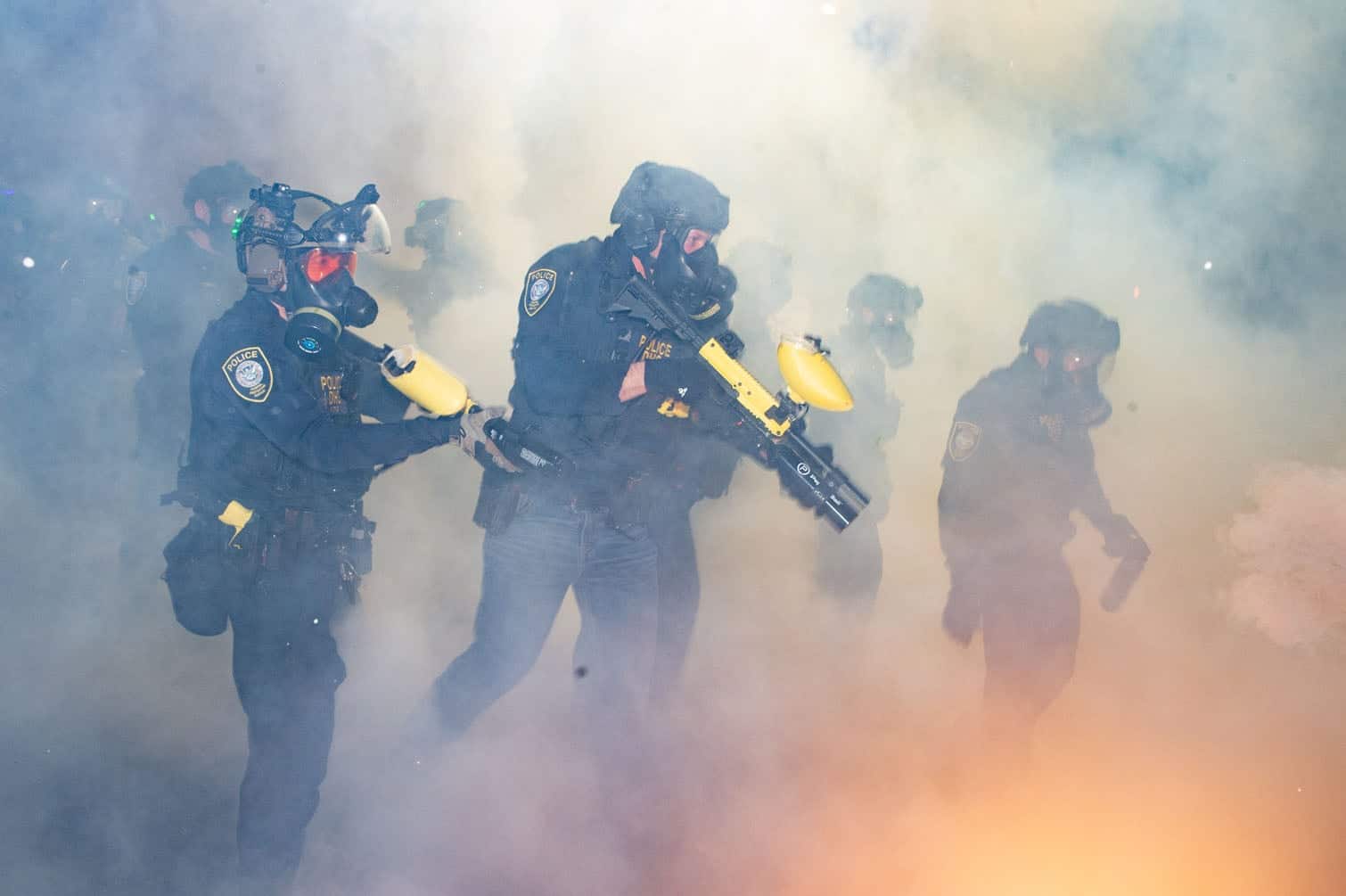
In Istanbul the same day, demonstrators burned a photograph of U.S. President Donald Trump outside the American consulate, underscoring how U.S. policy remains a lightning rod across the region and how diplomatic compounds continue to serve as stages for grievances directed at Washington. And in Portland, Oregon, an anti‑ICE rally outside City Hall fed into the United States’ persistent, heated debate over immigration enforcement and the reach of federal agencies in sanctuary‑minded cities.
Political theatre in Britain took a more conventional form: Conservative supporters gathered in northwest London awaiting the arrival of party leader Kemi Badenoch and Shadow Chancellor Mel Stride at a neighborhood restaurant-retail politics at street level as parties test their resonance with small businesses and commuters ahead of the next key milestones in the Westminster calendar.
Courts, sentences and the stakes of due process
The law’s long reach was on display in Dhaka, where Special Judge Court‑4 delivered verdicts in cases tied to the Purbachal New Town project. Former Prime Minister Sheikh Hasina received a 10‑year sentence, while her niece, British MP Tulip Rizwana Siddiq, was sentenced to four years; 35 others drew five‑year terms and Khorshed Alam two years, over alleged irregularities in allocating government land. For a country whose judiciary is formally guided by its 1972 constitution and anti‑corruption statutes, the rulings instantly raised questions about political accountability, judicial independence and the downstream effects on Bangladesh’s governance and investment climate.
In Johannesburg, the murder of media personality DJ Warras advanced in court as a second suspect, Armindo Joaquim, appeared before the city’s magistrates. Legal proceedings there are being closely watched in South Africa’s cultural community, where high‑profile cases test public confidence in an over‑burdened criminal justice system.
War, ceasefires and civilian cost
From the southern Gaza Strip, grief: relatives mourned three‑year‑old Iyad Ahmed el‑Rabayia in Khan Yunis on February 2 after Israeli fire from the sea struck tents sheltering displaced people in the al‑Mawasi area. Local accounts framed the shelling as a violation of a ceasefire, and the child’s body was taken to Nasser Hospital for funeral procedures. The images echo a brutal arithmetic seen throughout the conflict: even when front lines shift or pause, civilians repeatedly bear the brunt, while competing claims over what constitutes a breach of truce arrangements complicate diplomatic efforts to lock in lasting pauses in fighting.
Urban hazard and fragile infrastructure
Before dawn on February 2 in central Johannesburg’s Doornfontein, a transformer reportedly exploded in a storage room adjacent to a multi‑story building, triggering a collapse that injured three people who were rushed to hospital. For a city accustomed to power disruptions and aging infrastructure, the incident highlights the compounding risks when energy systems, dense housing and emergency response are stretched, and adds pressure on local authorities already under scrutiny for service‑delivery failures.
A roadside vigil in nearby Randburg revealed a different kind of urban vulnerability. Colleagues and residents paid tribute to David Sejobe-a 49‑year‑old MultiChoice security guard and cyclist-struck and killed by a car during his commute. Sejobe had become a local folk hero for his daily rides from Orange Farm and the encouragement he offered passersby; his death revived calls for safer roads for cyclists and pedestrians across Gauteng, where transport planners face growing demands to bring actual practice in line with road‑safety strategies on paper.
Climate pressure from Anatolia to Patagonia
Aerial frames from Ankara’s Nallıhan Bird Paradise showed wetlands shrunken by low rainfall, with habitats retreating under prolonged drought. The ecological strain links to a wider pattern across the Mediterranean basin and Anatolia, where altered precipitation, heat waves and water use are transforming landscapes and the species that depend on them, testing how far existing water‑management rules can stretch.
Far to the south, Argentina’s Patagonia remained under a government‑declared emergency as wildfires burned in the mountains near Epuyén, Chubut. Firefighters worked water‑pump trucks in rugged terrain as the Southern Hemisphere summer and winds drove flare‑ups through dry forest, renewing questions about resourcing for volunteer brigades and land‑use decisions at the edge of protected areas.
And in the United States, a rare southern‑tracking bomb cyclone-named Winter Storm Gianna-dropped more than a foot of snow across parts of the Carolinas on February 1, stranding drivers and canceling hundreds of flights around Charlotte. The disruption again exposed how infrastructure, from highways to hub airports, is calibrated to historical climate patterns that no longer reliably predict the intensity or track of winter storms.
Mobility, chokepoints and the machinery of movement
In China, the first day of Chunyun-the vast Spring Festival travel period-saw high‑speed trains stack on platforms in Nanjing, a reminder that the seasonal return to hometowns remains the world’s largest cyclical movement of people. The mass migration doubles as a test of rail capacity, ticketing systems and public‑order management in a country whose internal mobility is still formally structured by its household‑registration regime.
Northwest of Istanbul, a 100‑meter cargo ship flying the Comoros flag ran aground near Kısırkaya in Sarıyer district on February 2. While the Bosphorus itself is a different channel, the incident underscores the hazards along Türkiye’s Black Sea approaches and the enduring strategic weight of the Turkish Straits, where maritime incidents can quickly take on diplomatic and commercial dimensions.
Ceremony, sport and spectacle
In Salvador, Bahia, worshippers processed with offerings for Iemanjá, the Afro‑Brazilian Candomblé goddess of the sea, blending Catholic and West African traditions that have long defined Brazil’s syncretic religious calendar. The annual celebration, now part of the official cultural calendar, illustrates how religious communities negotiate space with municipal authorities in increasingly dense coastal cities.
In San Salvador, the Ilopango Air Show marked its 15th edition at the air base, mixing pyrotechnics with aerobatics by international and Salvadoran pilots-a set‑piece that doubles as soft‑power branding for a country eager to showcase stability and tourism while defending its security policies to foreign partners.
At Nairobi Polo Club, the Chairman’s Cup drew Kenya’s equestrian set to the capital for the season’s final two‑day tournament, a tableau of sport, fashion and a steadily growing leisure economy that sits alongside persistent debates over land, access and urban inequality.
Rome, meanwhile, turned to crowd control at one of the world’s most photographed landmarks. Beginning February 2, the city introduced a €2 access ticket at the Trevi Fountain aimed at curbing overtourism-part of a broader experiment by European destinations to throttle peak‑hour surges while funding maintenance for stressed heritage sites under Italy’s cultural‑heritage protection regime.
Stages and studios
Inside Los Angeles’ Crypto.com Arena on February 1, South African singer Tyla posed in the press room holding the Grammy for Best African Music Performance for “PUSH 2 START” at the 68th edition of music’s most prominent awards show-another milestone for the continent’s swelling cultural footprint on global charts and stages. The new category, still bedding down within the Recording Academy’s awards architecture, has quickly become a bellwether for how major Western institutions recognize African genres and audiences.
Status
As of February 2, 2026, Johannesburg emergency services reported three people injured and hospitalized after the Doornfontein collapse and said the site remained cordoned off as engineers and safety officials assessed structural risks and potential compliance failures.