
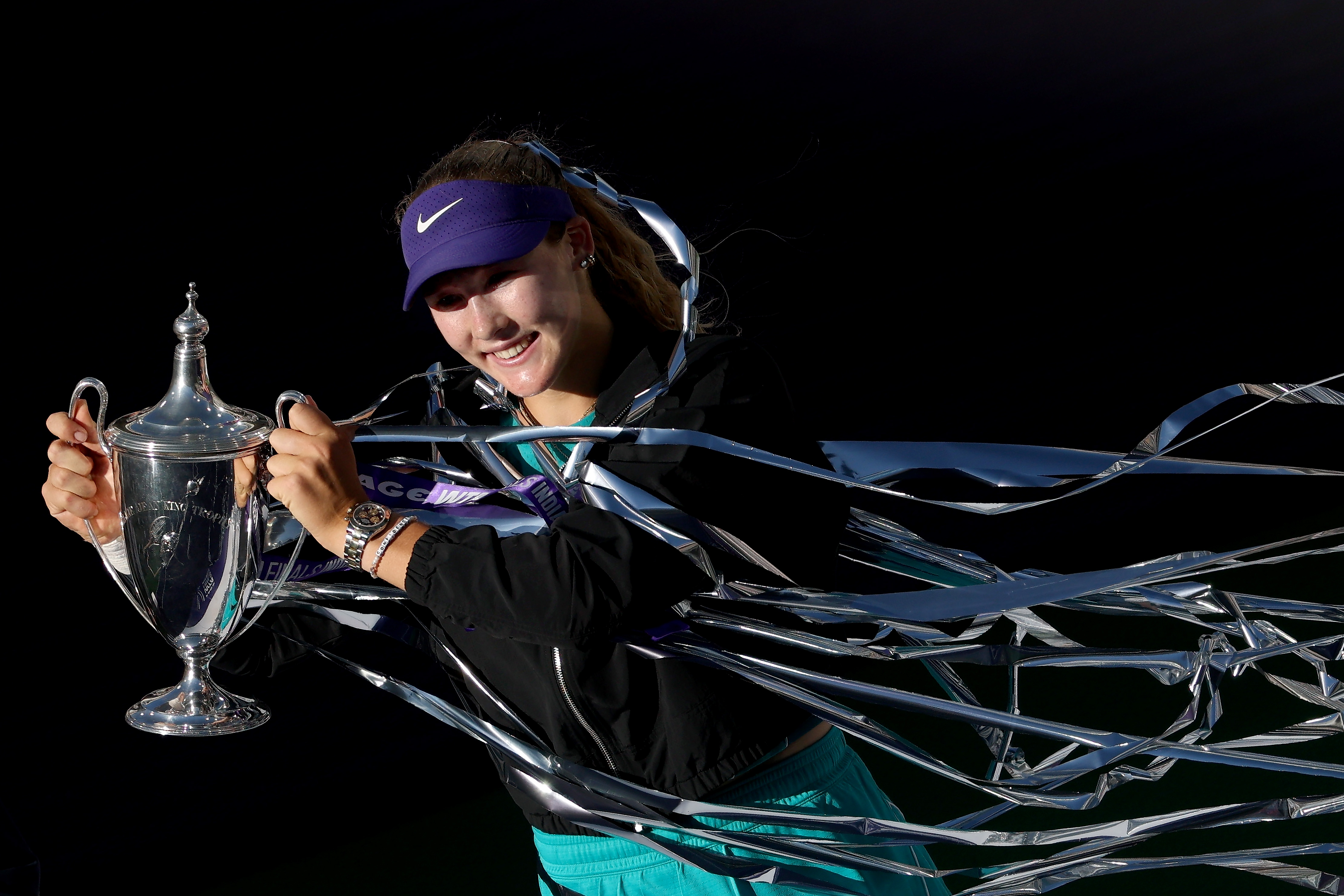
Andreeva’s Perfect Debut Places Her Among Most Ruthless WTA Finals Champions
INDIAN WELLS, Calif. — At the end of a long week and a longer speech, Mirra Andreeva looked past her box and turned the spotlight inward.
“The last person I want to thank is myself,” she said on Sunday, acknowledging the days when training felt like the hardest ask of all. After five matches and 10 uninterrupted winning sets at the FAGE WTA Finals, the evidence in her favor was clear.
Andreeva beat Elina Svitolina 7-5, 6-3 to secure the title in her first appearance at the season-ending event. Svitolina, the most consistent challenger she faced, became the only player all week to win more than four games in a set against the teenager and even broke back to 5-5 from 3-5 down in the opening set. Andreeva responded by taking the next two games, closing out a week in which she won 61 games and lost only 26.
How Andreeva’s Week Fits Into WTA Finals History
Since round-robin play was reintroduced to the WTA Finals in 2003, the format has demanded sustained excellence across group and knockout stages: players contest three group matches, with the top two from each group advancing to the semifinals and then the final. Within that structure, running the table without dropping a set is rare.
Across that modern era, only three champions have won every set they played at the year-end event. Andreeva is one of them, and the only one to complete a perfect-set campaign on her debut. For a 19-year-old to do it while facing established names underlines both her immediate competitive level and her capacity to handle the compressed, elite-only field that defines this tournament under the governance of the Women’s Tennis Association.
The performance carries direct competitive consequences. The WTA Finals is a high‑value event in ranking terms, and an unbeaten run through group and knockout stages yields maximum points and prize money, consolidating a player’s status within the top tier heading into the next season’s calendar. For Andreeva, delivering this level of control against opponents who have spent years at the top of the rankings strengthens her case as a central figure in future seedings and major-draw dynamics.
A Statistical Lens on Dominance
The original analysis of this event ranked title runs by percentage of sets won, using percentage of games won as a tiebreaker. Under that lens, Andreeva’s Indian Wells campaign sits alongside three of the most authoritative runs of the past two decades and one near-perfect effort that was interrupted only in a three-set final.
Those five campaigns are:
- Iga Swiatek (2023): 5-0 in matches, 10-0 in sets (100%), 62-20 in games (75.6%), in her third WTA Finals appearance.
- Mirra Andreeva (2026): 5-0 in matches, 10-0 in sets (100%), 61-26 in games (70.1%), in her first appearance.
- Serena Williams (2012): 5-0 in matches, 10-0 in sets (100%), 61-32 in games (65.6%), in her seventh appearance.
- Justine Henin (2007): 5-0 in matches, 10-1 in sets (90.9%), 67-34 in games (66.3%), in her fifth appearance.
- Serena Williams (2009): 5-0 in matches, 8-1 in sets (88.9%), 63-47 in games (57.3%), in her sixth appearance.
Set percentage is the primary measure in these rankings. Swiatek, Andreeva and 2012 Serena Williams share a perfect 10-0 record in sets; Swiatek’s game dominance places her first, with Andreeva’s efficiency next, followed by Serena’s 2012 run. Henin’s 2007 campaign edges Williams’ 2012 run on game share but is ranked lower due to the single set she dropped. Serena’s 2009 Doha title completes the top five as the only one here with more than one dropped set or incomplete set.
Swiatek’s Cancun Perfection Sets the Modern Benchmark
In 2023, Iga Swiatek delivered the most statistically dominant WTA Finals title run of the modern round-robin era in Cancun. Her week closed with a 6-1, 6-0 win over Jessica Pegula in the final, a match Pegula entered unbeaten after navigating her own group.
Swiatek’s final not only secured her first WTA Finals trophy; it also returned her to the No. 1 ranking. Over the course of the tournament she compiled a 5-0 match record, winning all 10 sets and dropping only 20 games. Across five matches, her opponents averaged four games per match, underlining the extent to which her baseline control and return patterns translated to the slower outdoor hard courts used at the event.
Having this level of separation against a field composed exclusively of top‑ranked players underscores a broader point about the WTA Finals format: when the field size is restricted and every opponent is a top-eight‑caliber player, margins of this kind are both rare and highly predictive of sustained dominance into the following season.
Andreeva’s Debut: A Controlled Surge Through the Draw
Andreeva’s 2026 campaign at Indian Wells is distinguished not just by its perfection in sets, but by how she managed momentum within matches against different playing styles.
Her week began with a win over Elina Svitolina in group play. From there, she faced Aryna Sabalenka and went on an extended run of 11 consecutive games after trailing 4-1, an illustration of how quickly she can flip a high‑power contest when her return game locks in.
She then closed group play with a 55‑minute victory over Diana Shnaider, limiting physical and mental expenditure ahead of the knockout rounds. In the semifinals, Jessica Pegula led 3-1 in the second set before Andreeva responded to win in straight sets. Svitolina, again her opponent in the final, recovered to 5-5 from a break down before Andreeva closed the door in two tight games and then took the second set.
Across these scenarios – early deficits, scoreboard pressure, and repeat meetings with the same opponent in one week – the common thread was that Andreeva did not allow a single set to escape. At 19, she became the youngest champion at the event since Maria Sharapova in 2004, a comparison that places her result within a long-term narrative of early‑career breakthroughs at the season finale.
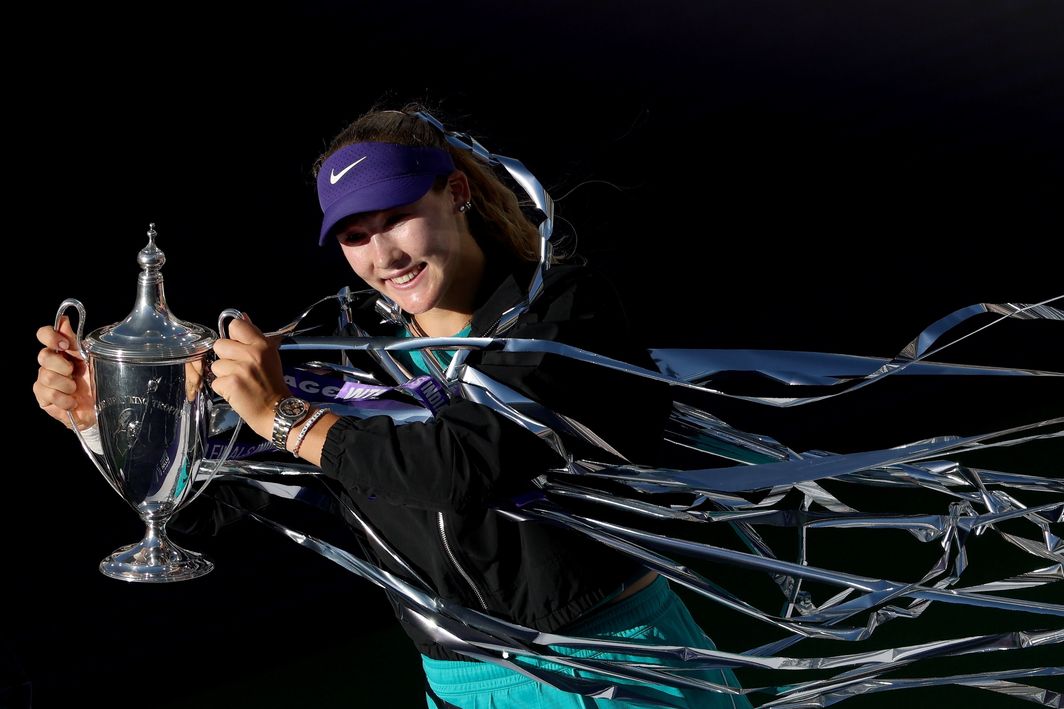
At institutional level, her victory also reinforces the WTA Finals’ role as both a reward for season‑long consistency and a proving ground for emerging leaders. A player who can win a debut title without dropping a set in this environment signals to tournament organizers, sponsors and national federations that future scheduling and promotion may increasingly be built around her presence.
Serena Williams’ 2012 Istanbul Run: Peak Efficiency, No Lost Sets
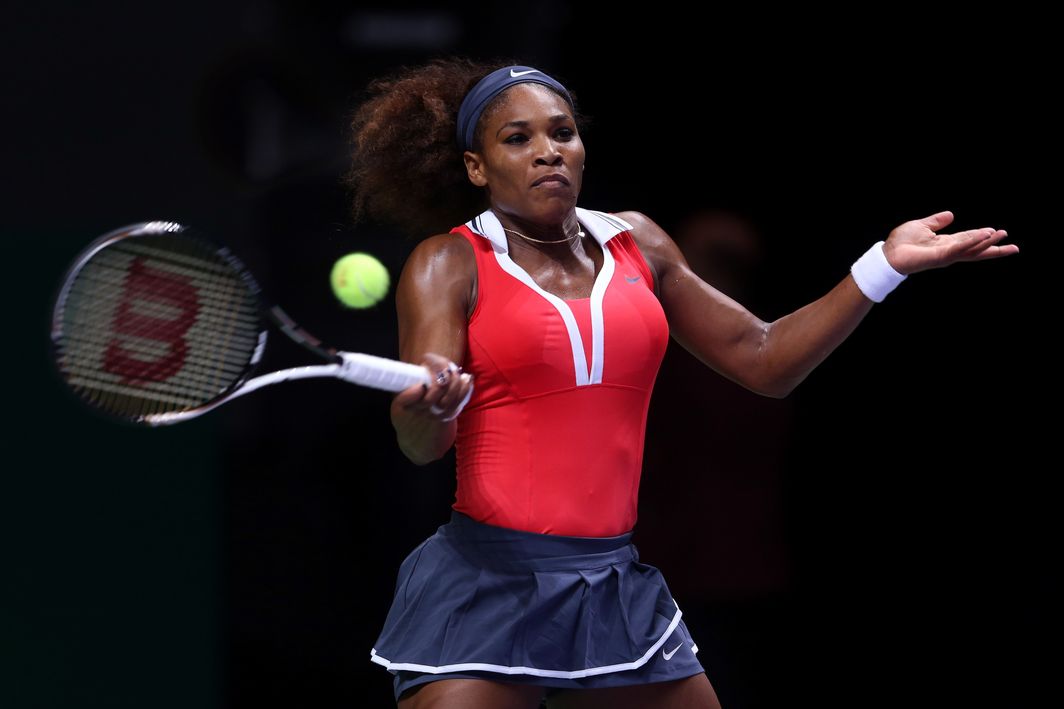
Serena Williams’ 2012 title in Istanbul marked her third WTA Finals crown and came three years after her second, with nearly eight years separating her first and second victories at the event. That longevity at the top end of the game is reflected in her seventh appearance at the Finals.
In 2012, Williams finished 5-0 in matches and 10-0 in sets, matching Swiatek and Andreeva in set perfection. She defeated Maria Sharapova 6-4, 6-3 in the final, closing a week in which she won 61 games and lost 32 – exactly as many games won as Andreeva in 2026, but with six more conceded.
Placed alongside Andreeva’s debut run, Williams’ Istanbul campaign highlights two distinct pathways to dominance at this event: the established champion reinforcing her era across multiple cycles of the Finals, and the teenager announcing herself in a single, compressed week.
Henin’s 2007 Madrid Title: One Set Dropped, Metrics Still Elite
Justine Henin’s 2007 run in Madrid demonstrates how narrow the margins can be between a perfect and near‑perfect campaign. She entered the final without having lost a set, then saw Maria Sharapova take the opener 7-5. Henin responded with a 7-5 second set of her own and closed the deciding set 6-3.
She finished 5-0 in matches and 10-1 in sets, winning 67 games and losing 34. In percentage terms, she captured a slightly higher share of total games than Serena Williams did in 2012, but within the ranking framework used here, the single dropped set in the final places her behind the three undefeated champions.
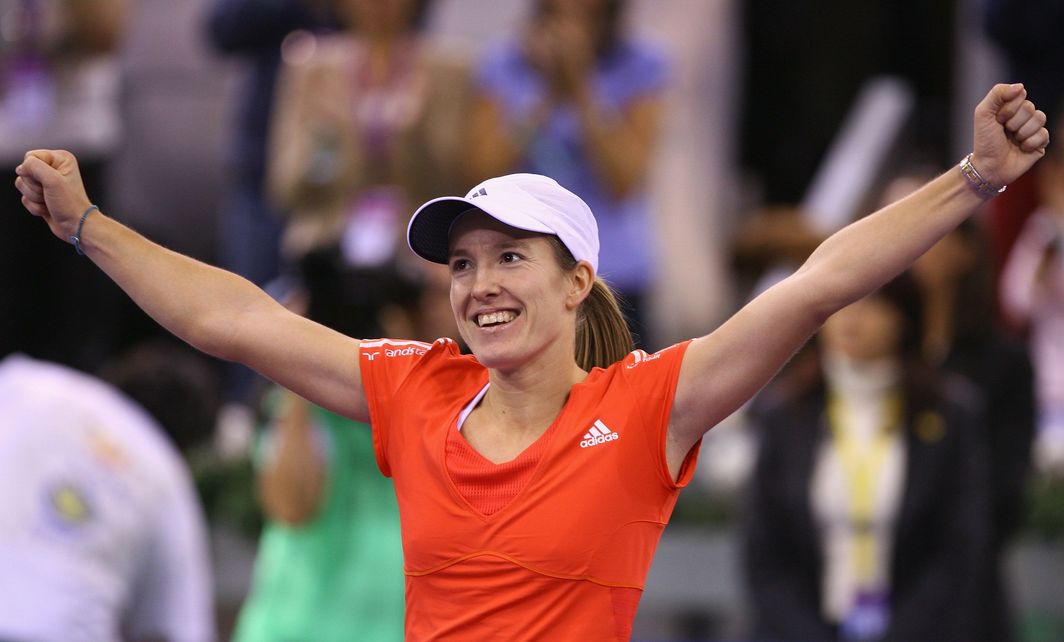
Henin’s run reflects a period when the season finale helped formalize year‑end hierarchies within women’s tennis. A champion emerging from that field with only one lost set in five matches signaled to national federations and tournament organizers that her game was equipped to handle both the tactical variability and the scheduling intensity embedded in the event’s design.
Serena Williams in Doha, 2009: Rivalry, Retirement and a Single Lost Set
Serena Williams’ 2009 title in Doha, her second WTA Finals crown, is the only campaign in this top five that includes a retirement. She finished 5-0 in matches, 8-1 in completed sets and 63-47 in games across the week in her sixth appearance at the event.
The lone set she lost came in group play against her sister Venus Williams. They met again in the final, where Serena won 6-2, 7-6 (4) to claim the title. The discrepancy between the nine completed sets on record and the five-match schedule is explained by Caroline Wozniacki’s retirement early in the second set of their semifinal after Serena had won the first.
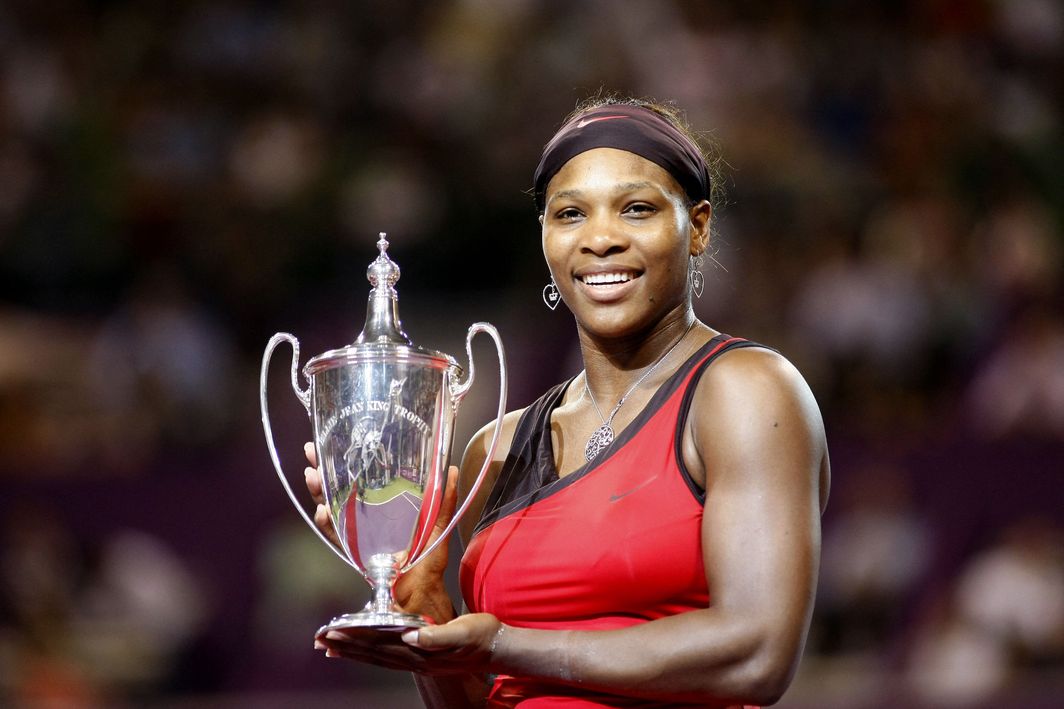
In structural terms, that week highlighted another aspect of the Finals: the possibility that injuries or retirements in a condensed schedule can shape the statistical profile of a champion’s run. Even with the truncated semifinal, Serena’s figures still fall within the top bracket of game dominance among champions at the event.
What This Means for the WTA Competitive Landscape
Viewed together, these five title runs reveal how the WTA Finals functions as both a closing statement on the season and an early indicator for what might follow.
- Swiatek’s 2023 dominance reinforced an already established world‑leading position.
- Serena Williams’ 2009 and 2012 campaigns extended and confirmed a long‑running era of control.
- Henin’s 2007 title capped a period in which her all‑court game routinely solved the tour’s most powerful hitters.
- Andreeva’s 2026 debut situates her not just as a rising player but as one whose game already scales to the most compressed and selective event on the WTA calendar.
For tournament directors across the tour, these profiles help inform seeding narratives, scheduling priorities and promotional planning. For national federations and player-support structures, they help shape investment decisions in coaching, sports science and competition pathways, particularly when a teenager like Andreeva transitions so quickly from prospect to proven winner at the season finale.
Within the governance framework of the WTA Finals, which aligns qualification and tournament operations with the broader WTA rulebook, such dominant week‑long performances also validate the event’s design: elite-only fields, round‑robin testing, and knockout closure. When a champion emerges from that system without dropping a set – especially on debut – it becomes a reference point for the competitive standard the circuit is calibrated to produce.
Worth a look
