
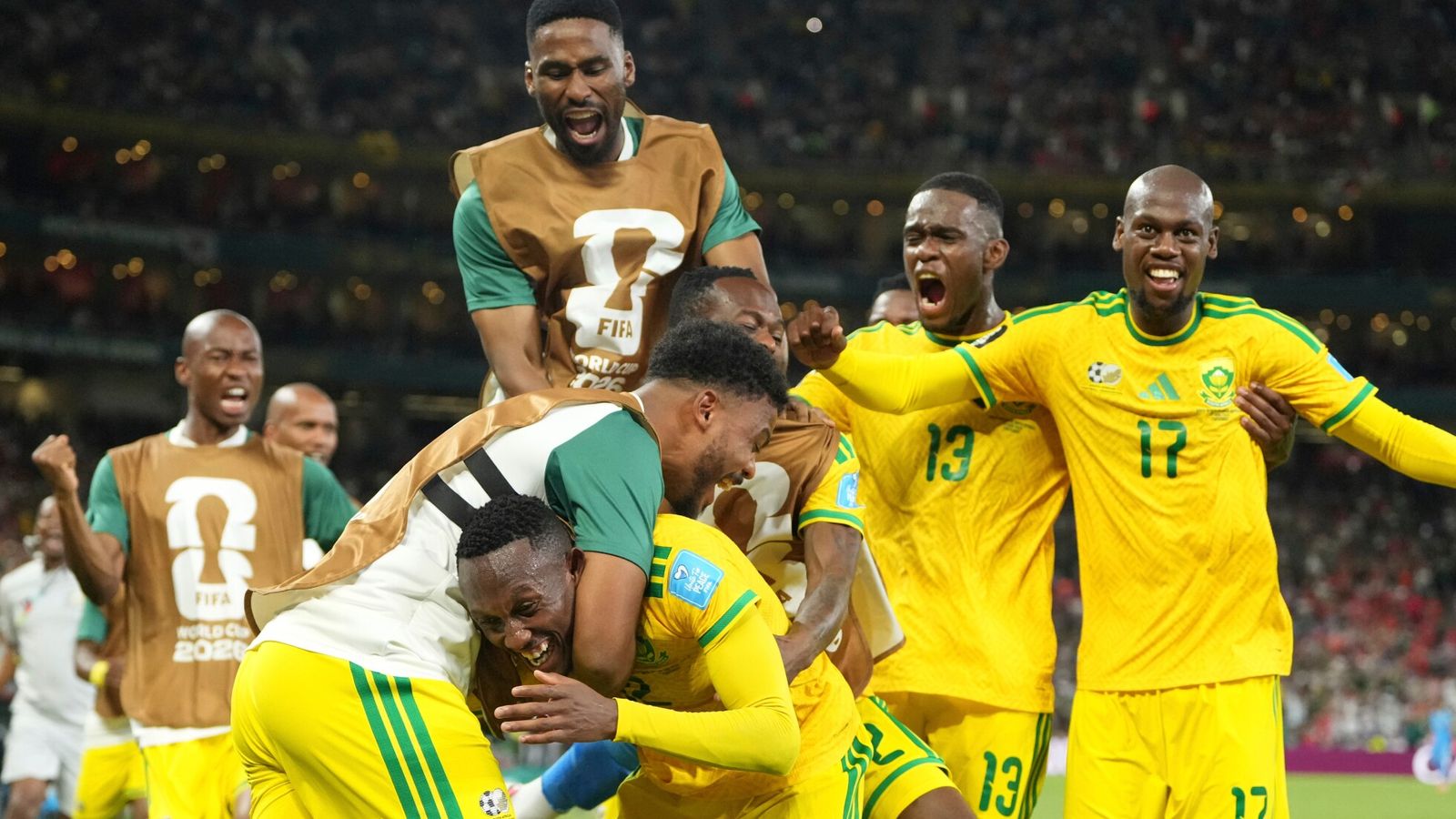
South Africa Secure Historic First World Cup Knockout Berth
South Africa have reached the World Cup knockout rounds for the first time in the nation’s history, securing second place in Group A following a 1-0 victory over South Korea in Guadalupe. The result delivers a landmark moment for a federation that has long sought to translate domestic football passion into sustained success on the sport’s biggest international stage.
The result marks a significant turnaround for manager Hugo Broos and his squad. After a devastating opening-game defeat to Mexico, in which South Africa were reduced to nine men, the team has demonstrated remarkable resilience to navigate the group stage and advance to the round-of-32.
Thapelo Maseko provided the decisive moment in the 63rd minute, finishing clinically from inside the area to seal the win. The victory ensures a knockout tie against Canada this coming Sunday, while South Korea must now wait to discover if they will progress as one of the best third-placed teams under the FIFA tournament regulations, which govern both group rankings and qualification pathways to the last 32.
Match Dynamics and Key Incidents
Despite dominating possession with 68 per cent of the ball, South Korea struggled to translate control into clear-cut opportunities. South Africa proved more efficient in their approach, recording a higher expected goals (xG) value and creating more dangerous openings throughout the match through direct transitions and set-piece pressure.
- 2′: Min-Jae Kim’s powerful header from a corner was cleared off the line by Aubrey Modiba, an early warning that South Africa would be forced into emergency defending.
- 8′: Kang-In Lee missed a close-range opportunity, firing wide of the right post after South Korea again worked space down the left.
- 30′: South African threats from Mbatha and Makgopa were thwarted by a double save from Seung-Gyu Kim, underlining the potency of South Africa’s counters despite their limited share of possession.
- 46′: South Korea manager Myung-Bo Hong introduced Heung-Min Son as part of a triple substitution, shifting the team to a back-four formation in an attempt to add width and attacking numbers.
- 63′: Thapelo Maseko scored the winning goal to secure South Africa’s progression, timing his run to meet a low cross and finishing first time beyond the goalkeeper.
From that point, South Africa’s defensive block dropped deeper, with Broos instructing his full-backs to stay narrow and the midfield line to compress space between the lines. South Korea increased the tempo but rarely forced clear saves, their attacks increasingly reduced to speculative efforts from distance.
Tactical Shifts and the Decline of a Talisman
The match highlighted the ongoing struggles of South Korean captain Heung-Min Son. In a bold tactical move, manager Myung-Bo Hong benched the 33-year-old for the first time in 13 World Cup games, ending a streak of 12 consecutive starts in the tournament and signalling a willingness to recalibrate a side long built around its star forward.
Son’s influence has diminished across his fourth and likely final World Cup. After being substituted in the 69th minute of the opening match and lasting only 57 minutes in the defeat to Mexico, his lack of impact became a primary concern for a coaching staff attempting to modernise the team’s pressing and build-up structures. In both those fixtures, he recorded the fewest touches of any South Korean starter.
Although he was more active following his half-time introduction against South Africa-registering 29 touches-only one occurred inside the penalty area. Once known for explosive pace on the wing, Son has struggled when deployed through the center, finding his movements stifled by opposing defenses and often receiving the ball with his back to goal. Having not scored in a World Cup match since 2018, his form remains a critical question for South Korea should they qualify for the next round, and raises broader selection dilemmas for the Korean Football Association about how quickly to phase in a new attacking core.
Implications for the Knockout Stage
For South Africa, the progression represents a watershed moment for the national team, validating the tactical adjustments made by Hugo Broos following their initial group-stage collapse. The ability to maintain defensive discipline while remaining lethal on the counter-attack will be essential for their upcoming clash with Canada, whose high-tempo pressing game has previously unsettled opponents in CONCACAF qualifying.
The achievement also carries institutional weight at home. South Africa’s football authorities have invested in long-term youth development and coaching reforms in an effort to avoid the boom-and-bust cycles that followed previous tournament appearances. A first-ever place in the World Cup knockouts strengthens the hand of administrators arguing for sustained public and private backing of those programmes, rather than short-term reactions to single results.
South Korea’s failure to capitalize on their possession reveals a lack of cutting edge in the final third and underscores an uncomfortable transition from a team centred on a single talisman to a more collective model. Their fate now rests on the results of other groups, as they hope their victory over the Czech Republic provides enough standing to secure a third-place qualification spot. Regardless of whether they advance, the campaign is likely to prompt internal review by football authorities over succession planning, talent identification and the balance between loyalty to veteran stars and the need to refresh the squad.
Keep reading
- Scotland SWNT Eyes Major Tournament Return as Ross Champions Squad’s Progress and Potential
- Life After Messi: Football’s Resilience Beyond the Legend’s International Farewell
- South Korea Judo Team Members Miss World Championships Flight After Meal Delay (archysport.com)
- Why Cold Weather Makes You Sleepy, and Why It's Really the Dark (daybreakwire.com)
