
Milan’s attacking fluency and Maignan’s late interventions define San Siro showcase
Under the lights at a sold-out San Siro celebrating its 100th anniversary, Milan’s meeting with Lecce unfolded as a study in vertical football, transition play and late-game resilience. The contest, kicking off at 20:45, offered a sequence of clear chances, a disallowed goal and decisive moments at both ends that will be closely examined by coaches, analysts and competition officials alike.
Historic stage, high-tempo start
The evening began with a light show befitting San Siro’s centenary, setting a celebratory tone before the first whistle. From kick-off, Milan looked intent on exploiting direct passing lanes and quick combinations, while Lecce sought to respond with sharp counters of their own.
Both sides tested the goalkeepers early. Monteiro embarked on a slaloming run in the ninth minute and let fly from long range, before Ilic followed up with a strike from the edge of the box, but neither effort troubled Maignan.
At the other end, Milan targeted depth behind the visiting back line. In the 11th minute, Goncalo Ramos threaded a through ball for Pulisic, who broke in behind the Giallorossi defence but could not quite reach it, with Falcone’s rapid advance off his line allowing the goalkeeper to gather low.
Pulisic’s early breakthrough
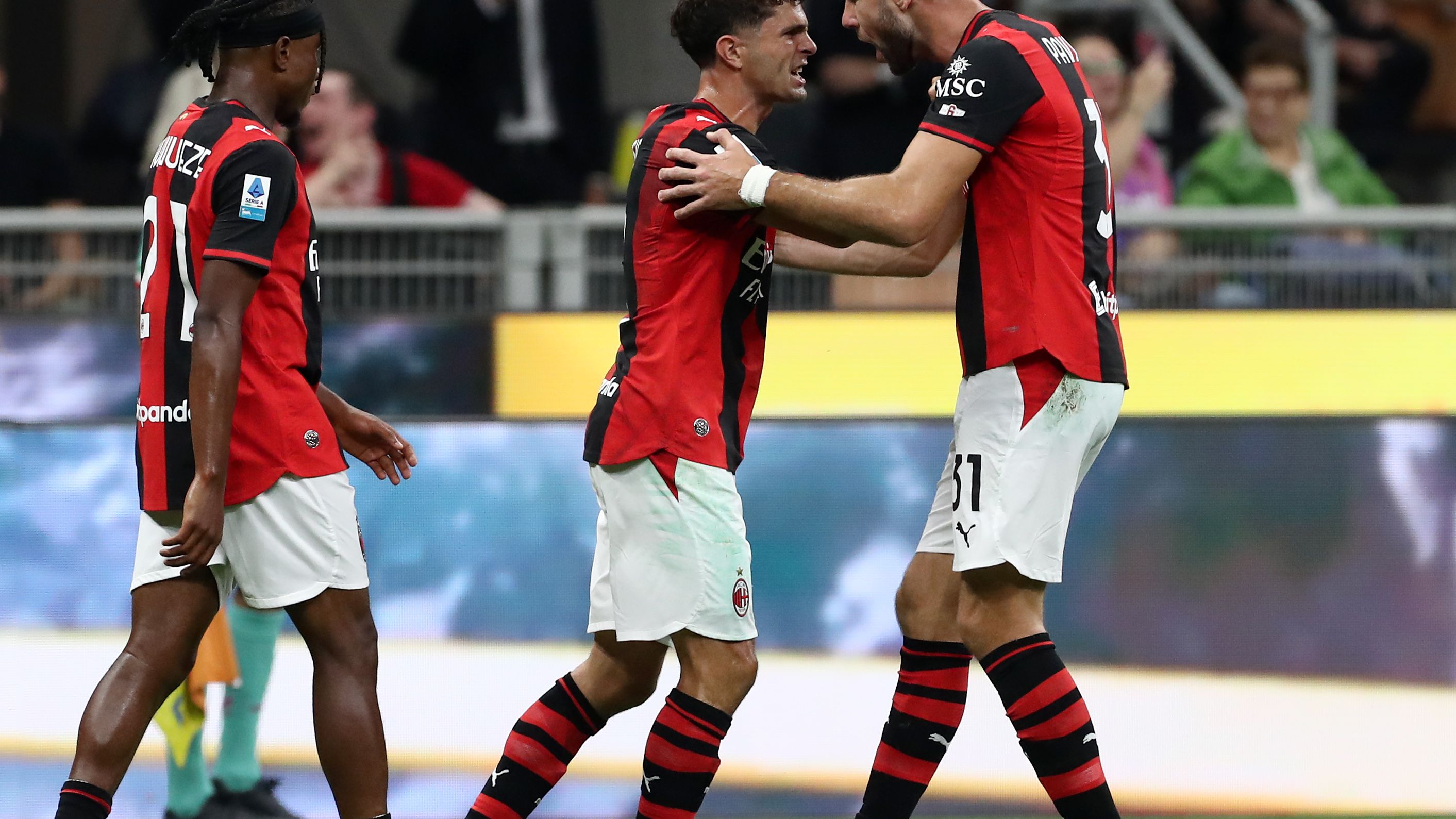
Their intent was rewarded three minutes later. In the 14th minute, Pavlovic stepped into midfield and delivered a precise vertical pass for Pulisic. The American stole a march on Siebert, controlled on the volley with his right and, in one fluid motion, set himself before lifting a left-footed finish over the advancing Falcone. It was a move that encapsulated Milan’s game plan: breaking lines quickly, attacking the space between centre-back and full-back and relying on the technical quality of their forwards.
The goal also reflected broader trends in top-tier European football overseen by domestic league governing bodies, where teams increasingly prioritise verticality and aggressive positioning between the lines within the laws and competition formats set by the national federation.
Wide threats and near misses before the interval
Milan continued to profit from runs in behind and combinations on the flanks. In the 34th minute, Chukwueze made a powerful vertical run from the right, catching Gallo out and latching onto a pass from Saelemaekers. The pattern mirrored the build-up to the opening goal, but on this occasion Falcone reacted more quickly, racing off his line to smother before the Nigerian could apply a touch.
Five minutes later, Pulisic again found space on the right and whipped a pinpoint cross into the middle for Goncalo Ramos, whose header drifted just wide. The sequence underlined how consistently Milan were able to access central areas from wide deliveries, even if the final touch eluded them.
One of the first half’s most striking passages came in the 41st minute, when Pavlovic led an end-to-end counter-attack after being released by another vertical pass from Pulisic. The defender surged all the way into the area but lost composure at the crucial moment. Already clearly in an offside position, he attempted to square to Chukwueze instead of shooting and passed straight to Falcone. Even though the move would not have counted, it highlighted how Milan’s structure allowed a defender to advance high in transition, while also exposing the fine margins of timing and positioning that match officials must constantly monitor under the competition’s offside regulations.
Saelemaekers and Chukwueze drive second-half transitions
The second half opened with Milan still committed to building from deeper positions and breaking quickly. In the 51st minute, Saelemaekers produced one of the game’s standout individual actions, controlling the ball on the edge of his own area, dribbling between two opponents and riding a challenge before launching a counter-attack. The move flowed to Chukwueze on the right edge of the box; his clipped cross to the far side found Goncalo Ramos free, but the forward failed to connect cleanly with an overhead kick.
This phase of play encapsulated Milan’s approach: risk-tolerant progression from the back, using technical defenders and wide players to create overloads in transition. For Lecce, it underscored the defensive strain of tracking midfield runners and wide threats over long distances.
Disallowed goal highlights offside discipline
The match briefly appeared to swing decisively in Milan’s favour in the 55th minute. Chukwueze worked space on the right and delivered a cross for Pavlovic, whose header forced a difficult save from Falcone. The goalkeeper failed to collect cleanly and, from the ground, pushed the ball away with his arm, only to see it rebound off his own legs and into the net for what would have been a 2-0 scoreline.
The celebrations were cut short. The goal was disallowed, with Pavlovic adjudged to have started from an irregular position. The intervention reaffirmed the central role of offside management in elite competition and illustrated why coaching staffs place such emphasis on defenders’ timing and starting lines on attacking set-ups. In tightly contested league campaigns, moments like this can have direct implications for points totals and, by extension, standings and qualification routes governed by national and continental frameworks.
Rabiot’s finish gives Milan daylight
Milan did not have to wait long to restore their two-goal cushion on the pitch. On 62 minutes, Pulisic switched play and Rabiot burst forward from midfield, exchanging a one-two with Goncalo Ramos on the edge of the area. The Frenchman continued his run through on Falcone and hammered a left-footed shot into the net to make it 2-0.
The move highlighted the value of late-arriving midfielders in modern attacking structures. As Lecce’s back line focused on the movement of the centre-forward, Rabiot exploited the gap between midfield and defence, a pattern repeatedly seen in top-level competitions organised under the umbrella of the European governing framework, where central runners are used to overload defensive blocks.
Lecce resist and exploit space on the flanks
Despite the setback, Lecce continued to threaten on the break. In the 65th minute, Monteiro attacked Gila down the left, beat him to the byline and fired a dangerous ball across the face of goal. Pierotti was close to turning it in, but Estupinan read the danger and made a perfectly timed diagonal run across his six-yard box to clear. The intervention was a reminder of how recovery runs and defensive angles can be as decisive as attacking movements in high-tempo fixtures.
The visitors maintained their belief and found reward in the 74th minute. Moreira pounced on a loose ball from Siebert with Lecce protesting a coming-together between Goncalo Ramos and Gaspar. Ignoring the appeals, he drove straight at Falcone’s goal, cut inside sharply and beat the goalkeeper at the near post with a low shot. The goal narrowed the margin and injected fresh momentum into the final stages, while also illustrating how quickly possession turnovers in central areas can be punished at this level.
Maignan decisive as Lecce push late on
Lecce’s attacking intent grew as the clock ticked into the closing stages. In the 76th minute, they constructed a superb vertical move through midfield, slicing through Milan and sending Pierotti through on Maignan slightly to the right of goal. The winger tried to slide a low shot under the advancing goalkeeper, but Maignan stayed upright, spread himself well and got enough on the ball for his defence to complete the clearance.
Eight minutes later, they came even closer. After Loftus-Cheek lost possession, Lecce broke once more. Fatah drove into the box from the left, cut inside onto his right after beating two defenders and, as he fell, aimed a shot towards the far post. Maignan stretched at full length and, with his fingertips, turned the ball behind for a corner.
Those interventions underlined the extent to which modern goalkeepers are expected not only to organise their defences but also to act as decisive last lines in high-exposure situations created by aggressive attacking schemes and occasional midfield turnovers. For a club with ambitions in domestic and European competition, such late-game composure from the goalkeeper is often the difference between consolidating a result and dropping crucial points.
Tactical patterns and wider implications
Across the 90 minutes, several structural themes were clear:
- Milan prioritised vertical passing and early runs in behind, with Pulisic, Chukwueze and Goncalo Ramos consistently looking to exploit gaps between and beyond defenders.
- Full-backs and even centre-backs such as Pavlovic were encouraged to advance in transition, increasing attacking numbers but occasionally testing offside discipline.
- Lecce sought to remain compact, then break quickly through wide channels, with Monteiro, Pierotti and Fatah all finding space when Milan lost the ball high.
- Goalkeeping performances from Maignan and Falcone shaped the narrative, with key one-on-one moments and reaction saves keeping the match finely balanced.
Within the framework of a long domestic campaign, the patterns seen here carry clear consequences. Efficient conversion of vertical attacks, management of risk when defenders step into midfield and understanding of offside lines in crowded penalty areas all feed directly into results that determine league positioning, European qualification and, at the other end of the table, relegation battles overseen by national and continental authorities. On a night when San Siro marked 100 years as one of European football’s most iconic stages, both sides produced a performance that reflected the tactical and regulatory demands of the modern elite game.
Worth a look
