
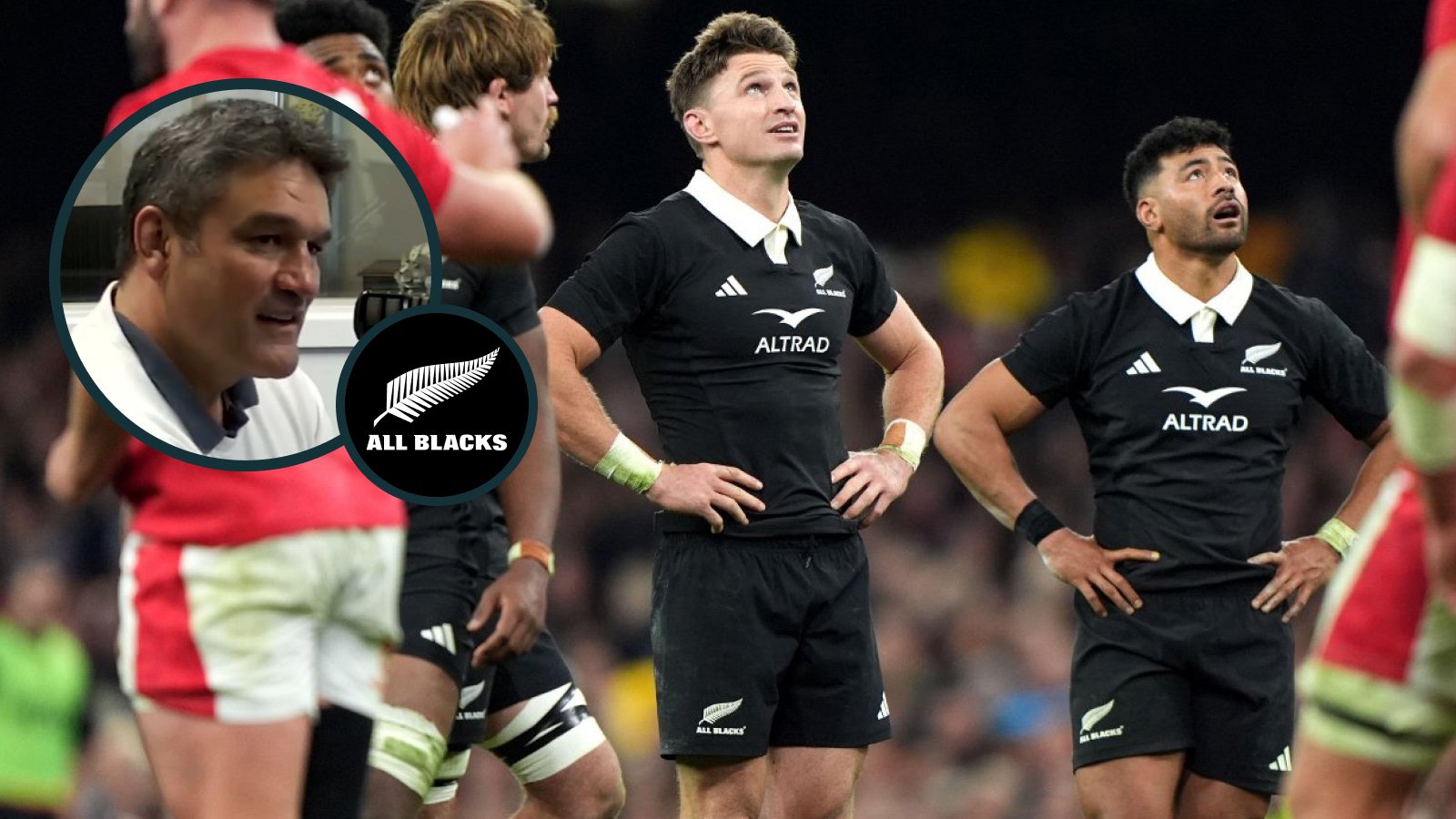
All Blacks shock in Cardiff leaves Barrett and Mo’unga futures under scrutiny
Ex-All Blacks captain Taine Randell believes Beauden Barrett and Richie Mo’unga could have played their final Tests for New Zealand against Wales in Cardiff on Saturday, a result that has immediately sharpened the focus on succession planning in one of international rugby’s most scrutinised teams.
The Nations Championship encounter at the weekend ended in a 35-28 defeat for New Zealand, their first loss to Wales since 1953. For a side historically defined by its dominance in tier-one fixtures, the reversal sits among the most jarring results of the professional era and will inevitably shape upcoming selection discussions under the New Zealand Rugby high-performance structure and the frameworks overseen by World Rugby.
Historic defeat frames captaincy debut
Barrett captained his country for the first time at Test level in Cardiff. The 35-year-old, who has played most of his international career at fly-half, started at full-back, while fellow experienced playmaker Mo’unga wore the All Blacks’ number 10 jersey.
Barrett was making his 149th appearance and Mo’unga his 58th at Test level, a combined body of experience that underlined why they were expected to guide New Zealand to a controlled, outcome-driven performance against a Wales side that relied heavily on defensive resilience and tactical discipline to secure victory.
Instead, the All Blacks were undone in key moments by that “superb defensive display”, with Wales repeatedly disrupting New Zealand’s rhythm and exit strategy. In a competition designed to pit leading national unions against each other on a regular cycle, dropping points in such fixtures carries not only ranking implications but also consequences for workload management and selection in the remaining Tests of a long season.
Barrett’s late-season resurgence meets brutal reality
Although Barrett had found himself on the outskirts of the All Blacks’ Test squad earlier this year, he forced his way back into the run-on side last month and delivered strong performances in back-to-back Bledisloe Cup triumphs over Australia and in a Nations Championship victory over Scotland.
Those outings had suggested he remained a viable option in the All Blacks’ playmaking mix, even as younger first five-eighths push for extended opportunities. Cardiff, however, placed that late resurgence under a far harsher spotlight, not least because Barrett was leading the side on a night that will be revisited whenever this All Blacks cycle is assessed.
The defeat also lands at a time when national set-ups increasingly have to balance continuity with the need to accelerate the development of emerging talent under the constraints of international windows, player welfare protocols, and club-country agreements.
Plenty of hype around Mo’unga’s return to New Zealand
There was significant anticipation around Mo’unga’s return to New Zealand earlier this year after he spent three seasons with Japan Rugby League One outfit Toshiba Brave Lupus.
The 32-year-old’s international comeback has not unfolded as hoped. He re-entered the Test arena in a Rugby’s Greatest Rivalry fixture against the Springboks, a match New Zealand lost, and a calf injury then ruled him out of the Tests against the Wallabies.
Given the investment of time and responsibility previously placed on Mo’unga as a long-term director of play, this Cardiff performance sits uncomfortably in his recent trajectory. In an environment where national coaches must justify every selection decision to central-contracting bodies and high-performance committees, another high-profile defeat under his stewardship at fly-half complicates any argument for retaining the same hierarchy at 10.
Randell questions long-term role for senior playmakers
While appearing on The Platform NZ podcast, Randell was asked by host Michael Laws whether the Wales defeat would be a defining moment for Barrett and Mo’unga – as well as some of the inexperienced players who were making rare Test starts – and whether they will be selected for the All Blacks again.
“Potentially. I mean, with the younger guys, they’ll definitely have more opportunities,” he said, drawing a clear distinction between those still at the beginning of their international journeys and veterans whose sample size of performances is already extensive.
Randell highlighted the depth in New Zealand’s playmaking stocks: “But for Beauden Barrett, for Richie Mo’unga, we’ve got Damian McKenzie playing first-five (fly-half), we’ve got Ruben Love injured. We’ve got really four players who are all first-fives.”
He then framed the Cardiff Test against the wider narrative of Mo’unga’s much-discussed return.
“And this was with Richie Mo’unga coming back, the so-called ‘anointed one’, he was going to do a lot for New Zealand rugby. He was playing in South Africa, again, Baltimore, they got hammered there, hammered last night (against Wales).
“And same for Beauden Barrett, who’s been overlooked for most of the season, gets a couple of good games towards the end. This was his chance as captain to really push for a spot.
“You can’t draw any other conclusion, but this is incredibly damaging for both of them.”
In selection terms, that assessment matters. With multiple first-five options available, any high-profile defeat where the attack fails to take control naturally strengthens the case for selectors to reallocate minutes, particularly with future tournament cycles in mind.
Shock result raises questions but not complacency claims
Saturday’s defeat against Wales is arguably the biggest shock in All Blacks history. The result has immediately prompted scrutiny of preparation, selection balance and mental approach, as well as broader questions about whether Dave Rennie’s squad underestimated their opponents or slipped into complacency.
Randell does not accept that explanation.
“No, they wouldn’t be complacent, because they’ve got a tour going on, and they know the top team had played against Scotland, top team’s going to play against England, and so for a number of those guys, they wouldn’t have played in that game,” the former back-row said.
‘They would have been really motivated’
For Randell, the internal dynamics of a touring squad are critical context. Players on the fringes of the first-choice XV typically see such fixtures as their main opportunity to stake a claim, especially when senior figures like Barrett and Mo’unga are tasked with steering them.
“This was their chance to play. So they would have been really motivated, incredibly motivated, but sometimes sports does some funny (stuff).
Want more from Planet Rugby? Add us as a preferred source on Google to your favourites list for world-class coverage you can trust.
“I captained in the All Blacks in 1999 where we were going to thump the French in the semi-final on the way to the final. We were not complacent, but sometimes funny stuff (happens), and it was the first time in my career I’d seen funny stuff happen.
“But I remember talking to Frank Oliver (former All Blacks lock and captain) six months or so afterwards, and he said, ‘You know, on the day, for example, the French can just do stuff that no one else, unless you’ve been there, can explain’.
“And (in) New Zealand history, we’ve got a very proud history against France, but it’s littered with corpses of All Black teams who’ve lost the odd unexpected game to France.
“And on this occasion (against Wales), this is so much more unexpected.
“It’s really interesting. You’ve got some young guys in that All Black team, and whether this scars their future or not, you’ve also got some older guys in that team really looking for redemption.
“So they would have been questioning the loss afterwards, and I think some of them would have been really questioning the trajectory or the future of their careers.”
Career crossroads for senior leaders
Randell’s remarks tap directly into a broader strategic issue for New Zealand Rugby: how and when to transition from a generation of players who have carried the jersey through multiple cycles to those who must now be tested under pressure.
Barrett’s 149 caps and Mo’unga’s 58 Tests speak to careers spent navigating Rugby Championship campaigns, northern hemisphere tours and global tournaments. Yet the Nations Championship structure and the relentless nature of modern calendars leave little margin for extended experimentation at the expense of results.
In that context, Cardiff feels like more than a one-off upset. It is a live case study in what happens when an experienced core is unable to close out a match that history, ranking and expectation all suggest they should win – and it may accelerate institutional decisions about where leadership and responsibility sit in the next phase of All Blacks rugby.
READ MORE: Wales legend hails All Blacks triumph as the ‘biggest shock in rugby since Japan beat South Africa in 2015’
Worth a look
