
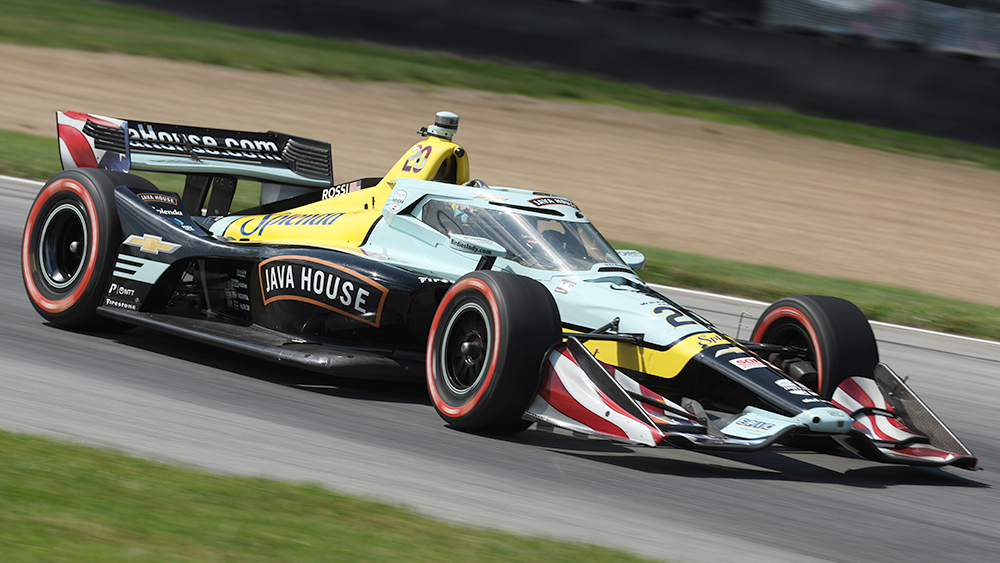
ECR Locks In Chevrolet Power as INDYCAR Enters New Technical Era
ECR and Chevrolet announced Oct. 7 a multiyear extension of their longstanding partnership, confirming that the Indianapolis-based team will remain with the American manufacturer as the NTT INDYCAR SERIES heads toward significant technical change.
Continuity for One of Chevrolet’s Longest-Serving INDYCAR Teams
ECR is one of only two teams to have been powered by Chevrolet since the introduction of the 2.2-liter twin-turbo V6 engine formula in the NTT INDYCAR SERIES. The renewed agreement keeps that alliance in place through at least the early phase of the championship’s next rules cycle.
During the 2027 season, ECR is set to reach its 500th race start, a milestone that will arrive with Chevrolet engines still installed in its cars. The partnership dates back to the team’s inception in 2012 and has become a defining element of ECR’s identity in the paddock.
Across that period, ECR and Chevrolet have combined for nine race victories and six NTT P1 Awards, including three Indianapolis 500 pole positions earned by team co-owner and CEO Ed Carpenter. In a series where engine-chassis integration is central to performance over long seasons and at blue‑riband events such as the Indianapolis 500, those numbers underline the competitive value of the relationship.
Extension Timed Around 2028 Technical Shift
The extension is strategically aligned with a major rule change: the introduction of a new chassis and engine formula in 2028 for the NTT INDYCAR SERIES. The current era of 2.2-liter twin‑turbo V6 engines has shaped the competitive landscape for more than a decade; the coming package will reset much of the technical baseline for teams and manufacturers.
Alexander Rossi, driver of ECR’s No. 20 Java House Chevrolet, is one of two drivers to have taken part in the initial tests of the series’ new chassis. That early involvement gives ECR first-hand insight into how the next-generation car behaves and what will be required from Chevrolet’s future power unit in areas such as drivability, energy delivery and integration with aerodynamics.
As development progresses, ECR will have the opportunity to be involved in testing Chevrolet’s new powerplant. For a team that has built its modern history around one manufacturer, that role is critical: contributing feedback in the development phase can directly shape how well the final engine package complements ECR’s setups on street circuits, road courses and ovals once the rules reset arrives.
Carpenter Emphasizes Stability Ahead of 500th Start
“Chevrolet has been with ECR since the beginning of our team, and they have been an important part of our team’s growth over our first 15 seasons,” Ed Carpenter said. “We’ve had a lot of success with Chevy over the years, and we’re proud to be one of only two teams to have partnered with Chevrolet since its return to INDYCAR. Maintaining that continuity is very important to us as we not only approach our 500th race start but also enter the next era of INDYCAR competition.
“We’re very proud of our history with Chevrolet and are looking forward to adding to it.”
In a championship where teams are free to choose from competing engine suppliers, long-term continuity is relatively rare. By extending now, ECR removes a major variable from its medium‑term planning. That has practical consequences across the organization, from engineering roadmaps and simulator development to driver recruitment, as competitors and partners know what technical platform the team will be using into the next rules cycle.
Chevrolet’s INDYCAR Strategy and Technical Alignment
On the manufacturer side, the renewal reinforces Chevrolet’s long-term footprint in American open‑wheel racing. The brand’s involvement in the series is structured within the broader General Motors motorsports portfolio, which uses top-level competition as both a technology test bed and a marketing platform.
“ECR has been an important part of Chevrolet’s INDYCAR program, and this extension reflects the strength of the technical relationship we’ve built together,” said Eric Warren, General Motors vice president of global motorsports competition. “As the series moves toward its next-generation car and powertrain, close collaboration between our engineers will be critical. We share a clear objective with ECR: to keep raising the performance of the Chevrolet package and compete for wins, championships and Indianapolis 500 victories.”
For Chevrolet, retaining a team that has helped deliver multiple race wins and pole positions at the Indianapolis 500 ensures continuity of data and experience as it prepares its new engine for the series’ next technical phase. Close alignment with teams such as ECR reduces risk around reliability and performance when the updated regulations arrive.
Positioning for the Next Phase of the NTT INDYCAR SERIES
The NTT INDYCAR SERIES, sanctioned by INDYCAR, operates a schedule that spans street circuits, permanent road courses and high‑speed ovals, including the Indianapolis 500. In that structure, engine manufacturers compete not only for race wins and titles but also for prominence at one of global motorsport’s flagship events.
Within that environment, ECR’s choice to stay with Chevrolet has immediate and longer‑term implications:
- Sporting stability: With its engine program settled, ECR can focus resources on chassis development, race operations and driver performance ahead of the 2027 milestone season and the 2028 rules introduction.
- Technical roadmap: Early access to next‑generation chassis testing, combined with continued involvement in Chevrolet’s power unit development, allows ECR to align its engineering programs with the specifications that will govern the series from 2028 onward.
- Commercial positioning: A long‑running partnership carried through a major rules change offers a clear narrative for sponsors and partners seeking continuity around one manufacturer’s brand and technology story.
Rossi’s Role and the Team’s Competitive Window
Alexander Rossi’s participation in the first tests of the new chassis places ECR at the center of the NTT INDYCAR SERIES’ transition work. While the detailed technical specifications of the 2028 package are managed within the series’ own regulatory framework, teams with drivers directly involved in early testing gain practical knowledge of how future cars will demand different driving styles, engineering approaches and strategic choices.
For Rossi, working on the next‑generation car while racing under the existing regulations can sharpen his understanding of how evolving technology will affect race craft and car behavior. For ECR and Chevrolet, his feedback links track experience with the development of both chassis and power unit, potentially shortening the learning curve when the new package is introduced.
Looking Ahead to the 2027 Campaign
The 2027 NTT INDYCAR SERIES season, in which ECR will mark its 500th race start, is scheduled to begin Sunday, March 7 on the streets of St. Petersburg, Florida. As one of the championship’s established urban venues, the St. Petersburg opener typically provides an early indication of which teams have extracted the most performance from their off‑season development programs.
By entering that campaign with a confirmed, extended partnership with Chevrolet, ECR sets a clear technical foundation for a period that includes both a landmark participation milestone and the build‑up to a new generation of cars and engines across the series.
Keep reading
- Navan Racing Festival Hospitality Now Available for Nursery Handicap Event
- Scotland SWNT Eyes Major Tournament Return as Ross Champions Squad’s Progress and Potential
- Bahrain GP in Malaysia 2026: Verstappen on pole ahead of Hamilton (globallypulse.com)
- Sarah Zadrazil returns to official ÖFB team training ahead of play-offs (archysport.com)
