
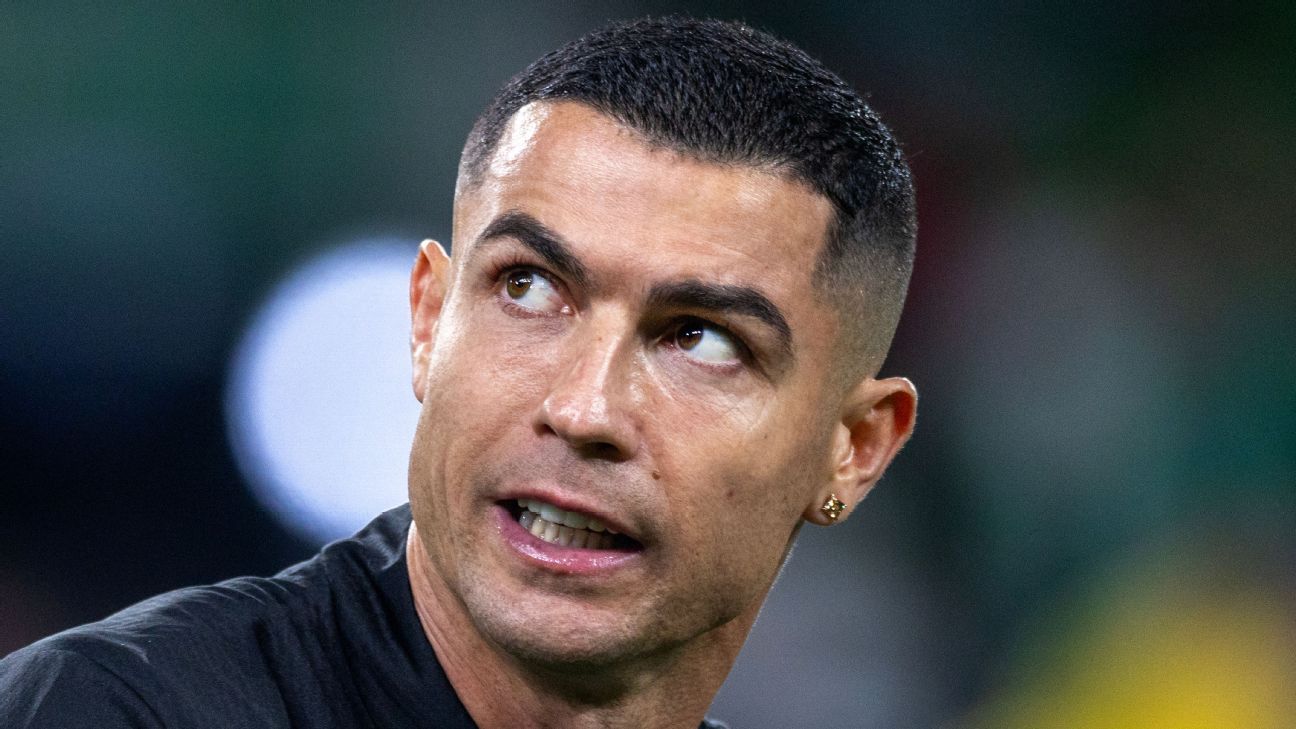
Cristiano Ronaldo takes 25% stake in UD Almería as promotion chase sharpens
Cristiano Ronaldo has acquired a 25% ownership stake in Spanish second division club UD Almería. The transaction, executed through the Portugal captain’s CR7 Sports Investments company, was announced with financial terms undisclosed and framed by Ronaldo as a long‑term strategic commitment to the club rather than a short-term commercial play.
Long-term move beyond the touchline
“I have long had the ambition to contribute to football beyond the pitch,” Ronaldo said. “UD Almería is a Spanish club with a strong foundation and clear growth potential. I wish to work with the team leading the club to support it in its new phase of growth.”
The move extends a wider trend of current and former elite players taking positions in club boardrooms and ownership structures, blurring the line between sporting influence and corporate governance. In Ronaldo’s case, the 25% stake gives him a significant minority voice in strategic decisions while leaving day‑to‑day control with the existing majority ownership and executive team.
Signal for Almería’s project
Almería were taken over by a Saudi investment group in May 2025, and club figures welcomed the addition of Ronaldo to the ownership group as a validation of the project’s ambition. Head coach Juan Francesc Ferrer “Rubi” called it “exciting news for the entire club, the city and the province,” adding: “Of course, we welcome him. I think it’s great news because someone like him, with his extensive knowledge of sport and football, can really help a club like ours.”
Rubi also noted: “Everyone knows the good relationship Cristiano has with the owners… The important thing is that he’s arrived here to join us [as a shareholder]. We’re very happy.”
Club president Mohamed al Khereiji said: “He is considered the best on the pitch. He knows the Spanish leagues very well and understands the potential of what we are building here both in terms of the team and the youth academy.” For local authorities and regional sponsors, the arrival of one of the sport’s most visible figures is likely to increase scrutiny of club governance but also raise the city’s profile in national and international football debates.
Promotion race and league framework
Relegated in April 2024, Almería have positioned themselves to return to Spain’s top flight. After 27 games, they sit third in the second tier, two points behind leaders Racing Santander. Spain’s professional leagues are organised under the statutes of the Royal Spanish Football Federation and operated in the professional sphere by LaLiga, where the top two in the second division earn automatic promotion and the next four typically contest playoffs for the final place. For Almería, Ronaldo’s investment arrives at a pivotal point in the calendar when depth, decision-making and resource allocation can influence whether a season ends with automatic promotion or a high-stakes playoff run.
The deal also ties Ronaldo more closely to Spain’s football ecosystem at a time when the country is co‑hosting the 2030 World Cup, adding a layer of institutional relevance to his role. While he is not expected to be involved in match‑to‑match decisions, his presence in the ownership group will sit alongside league‑level oversight of club finances and competitive integrity.
- Division: Spain’s second tier (Segunda División)
- Position: 3rd after 27 matches
- Gap to 1st: Two points behind Racing Santander
- Recent history: Relegated from the top flight in April 2024
- Ownership: Majority Saudi investment since May 2025; Ronaldo now holds 25% via CR7 Sports Investments
- Transaction terms: Not disclosed
Potential competitive effects
While immediate sporting decisions remain with the technical staff and sporting director, an investor of Ronaldo’s stature can shape medium‑term strategy: enhancing scouting reach, accelerating academy development and sharpening commercial visibility. His global profile may help Almería attract sponsorships and player interest that would typically flow to established top‑flight brands, particularly in markets where Ronaldo already has commercial partnerships.
Any increased resources would still operate within Spanish league financial controls that govern squad spending and sustainability, a factor that tends to reward clubs able to plan multi‑window squad building rather than short‑term fixes. In practice, that means Ronaldo’s influence will likely be felt in how aggressively Almería can invest in infrastructure, data and youth recruitment, rather than in any sudden, regulation‑busting transfer splurge.
Playing career unchanged—future cameo left open
Ronaldo, who turned 41 on Feb. 5, 2026, remains an active player after extending his Al Nassr contract through June 2027 last summer. He is expected to captain Portugal at the 2026 World Cup in North America, underscoring that his move into Spanish club ownership runs in parallel with, rather than instead of, his on‑field career.
Asked whether he might one day play for Almería, Rubi replied: “That’s a question for him, but it would be extraordinary and wonderful. This is his club, and if he wants to continue playing… he’d be welcomed with open arms.” For now, Almería get Ronaldo the owner rather than Ronaldo the forward — but the symbolism of one of the game’s defining players buying into a promotion‑chasing, Saudi‑backed Spanish club may prove almost as significant as any goal he could score there.
Related reading
