
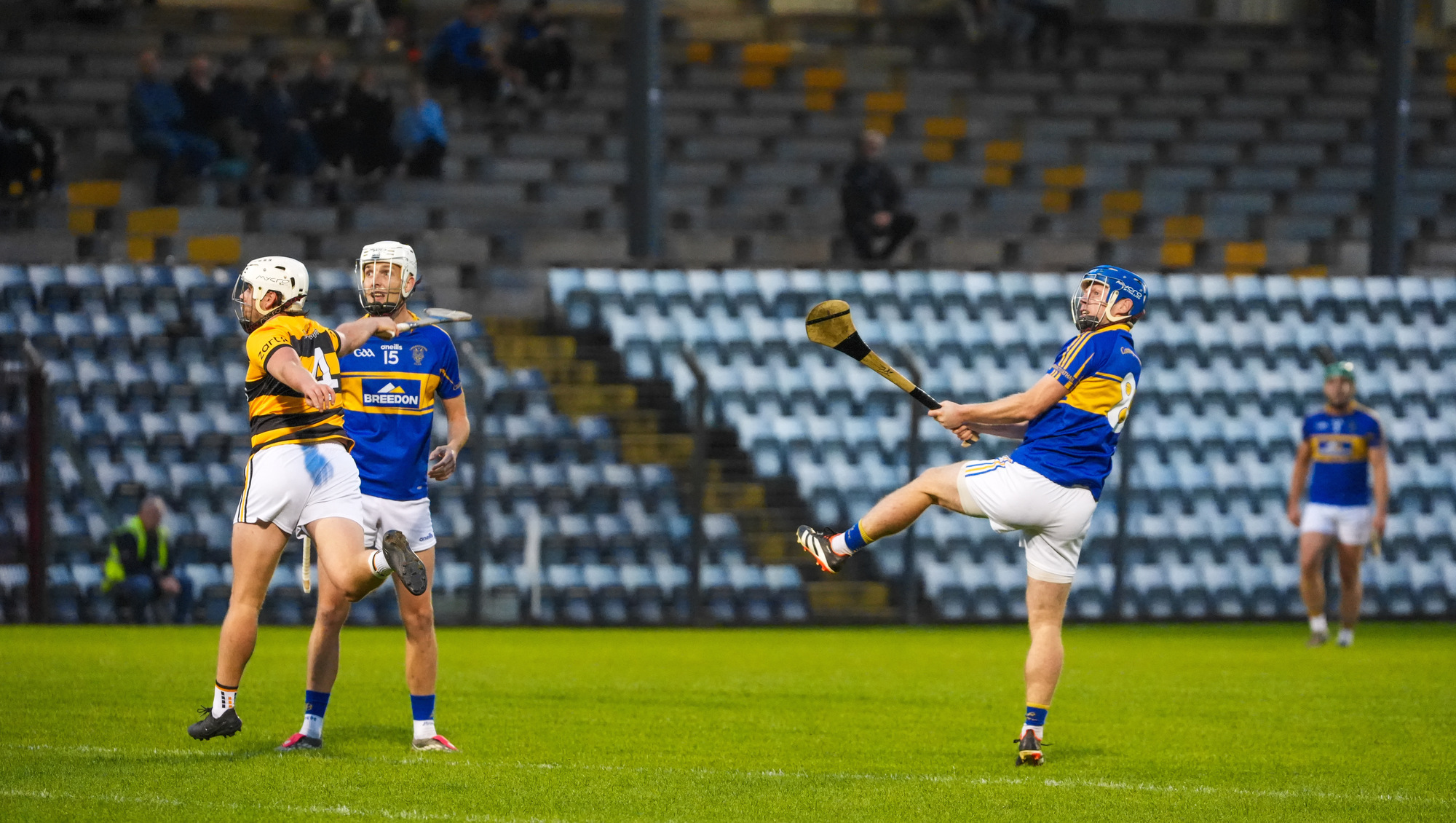
Carrigtwohill’s resilience underpins return to Cork SAHC semi-finals
While the loss of a seven-point lead in their last Co-op SuperStores Cork Senior A Hurling Championship (SAHC) group game might not have been what Carrigtwohill wanted, it served them in good stead in Friday’s quarter-final against Na Piarsaigh at Páirc Uí Rinn.
That earlier collapse, when the advantage they held against Ballinhassig at the same venue was wiped out, still ended in a draw that secured qualification for the knockout stages. Against Na Piarsaigh, the dynamic was reversed: Carrigtwohill trailed by six but battled back to send the game to extra time and then penalties before prevailing.
For manager Denis Walsh, the way his side handled both scenarios – letting a lead slip and chasing a deficit – has become central to their identity in this year’s championship.
“Yeah, massive encouragement,” he said.
“The lads, against Ballinhassig we were pegged back from seven points up and after 59 minutes, we were going with the championship and they turned it around in the last six minutes, including the stoppage time.
“It was the same thing here, how many times tonight were we going out of the championship? They just refused to die, they refused to lie down.”
Walsh’s focus is not on fluency of play so much as on mentality and capacity to absorb pressure in knockout hurling, where there is no safety net.
“They kept going and, with any team, you just hope that they’ll do that, regardless of how you’re hurling, that they just don’t stop, and they didn’t stop.
“In fairness to our lads, they showed incredible character because they didn’t have their best stuff tonight by any means – we didn’t hurl the way we can.
Penalties, pressure and a tight calendar
The quarter-final was ultimately decided on penalties after what Walsh described as “a titanic game, an absolutely titanic game for 85 or 90 minutes”. Under the condensed fixtures model used across the inter-county and club season, replays have largely been removed from county championships, increasing the likelihood that high-stakes ties go straight to a shoot-out.
“Look, we’ve said it a million times, but it’s always true – that’s no way to lose a match or no way to decide a match, penalties after a titanic game, an absolutely titanic game for 85 or 90 minutes.
“I know it’s a tight calendar and a tight schedule and there’s no room for replays and stuff like that, but it’s still a cruel way for them to go. We had it ourselves a few years ago, we were relegated on penalties by Charleville and they changed the rule after that for the relegation.”
That personal history colours Walsh’s view of the format: Carrigtwohill have been on the wrong side of a penalty outcome in the past, suffering relegation on spot-kicks before a rule change removed penalties from relegation play-offs. Now, in a last-eight tie, the same mechanism has propelled them into the semi-finals.
For international readers, the Cork SAHC is part of the club championship structure run under the Gaelic Athletic Association, with county competitions feeding into provincial and then national club championships. The pressure created by a fixed calendar, with club, county and underage fixtures all sharing the year, has been a key driver of decisions to avoid replays wherever possible.
From Ballinhassig scare to Na Piarsaigh comeback
Carrigtwohill’s route to the last four has hinged on their capacity to recover from difficult in-game positions:
- Against Ballinhassig in their final group match at Páirc Uí Rinn, they surrendered a seven-point lead late on, but a draw was still enough to confirm their progression to the knockout stages.
- Back at the same venue in the quarter-final, they trailed Na Piarsaigh by six before forcing extra time and then holding their nerve in a penalty shoot-out.
The contrast between those two games – first protecting qualification despite a late setback, then overturning a substantial deficit in a do-or-die tie – underpins Walsh’s assessment of his squad’s development and resilience.
Character over spectacle
Walsh is clear that the quarter-final was not a showcase of Carrigtwohill at their most expansive on the ball. Instead, he highlights the defensive work, tackling and refusal to break under scoreboard pressure.
“In fairness to our lads, they showed incredible character because they didn’t have their best stuff tonight by any means – we didn’t hurl the way we can,” he said.
He readily credits Na Piarsaigh’s performance for restricting Carrigtwohill’s usual patterns.
For a club with ambitions at Senior A level, that capacity to win when not playing fluently is significant. In a competition where promotion to the top tier of county hurling is often decided over a short series of knockout games, mental durability and depth of panel can matter as much as form.
Back-to-back semi-finals and a date with Blarney
By reaching the last four again, Carrigtwohill have matched their achievement of last year and maintained a level of consistency in the Senior A grade. That continuity is important in a tier that often serves as the launching pad for clubs aspiring to join the Cork senior elite.
In the semi-final they will face Blarney, who Walsh describes in unambiguous terms.
“Look, they’re the favourites for the county, they’ve been the favourites all year.
“They have a savage team, obviously, with their three Cork seniors and the whole lot, we’ll be underdogs, but what harm, that’s perfect.”
For Carrigtwohill, the challenge is twofold: to recover physically after a punishing quarter-final that went to extra time and penalties, and to prepare tactically for a side stacked with inter-county experience. At the same time, the underdog tag gives Walsh room to focus his players on performance and collective effort rather than external expectation.
Managing resources for Páirc Uí Chaoimh
An injury list still shapes preparation. Seán Walsh remains out, while Justin Oke is likely to be available after a storming display off the bench on Friday, providing an important boost to the match-day options.
“We’ll try and get fellas back in one piece, try and get fellas rested and fit and back on the pitch in two weeks,” Denis Walsh said.
The semi-final will be played at Páirc Uí Chaoimh, Cork’s main county stadium and one of the premier venues for Gaelic games. For clubs at Senior A level, simply reaching that stage of the competition carries significance beyond the immediate result.
“It’s great to be there – that was our target at the start of the year, to get back to Páirc Uí Chaoimh, that’s everyone’s target, so we’re thrilled to be going there in two weeks’ time.”
Beyond the immediate sporting stakes, a semi-final at the county’s flagship ground can influence a club’s medium-term standing: it enhances visibility for younger players, underlines the value of local coaching structures and can strengthen the case for continued investment in facilities and development. Within Cork’s club system, sustained appearances at this level often underpin a club’s ambitions to move higher within the championship hierarchy set out in the GAA’s official competition structures.
Penalty shoot-outs and evolving competition design
Walsh’s reflections on penalties touch on a broader debate in Gaelic games about how to balance fairness, player welfare and calendar management. With a compressed season and a defined “split season” between club and county in place, the space for replays is limited in county championships across Ireland.
Penalty shoot-outs, now part of the competition toolkit from underage to adult club level in various counties, sit within those constraints. They offer a definitive result within a single fixture slot, but they also place an intense spotlight on a small group of players after an extended physical contest.
Carrigtwohill’s experience – relegated on penalties in a previous campaign, then advancing to a semi-final on penalties this year – illustrates both sides of that system. For a club trying to build momentum and attract the next generation of players and volunteers, the difference between those two outcomes can shape perceptions of an entire season.
Within that context, the semi-final against Blarney at Páirc Uí Chaoimh in two weeks’ time will be more than another fixture: it will test whether Carrigtwohill’s capacity to respond under pressure can carry them beyond back-to-back semi-finals and deeper into the upper reaches of the Cork club structure that underpins the wider GAA’s official rules framework.
For now, Walsh’s assessment is rooted in the qualities that have brought them this far – resilience, work-rate and a willingness to keep going when the scoreboard and the format both threaten to push them out of the championship.
Related reading
