
From World Series Stage to Early Exit: Blue Jays Confront the Thin Margins of Modern Baseball
BALTIMORE — That’s baseball.
You’ve heard manager John Schneider say it a hundred times this season, or at least one of its variations. Baseball happened. Baseball is going to baseball. It’s his own version of “c’est la vie,” a catch-all for a sport that so often resists neat explanations.
From Contenders to Cautionary Tale
Hidden inside that phrase is everything that’s gone wrong for the 2026 Blue Jays, who were mathematically — and perhaps mercifully — elimated from postseason contention on Wednesday in Baltimore.
For a club that played into November a year ago, the timing of that elimination is more than a footnote. Under the structure of Major League Baseball’s league format, where 162 regular-season games funnel into a tightly contested postseason bracket, dropping out of the race before the final weeks resets the competitive and commercial outlook of a franchise. It changes the way innings are allocated, how veterans are managed, and how front offices frame the off-season to supporters and stakeholders.
Those who live the baseball life, from players to coaches and team staff, learn to accept that so much of this game exists outside of their control. There are injuries, bad bounces, awful seasons from star players and another team trying to beat you every night.
This season, the Blue Jays’ challenge has been less about understanding that volatility and more about their inability to insulate themselves from it.
When the Game Turns, Great Teams Have Answers
It’s about limiting how much of the game exists beyond their control, and in 2026, the Blue Jays left the barn doors wide open for baseball to blow in and create its chaos.
This game is a living, breathing thing, and it’s prone to mood swings. A year ago, baseball was kind and gentle to the Blue Jays. We’ve seen what it looks like when everything goes right, and now, what it looks like when everything goes wrong. There’s the old saying that all teams win one-third of their games and lose one-third, and it’s the other third that decides their season. That third went from a masterpiece to a mess.
When Schneider has leaned on his mantra throughout the season, it has too often been interpreted as an excuse. In reality, his comments speak to the structural truth of a 162-game calendar: the very best clubs build enough margin to absorb slumps, injuries, and schedule quirks without losing their footing in a playoff race.
Great teams are built to weather the moods of baseball, built to have a second, third and fourth way to win ball games when the game itself decides to turn on them. Great teams can wrestle some control back from the game, driving their own success and leaving less room for those year-to-year swings to determine their fate.
That is how the 2025 Blue Jays dragged themselves to the doorstep of immortality in Game 7 of the World Series, but it’s also why the ’26 team has fallen so painfully short. They allowed baseball to keep happening to them.
Big Offseason, Bigger Expectations
This team entered the season with World Series expectations, because of course they did. In a league where recent postseason success typically pushes front offices to double down, the Blue Jays’ winter was assertive and coherent on paper.
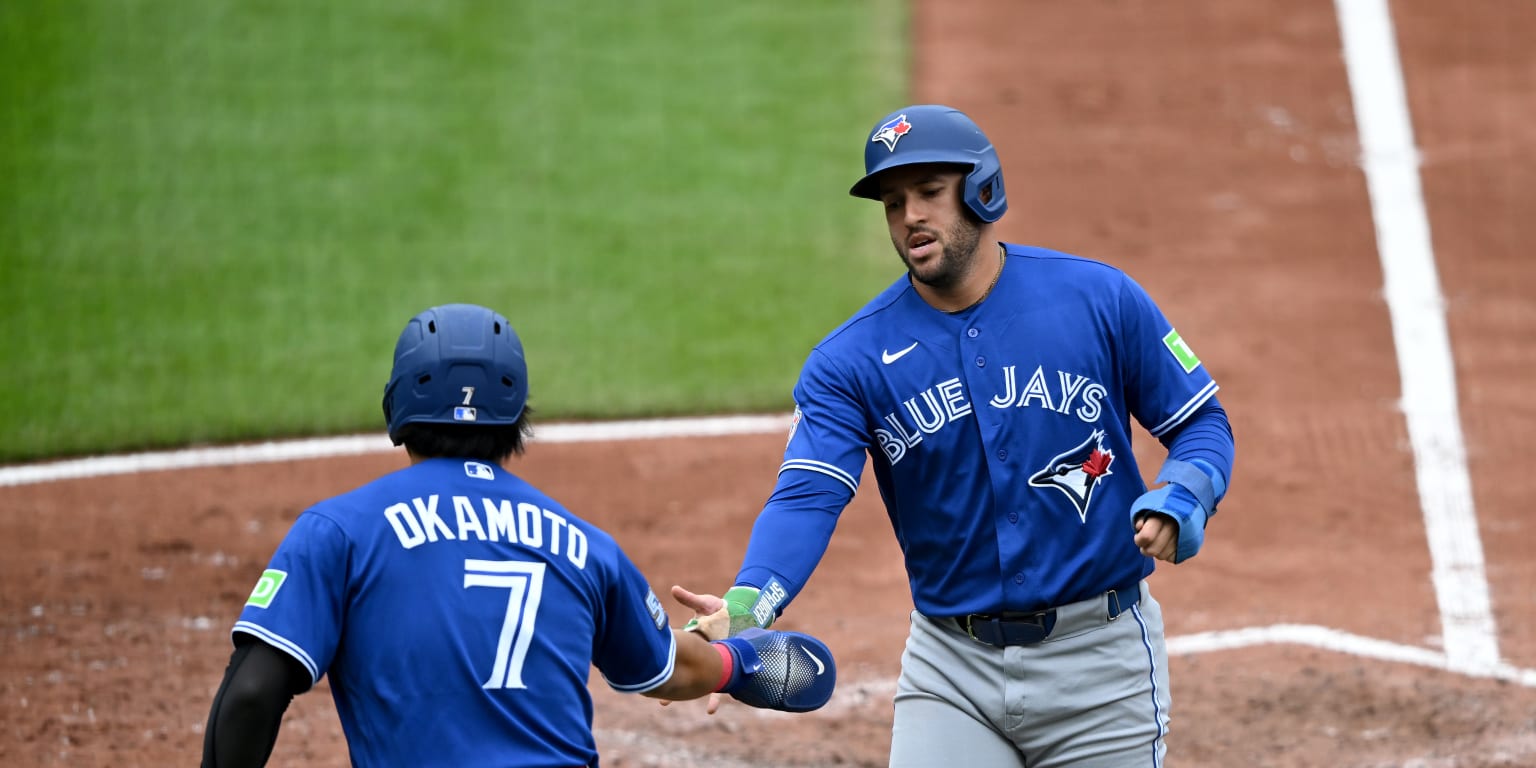
The work done in the offseason was strong, too. Dylan Cease is a true ace, Tyler Rogers is a dream setup man, Kazuma Okamoto was one of the best value deals signed last winter and finding Rule 5 wonder Spencer Miles, dollar for dollar, may have been the move of the offseason.
On paper, those moves aligned the roster with how modern contenders are typically built: front-line starting pitching, specialized late-inning relief, and cost-efficient power or on-base threats around a homegrown core. The structure was intended not just to return to October, but to sustain a multi-year window at the top of the American League.
“When you have expectations to go back [to the World Series] and finish the job, it feels good to have support from the fans to go out and try to do that,” Schneider said, “but it’s frustrating that we didn’t fulfill our end of it.”
The Offense That Never Arrived
How did this happen, then? The Blue Jays, stumbling towards a losing record, have one of the worst offenses in baseball, and it’s because they haven’t found other ways to win.
This season has been one long, frustrating power outage. Vladimir Guerrero Jr. has hit just nine home runs, and in a lineup built for contact around Guerrero as its engine, this has sunk the Blue Jays. Last year’s team could find other ways to win, but it rarely felt like this year’s could.
In a competition structure that increasingly rewards depth of scoring — from longer bullpens to expanded analytics on pitcher usage — a lineup that cannot consistently generate extra-base damage places disproportionate strain on pitching and defense. For Toronto, the lack of power and timely production has not only cost individual games; it has gradually eroded the margin for error that is essential to staying alive in a marathon season.
“I have to learn a lot from this year,” Guerrero said through interpreter Hector Lebron. “It’s a process. Especially when you go to the World Series, that was my goal again this year. You put that pressure on yourself, trying to take your team back to the World Series. It didn’t happen.”
Identity Lost in Eleven Months
Great teams become undeniable, whether it be superstars taking over games or a true team identity, which is so hard to find. Last year’s team had both, in a clear offensive identity and in Vladdy, whose postseason was one of the greatest stretches we’ve seen in Toronto.
“We showed last year we can play all the way into the World Series. This year, we’re not going to the playoffs. We didn’t accomplish our goals,” Max Scherzer said. “It’s frustrating. Whatever words you want to say are fair to say.”
At the highest level, that swing from near-champions to non-qualifiers in consecutive seasons illustrates the competitive reality inside MLB’s framework. The same rules, same schedule length, and same postseason format apply, but small shifts in performance from key players can move an organization from the centre of the sport’s global stage to the periphery of its playoff picture in less than a year.
For players of Guerrero’s and Scherzer’s stature, seasons like 2026 also carry personal implications. Under the sport’s contractual and arbitration structures, sustained production and postseason visibility shape future roles, leadership expectations and, ultimately, how long front offices build around a given core. A missed playoff year does not end that cycle, but it forces hard questions about timelines and windows.
A Fan Base Left with Memory and Frustration
Now, we’re left to look back on just how special 2025 was, fading a full year into the rearview mirror. There may be no better feeling in sports, as a fan, than your ball team making a postseason run. It’s every night, a freight train of momentum no other sport can offer.
On the other side, though, there are few things more frustrating than watching your ball team fall short… because it’s every night. The same frequency that makes baseball’s playoffs uniquely immersive also magnifies disappointment when a team spends the closing weeks of a season playing out the schedule rather than chasing a bracket place.
This, ultimately, is what the other side looks like, from the summit back down to the base of the mountain in just 11 months. For the Blue Jays’ players, staff, and supporters, the coming months will be about translating the lessons of that fall into choices that restore the multiple pathways to winning they enjoyed in 2025.
That’s baseball.
Worth a look
