
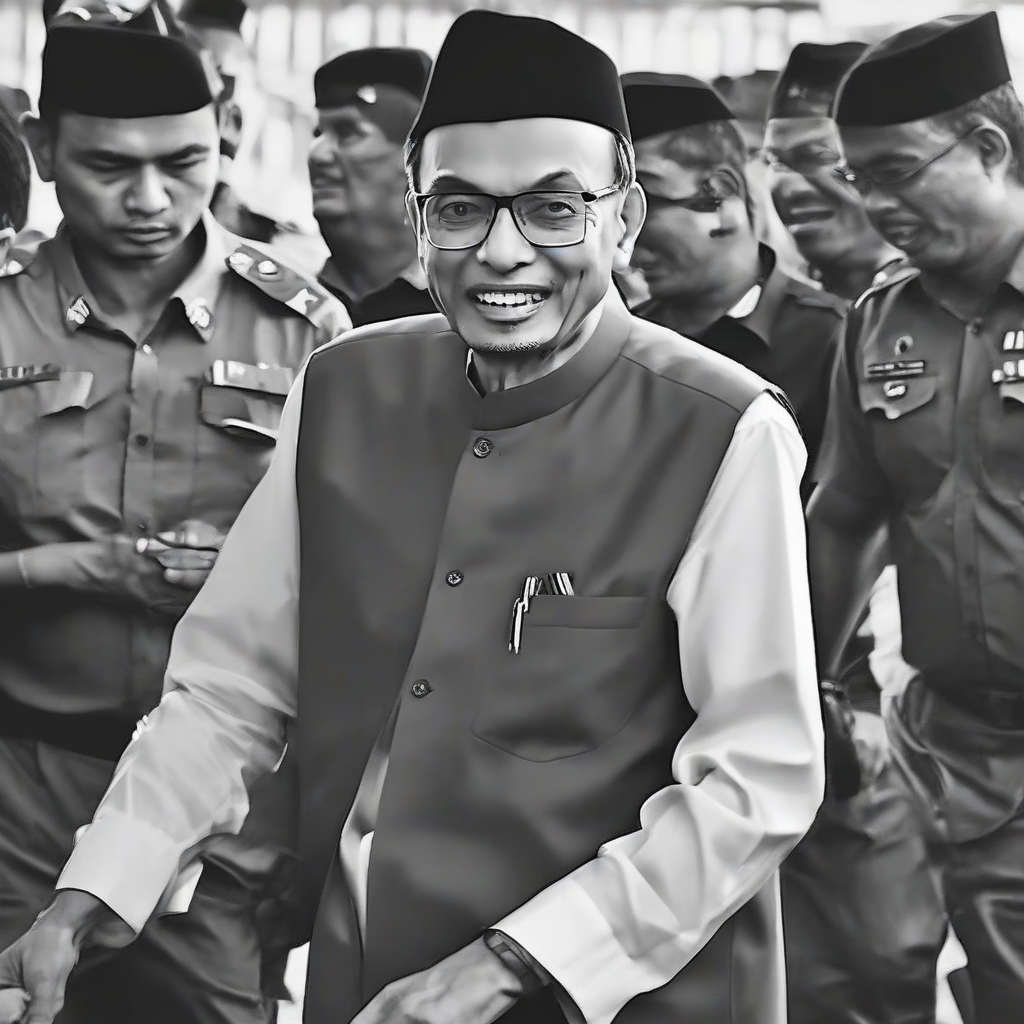
KUALA LUMPUR – Prime Minister Anwar Ibrahim’s Pakatan Harapan (PH) faces a critical juncture as candidates submit nominations for the Negeri Sembilan state election on July 18, following a series of significant losses in previous state polls.
The outcome of the August 1 vote is expected to influence the internal strategies of Malaysia’s three largest ruling parties and could potentially catalyze a realignment between the Barisan Nasional (BN) coalition and the opposition Perikatan Nasional (PN) ahead of the general election due by early 2028.
Internal Party Referendums
The election coincides with a period of intense internal scrutiny for the ruling coalition’s components. The Democratic Action Party (DAP), the largest party within PH, is scheduled to hold its annual congress two weeks after the August 1 vote to determine its continued role in the current administration and in Anwar’s so‑called “unity government.”
This internal review follows a significant defeat in November’s Sabah state election, where PH secured only one of 22 contested seats. During that contest, the DAP failed to defend any of the six seats it had won in 2020, underscoring growing disenchantment among its traditional urban and non-Malay base.
In response, party leadership established a six-month window for the unity government-a coalition of rival parties formed after the 2022 hung Parliament under the framework of Malaysia’s Federal Constitution-to implement reforms and fulfill election pledges to regain the trust of urban and non-Malay voters. Key issues under review include cost-of-living measures, institutional reform and the pace of governance changes promised during the 2022 national campaign.
Simultaneously, Anwar’s Parti Keadilan Rakyat (PKR) and the Prime Minister’s ally UMNO will hold their respective annual assemblies during the same weekend as the DAP congress, turning the post-election fortnight into a de facto confidence test for the governing coalition’s policy direction and leadership arrangements.
Shift in Malay Electoral Alliances
The political dynamics in Negeri Sembilan are being shaped by a growing cooperation between the opposition Parti Islam SeMalaysia (PAS) and BN. PAS, currently the party with the highest number of elected representatives in Malaysia, has offered to cooperate with BN and support an UMNO candidate for chief minister in the central state, in a bid to consolidate the Malay Muslim vote.
This strategy mirrors recent events in Johor, a bellwether state for federal power:
- July 11 Johor election: Perikatan Nasional (PN) contested only 33 of 56 wards, ceding space to BN in key Malay-majority constituencies.
- Support mechanism: PAS urged supporters to back BN candidates in the remaining 23 contests to promote Malay Muslim unity and avoid splitting the conservative vote.
- Result: BN won 48 seats, an increase from 40, while PH seats dropped from 12 to eight, reinforcing the vulnerability of multiethnic coalitions in Malay-dominated areas.
- Demographic trend: BN and PN combined secured nine out of 10 votes in seats where the electorate was over 80 percent Malay, signalling a structural tilt that could be replicated nationally.
While no formal deal has been publicly announced for Negeri Sembilan, BN stated on July 15 that it would contest only 25 of the 36 available seats. This unilateral reduction, widely read as space-making for PAS and PN, has caused friction among leaders of the Malaysian Chinese Association, a founding member of BN, who view the move as a tacit pact with the Islamist party that may dilute BN’s multiracial branding.
Implications for General Election 2028
A failure by PH to secure a third consecutive term in Negeri Sembilan may accelerate a formal electoral pact between PN and BN for the 16th general election. With 123 of the 222 parliamentary seats being Malay-majority, such an alliance would likely be the favorite to win national control under Malaysia’s first-past-the-post system, particularly if opposition parties can agree on one-on-one contests against PH.
However, internal volatility within PN may complicate this alignment. PAS has increasingly dominated the coalition, leaving former Prime Minister Muhyiddin Yassin’s Parti Pribumi Bersatu Malaysia sidelined. In its place, Parti Wawasan Negara, led by former Bersatu No. 2 Hamzah Zainudin, is emerging as a more moderate Malay nationalist partner for PAS and a possible alternative broker in any eventual seat-sharing talks with BN.
Adib Zalkapli, managing director of advisory firm Viewfinder Global Affairs, noted the potential for a fragmented Malay vote to benefit the current administration.
“If BN allies with PN for the general election, PH can still pray and hope to win pluralities in multi-cornered contests if Bersatu can win enough Malay votes. A crowded race among Malay parties could still mean PH emerges as the largest bloc and give Anwar a chance at a second term,” Zalkapli told The Straits Times.
The potential for future leadership disputes remains high, as UMNO president and Deputy Prime Minister Zahid Hamidi, PN chairman Samsuri Mokhtar, and parliamentary opposition leader Hamzah Zainudin could all potentially vie for the premiership in a post-election hung Parliament scenario, complicating coalition bargaining and policy continuity.
The 2023 Precedent
During the 2023 simultaneous state polls, a PH-BN pact ensured that only one candidate from the alliance contested each seat against PN. While PN dominated three northern states-including a clean sweep of all 32 seats in the Terengganu assembly-the results in other states were mixed and revealed sharp regional divides in support for Anwar’s administration.
In Negeri Sembilan, BN performed strongly, winning 14 of the 16 seats it contested, though this success was partially attributed to support from PH voters who backed BN in the interest of preserving the unity government at the federal level. If BN exceeds 14 seats in the upcoming vote, it may provide the necessary justification for the coalition to abandon its reliance on PH’s voter base in favor of a realignment with PAS, with knock-on effects for federal policymaking and the stability of reform initiatives.
Candidates are currently submitting their nominations on July 18 ahead of the August 1 polling date, in a contest that has become an early proxy battle over the shape of Malaysia’s next governing coalition and the trajectory of Anwar’s reform agenda.
Keep reading
- Urban Infrastructure Resilience: How European and Asian Megacities Are Adapting to Extreme Climate Oscillations in 2026
- UN General Assembly 2026 Framework on Autonomous Systems: International Diplomacy Faces Algorithmic Governance
- Trump endorses embattled Netanyahu ahead of Israeli election (globallypulse.com)
