
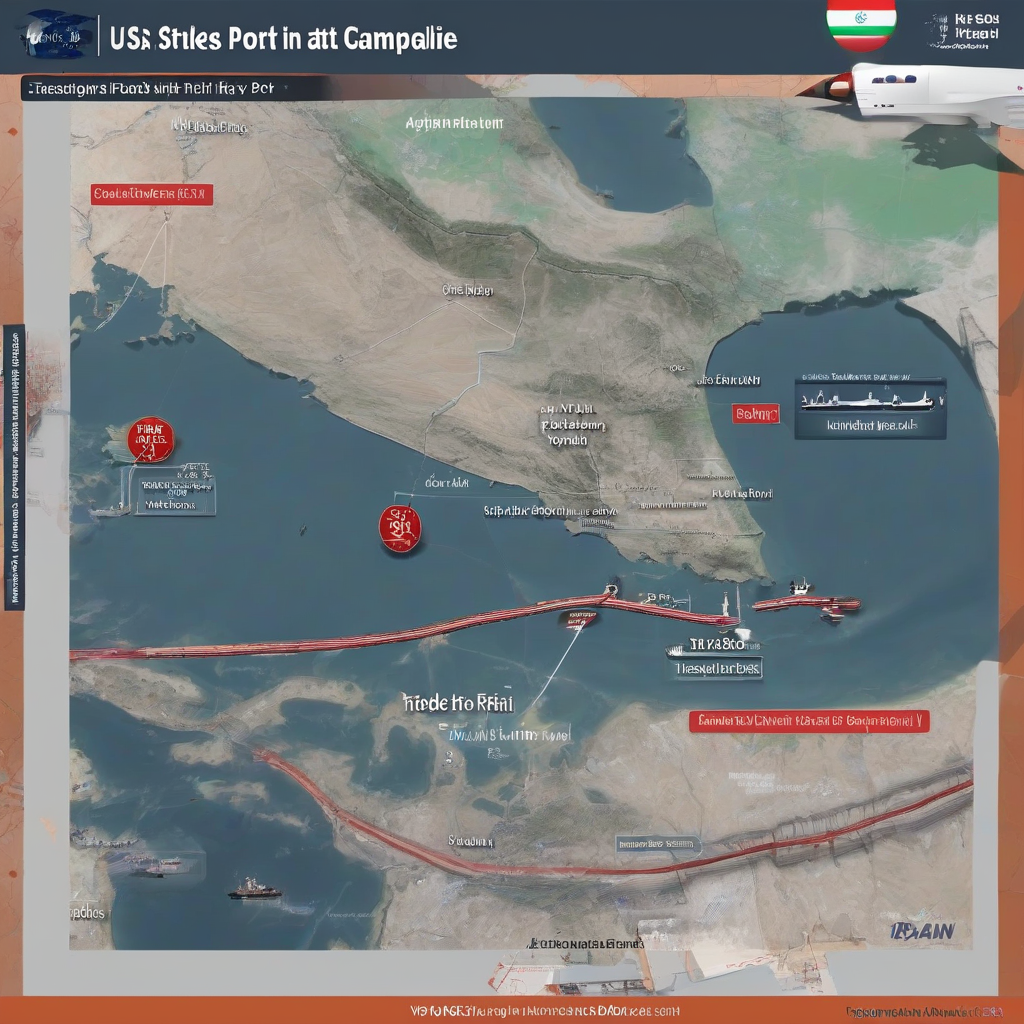
WASHINGTON – The United States expanded its aerial campaign against Iran on July 17, striking critical infrastructure in southern Iran as the two nations battle for control of the Strait of Hormuz. The operation targeted bridges and port facilities, signaling an escalation in President Donald Trump’s strategy to pressure Tehran into reopening the vital maritime chokepoint.
The strikes follow the collapse of an interim ceasefire agreed upon in June. The region has now entered a period of sustained tit-for-tat engagements, with the U.S. focusing on infrastructure degradation while Iran targets U.S.-allied nations across the Middle East.
Strategic Targets in Southern Iran
Overnight operations into July 17 focused on Iran’s southern Hormozgan province, a corridor that links key Gulf oil terminals to inland industrial centers. U.S. Central Command said dozens of targets were struck during the mission, which concluded at dawn, describing the campaign as calibrated to degrade Iran’s ability to project power into the Strait of Hormuz.
In the coastal city of Bandar Khamir, airstrikes hit multiple bridges that connect the port area to the main coastal highway. Iranian state television reported that the attacks killed at least seven people and disrupted civilian traffic, while local officials accused Washington of deliberately targeting dual-use infrastructure.
Additional strikes targeted the Chabahar port on the Gulf of Oman. A surveillance tower at the facility appeared to collapse, an image later shared by Secretary of Defense Pete Hegseth. The tower had previously been circulated on social media by activists and, according to Iranian officials, was used to monitor shipping lanes and port security rather than to direct military operations. Visuals from the scene showed extensive dust plumes rising over the harbor area.
While Iranian state media acknowledged a third round of strikes on the facility, officials described the tower as a tool for overseeing commercial traffic. The Chabahar port is a critical trade route for landlocked Afghanistan and has been operated by Iran with support from India under a bilateral development agreement, even as Western sanctions have tightened around the Iranian economy. However, the paramilitary Revolutionary Guard also maintains operations at the site, underscoring the blurred line between commercial and security infrastructure in Iran’s port network.
Secretary of Defense Pete Hegseth. (Source: Associated Press)
Regional Retaliation and Mediator Targets
Iran responded to the strikes by launching missile barrages against several U.S. allies, widening a confrontation that regional diplomats had hoped to contain. Qatar, which has served as a key mediator alongside Pakistan in attempts to end the conflict and has hosted several rounds of indirect talks between Washington and Tehran, was targeted twice on July 17.
Qatar’s Interior Ministry reported that falling debris from intercepted missiles wounded one child. Residents reported hearing explosions as air defenses engaged the incoming fire near critical energy and aviation infrastructure, briefly disrupting commercial flights and prompting renewed calls in Doha for de-escalation.
The retaliatory campaign extended to other regional partners:
- Bahrain and Kuwait: Targeted by Iranian missiles early July 17, hours after both governments reaffirmed their participation in the U.S.-led maritime security coalition in the Gulf.
- Northern Iraq: Explosions were reported in Irbil and Sulaymaniyah in the semiautonomous Kurdish region as air defenses intercepted incoming fire near coalition facilities and logistics hubs supporting operations against Iran.
A billboard depicting US President Donald Trump lying on what appears to be a coffin at Islamic Revolution Square in downtown Tehran. (Source: Associated Press)
Conflict Over the Strait of Hormuz
The current escalation is rooted in the closure of the Strait of Hormuz, which Tehran effectively shut to shipping traffic after the U.S. and Israel launched a war on Iran on February 28. That move challenged long-standing principles of freedom of navigation under international maritime law and immediately triggered emergency consultations among Gulf producers and consumer nations in Asia and Europe.
The strait is one of the most critical energy arteries in the world, through which approximately 20% of all traded oil and natural gas typically passes during peacetime. Iran has used its control of the waterway as primary leverage in negotiations, arguing that it will not fully reopen the channel until attacks on its territory cease and sanctions relief is addressed within a wider political framework.
Maritime data from Lloyd’s List Intelligence indicates the economic impact of the closure:
- Cargo volume: Week-to-week shipments dropped by nearly 25% at the beginning of July, according to shipping manifests and tanker tracking data.
- Shipping behavior: Many oil shippers have ceased transiting the strait or are operating with location devices turned off to avoid detection, raising concerns among insurers and regulators over safety and transparency.
- Alternative routes: While energy shipments via pipelines on the Arabian Peninsula have increased, they are insufficient to offset the decline in maritime traffic, driving up freight rates and complicating government energy security planning.
Iran controls the Strait of Hormuz currently, using it as leverage against US attacks. (Source: Getty)
U.S. Naval Blockade and Policy
President Trump has reiterated his intent to target Iranian power stations and bridges to compel Tehran to ease its hold on the strait. During a primetime address to the American public, Trump stated the campaign was succeeding, framing the strikes as part of a broader effort to protect global shipping and uphold the navigation rights enshrined in the U.N. Convention on the Law of the Sea, which Washington cites even though the United States has not formally ratified it.
“We are likewise winning big in Iran, and you will see the fruits of that labour very, very shortly,” Trump said.
To further isolate the Iranian economy, the U.S. has reimposed a naval blockade on Iranian ports to halt crude oil shipments, backed by new Treasury Department designations on shipping companies and insurers. U.S. Central Command reported that forces have redirected three commercial vessels attempting to bypass the blockade. One vessel was disabled for non-compliance, and another was boarded by U.S. forces to ensure full compliance, actions that senior administration officials argue are consistent with long-standing U.S. sanctions enforcement practices in maritime zones such as the Persian Gulf and the Gulf of Oman.
Diplomats say the confrontation is now testing not only regional security arrangements but also the capacity of existing export control and sanctions regimes to manage a crisis in a chokepoint that underpins the global energy system. With indirect talks stalled and both sides escalating, mediators warn that any miscalculation at sea or in the air could rapidly draw in additional powers and further strain already fragile regional governance structures.
Worth a look
