
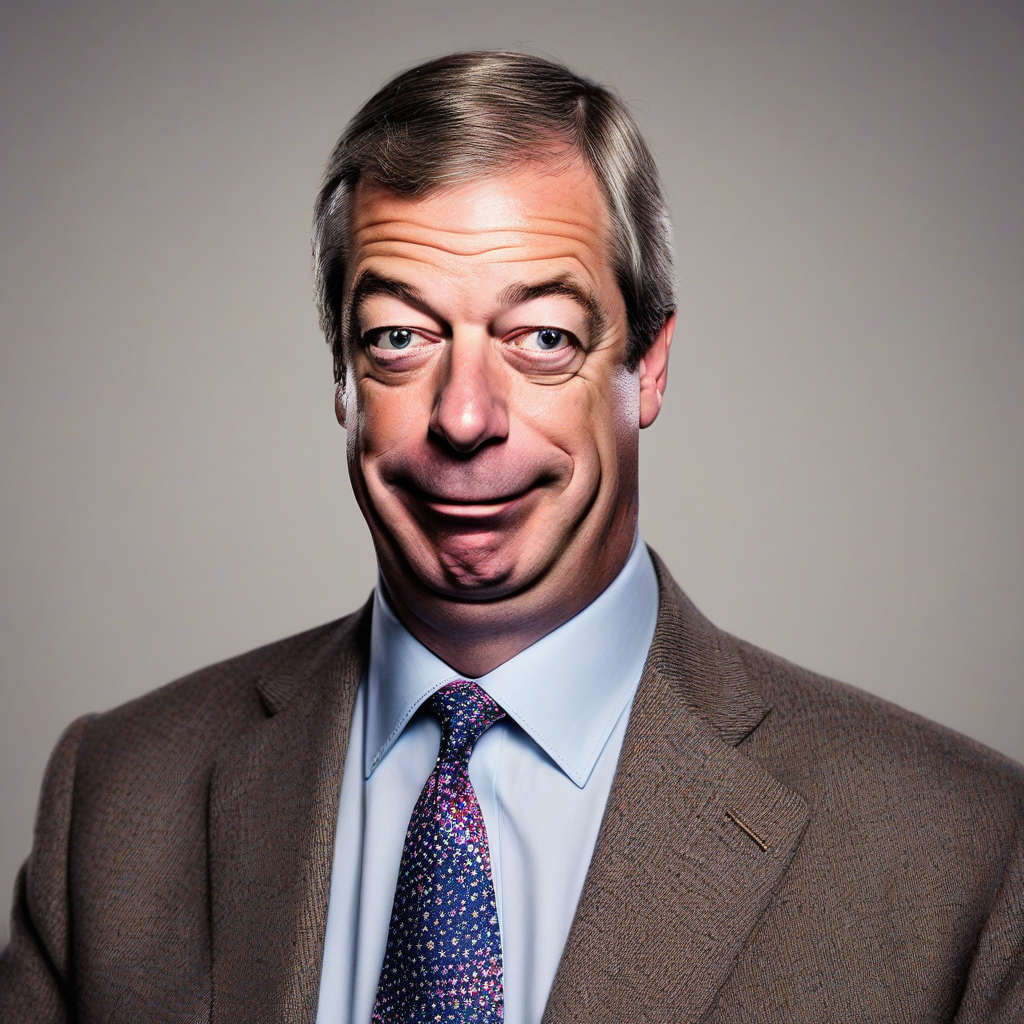
LONDON – Nigel Farage has claimed that critics questioning his financial arrangements are engaging in a “coordinated pile-on” designed to dismantle Reform UK.
Speaking at the Conservative Political Action Conference GB (CPAC GB) in east London’s Docklands, the Reform leader alleged he has been “dehumanised in the most extraordinary way” following the disclosure of significant financial gifts.
The remarks come as Farage faces two separate parliamentary standards inquiries into his financial support. The scrutiny intensified after reports emerged in April that he received a £5m gift from crypto billionaire Christopher Harborne prior to the last election.
Financial Inquiries and Regulatory Scrutiny
The parliamentary standards investigations focus on two distinct areas of Farage’s financial backing:
- Non-disclosure of funds: An inquiry into the failure to make the £5m gift from Christopher Harborne public.
- Associated funding: A second investigation into allegations of financial support from George Cottrell, a convicted fraudster and crypto gambler described as a close friend of Farage.
The probes are being conducted under the House of Commons code of conduct, which requires MPs to register significant donations and benefits in the Register of Members’ Financial Interests and to declare any relevant financial interests when participating in parliamentary business.
Beyond Farage’s personal finances, police are investigating a donation made to Robert Jenrick during his campaign for the Conservative party leadership. Detectives are reviewing allegations that a £37,500 donation originated from a foreign donor, despite five separate warnings regarding the source. Jenrick has denied breaking any electoral laws, which prohibit overseas funding of UK political parties and campaigns under the Political Parties, Elections and Referendums Act overseen by the Electoral Commission.
Political Attacks and the “Uniparty”
Addressing a crowd that included former Prime Minister Liz Truss and US influencer Jack Posobiec, Farage broadened the dispute beyond his personal finances, casting it as an attack by the political establishment. He targeted the leadership of the UK’s primary political parties, labelling Labour leader Andy Burnham and Conservative leader Kemi Badenoch as leaders of what he called the “uniparty.”
Farage specifically targeted Burnham on the day he officially assumed the Labour leadership, describing the Makerfield MP as a “dud” and arguing that both main parties are failing to offer meaningful change on issues such as immigration, tax and constitutional reform.
“The British public have had enough of this game of musical chairs that is taking place in Downing Street,” Farage said. “There must be an immediate general election so the country can decide.”
Farage compared the scrutiny he is facing to political tactics used in the United States, telling the audience, “Americans will remember this playbook, won’t they? This happened in America … I found myself and my colleagues being judged to be guilty, guilty every single day.” He framed the investigations as part of a broader trend of lawfare and institutional pressure against insurgent right-wing movements.
The Clacton Byelection
The speech coincided with the closing of nominations for the Clacton byelection, a contest Farage has sought to turn into a referendum on his leadership and Reform UK’s future. The byelection was triggered by Farage’s decision to resign as an MP amid the ongoing investigation into his finances, a move he has presented as an attempt to seek a fresh mandate from voters.
While major Westminster parties have boycotted the contest, describing it as a “circus” and a “fake byelection,” Farage is facing a field of candidates that includes right-wing activist Laurence Fox and satirical candidate Count Binface, underlining the highly personalised and unconventional nature of the race.
Farage described the decision to run as a personal gamble, stating, “I’ve taken a punt, because I like a gamble. The people of Clacton can decide whether they back me or whether they back the establishment.”
Reform UK has characterized the contest as a “defining moment for our movement,” issuing urgent WhatsApp messages to activists across England to mobilize in the Essex town and portraying the seat as crucial to maintaining momentum after the general election.
Regional Performance and Party Funding
Farage cited the recent election of Colin Sutton as the police and crime commissioner for Norfolk as evidence of Reform UK’s growth and its ability to convert protest votes into control of public offices. Sutton, a former murder investigator, won the seat with a majority of 14,299, though voter turnout was 17%, highlighting both the party’s organisational reach and the fragility of its mandate.
Farage claimed the party is now the dominant force in centre-right politics, stating: “We’ve managed to raise more money last year than any other political party, and we are genuinely doing everything we can to get ready to fight that next general election, whenever it begins, and to win it.” His fundraising boasts come as the party’s reliance on a small number of high-net-worth donors is being tested by the standards inquiries now under way.
However, internal challenges persist. A party figure in north-west England suggested the focus on Clacton has come at the expense of the Greater Manchester mayoralty election, where Reform had hoped to build a broader regional base. Recent polling placed Reform UK in third place for that contest, trailing behind the Green Party and raising questions about whether its national profile can be translated into consistent performance across devolved and local races.
The parliamentary standards inquiries into Farage’s financial disclosures remain open, with any findings likely to have significant implications not only for his personal standing but also for Reform UK’s efforts to shape the rules and rhetoric of post-Brexit politics.
Related reading
- Urban Infrastructure Resilience: How European and Asian Megacities Are Adapting to Extreme Climate Oscillations in 2026
- UN General Assembly 2026 Framework on Autonomous Systems: International Diplomacy Faces Algorithmic Governance
- Shawn Oliver suspends lieutenant governor campaign following OUI arrest (globallypulse.com)
