
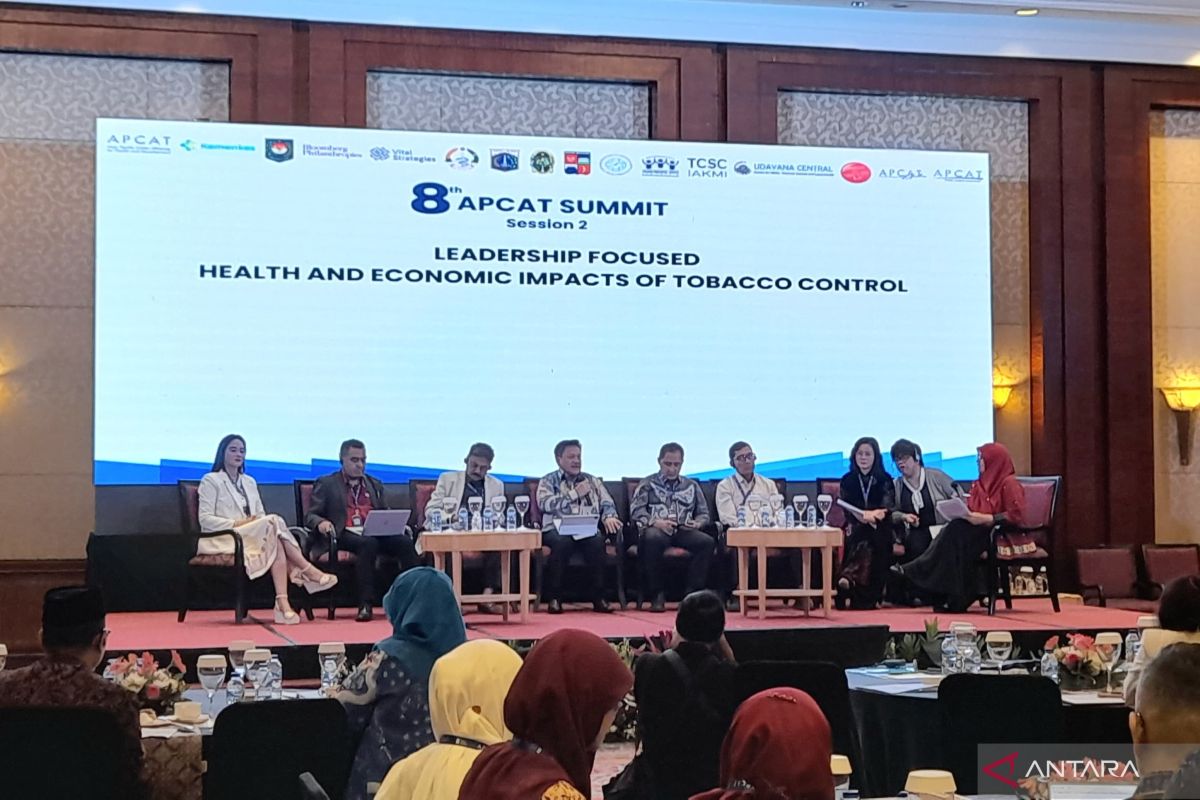
JAKARTA – Health Minister Budi Gunadi Sadikin said Indonesia will seek changes to national law to tighten tobacco control, outlining plans to expand graphic health warnings, restrict advertising, ban sales of loose cigarettes, and regulate e‑cigarettes during a virtual address to the 8th Asia-Pacific Cities Alliance for Health and Development (APCAT) Summit in Jakarta.
The push, delivered to mayors and health officials from across the region, ties tobacco control to the country’s broader effort to reduce preventable deaths and disease. Sadikin framed the initiative as a coordinated program to curb both demand and supply, with local governments and community networks expected to play central roles.
What the minister proposed
In his remarks, Sadikin said the government’s planned legal package would target multiple points in the tobacco chain. He stated:
- Expand graphic health warnings
- Restrict advertising
- Ban the sale of loose cigarettes
- Regulate e‑cigarettes
“To reduce both the supply and demand of tobacco, a major strategy is needed, implemented through partnerships. First, we plan to revise the national law to expand graphic health warnings, restrict advertising, ban the sale of loose cigarettes, and regulate e-cigarettes,” Sadikin said.
Revising national law is a formal process that would move beyond ministerial regulation, signaling an intent to set nationwide standards rather than relying solely on local ordinances. Any overhaul would have to align with Indonesia’s overarching Health Law framework, which governs how tobacco control measures are anchored in statute and implemented across provinces.
Sadikin’s reference to regulating e‑cigarettes comes as Indonesia weighs how to treat newer nicotine products alongside combustible tobacco, amid concerns about youth uptake and aggressive marketing.
Scale of the problem cited
Sadikin underscored the public health burden with figures presented in his address:
- Over 80 percent of active smokers live in low- and middle-income countries, including Indonesia.
- In Indonesia, tobacco is the third leading risk factor for death.
- Some 70 million Indonesian adults smoke.
- 9.1 percent of children have tried smoking.
- “These numbers are still far from the National Medium-Term Development Plan target of 8 percent,” he added.
By tying his remarks to the National Medium-Term Development Plan, Sadikin cast tobacco control as a core development issue rather than a standalone health campaign, signaling that smoking prevalence will be a benchmark for judging the government’s broader performance on human capital and productivity.
Local action and cessation support
The minister said the government will expand smoke-free areas and strengthen quit support at community health centers (puskesmas). He also praised municipal leaders already enforcing smoke-free rules and urged others to follow.
- “I would like to thank all mayors in Indonesia who have enacted smoke-free regulations, and encourage other regions to follow suit,” he said.
- The ministry will provide smoking cessation services at puskesmas to increase access to counseling and treatment at the primary-care level.
Officials say the combination of smoke-free bylaws, enforcement by local authorities, and accessible cessation services is intended to give subnational governments clearer tools as national standards tighten. The Health Ministry has also previously supported measures such as bans on single-stick cigarette sales, seen as a way to curb children’s access to cheap tobacco.
Cross-sector collaboration highlighted
Murti Utami, the Health Ministry’s Director General of Disease Control, emphasized that curbing tobacco use is part of a wider effort to prevent non‑communicable diseases amid high rates of conditions such as hypertension. She noted the importance of collaboration across sectors and pointed to the role of families and community groups in prevention, saying networks such as the family empowerment movement (PKK) team can help educate the public about smoking’s dangers and reduce prevalence.
Utami’s remarks underscored that the ministry wants line ministries, schools, and community organizations to carry consistent messaging, rather than leaving tobacco control solely to health officials. That approach mirrors regional efforts under platforms like APCAT to embed tobacco policies in urban planning, education, and social protection programs.
Regional forum setting
The APCAT Summit brought together mayors, health leaders, and policymakers from across the Asia‑Pacific to address tobacco consumption and promote healthier urban environments. Indonesian officials used the platform to align local smoke‑free regulations, cessation services, and community education with an anticipated national legal push.
For Jakarta, the forum doubled as a diplomatic stage to show that domestic reforms are being shaped with regional best practices in mind, as neighboring countries debate higher excise taxes, plain packaging, and tighter advertising rules.
Sadikin said the Health Ministry will pursue a legislative revision covering health warnings, advertising, loose cigarette sales, and e‑cigarette rules. Details of the draft have yet to be released, but officials indicated that once the legal changes are in place, local governments will be expected to bring their bylaws and enforcement practices into line with the new national baseline.
Related reading
