
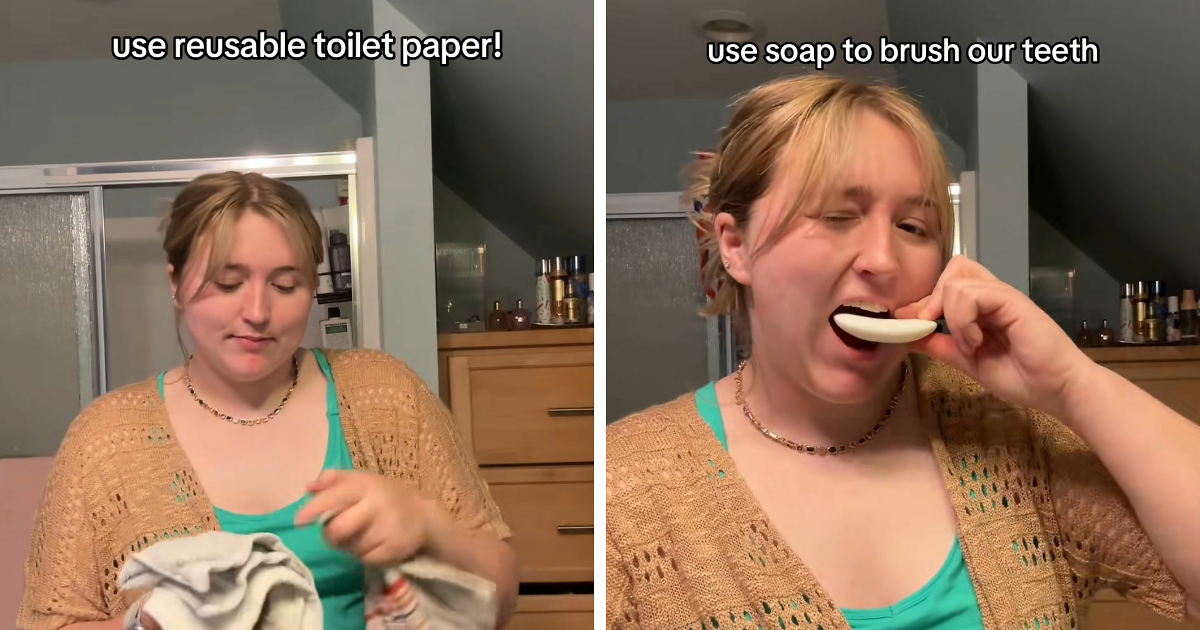
The emergence of viral social media content detailing extreme cost-cutting measures in low-income households has highlighted a critical intersection between socioeconomic instability and public health. A series of videos shared by a mother known as Jaz on TikTok, which described her family’s “survival strategies,” has sparked an intense debate regarding the threshold between resourcefulness and dangerous sanitary practices.
The content, titled “Things my low-income family of 6 does that would drive a high-income family crazy,” outlines a domestic environment where basic hygiene products are treated as shared communal assets. While the intention was to showcase the realities of living on a limited budget, the practices described raise significant concerns regarding infection control and population-level health risks. Public health officials and poverty campaigners say the video also exposes the widening gap between what clinical guidelines define as minimum hygiene standards and what many low-income households can realistically afford.
The Clinical Risks of Shared Personal Care Tools
Among the most contentious revelations was the claim that the household shares a single toothbrush and razor. “My family shares the same toothbrush… It saves us money because why would I buy more than one when this one has worked perfectly for all of us for more than a year,” the mother stated. From a public health perspective, this practice bypasses fundamental barriers against the transmission of pathogens and directly contradicts basic personal-hygiene advice issued by health authorities, which recommend individual items for anything that can come into contact with blood or bodily fluids.
The risks associated with sharing oral care tools extend beyond simple saliva exchange. “Brushing sometimes causes the gums to bleed, which exposes everyone you share your toothbrush with to blood stream diseases. This means that by sharing a toothbrush, you could also be sharing blood, which is a lot riskier than just swapping saliva,” noted Dr Ben Atkins, dentist and trustee of the Oral Health Foundation. He further warned, “There are many hundreds of different bacteria and viruses in our mouths and people sharing a toothbrush could be passing these on to others.” In households where children, the elderly, or immunocompromised people live alongside healthier adults, that elevated risk can translate into more frequent infections and higher demand on already stretched primary-care services.
Similarly, the sharing of razors introduces the risk of cross-contamination of bloodborne pathogens and skin-borne infections. When micro-abrasions occur during shaving, the razor blade can act as a vector for bacteria and viruses between users, potentially leading to severe dermatological or systemic infections. These are the same principles that sit behind workplace and healthcare regulations on sharps and blood exposure, under frameworks such as the U.S. Occupational Safety and Health Administration’s standards on bloodborne pathogens, which are designed to prevent exactly this kind of cross-contamination in institutional settings.
Pathogen Accumulation in Communal Textiles
The use of a single bath towel for an entire family of six further compounds the risk of bacterial proliferation. The original report references a microbiologist’s findings on communal towel usage, where lab tests revealed a “horrific soup of dead skin cells and bacteria.” While many households stretch towels between washes during periods of high energy and water costs, experts distinguish between occasional reuse by one individual and continuous sharing by multiple people over time.
A shared towel can harbor substantial loads of staphylococcus bacteria, specifically golden staph, which is known to cause infections when introduced through broken skin. While personal towels are not sterile, the sheer volume of microbial load on a communal towel significantly increases the probability of infection spread within a household. In crowded housing, this can create a cycle where minor cuts, insect bites, or shaving nicks become entry points for more serious skin infections that require clinical treatment and time off work or school.
The risk profile for these household practices can be summarized as follows:
| Shared Resource | Primary Pathogen/Risk | Potential Health Outcome |
|---|---|---|
| Razors | Bloodborne pathogens / Bacteria | Skin infections, systemic bloodborne diseases |
| Toothbrushes | Oral bacteria / Viral loads | Gingivitis, transmission of bloodstream diseases |
| Communal Towels | Staphylococcus aureus (Golden Staph) | Skin abscesses, cellulitis, wound infections |
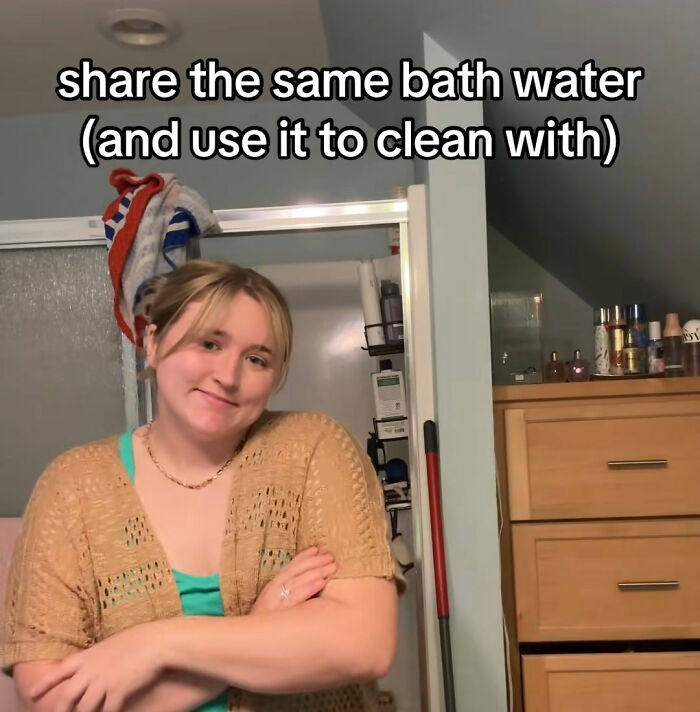
| Shared Bathwater | Fecal coliforms / Skin flora | Cross-contamination, secondary skin infections |
Environmental Health and Sanitation Failures
Perhaps the most alarming claim involved the family’s approach to waste management. “My family only flushes the toilet one time a week, on Fridays,” the mother claimed, referring to the practice as “flushing friday.” The videos frame this as a deliberately chosen “hack” to keep water bills down, a framing that many viewers saw as normalizing practices that public-health authorities have long warned against.
Infrequent flushing allows human waste to stagnate, creating a breeding ground for harmful bacteria and viruses. This lack of regular sanitation increases the concentration of pathogens in the toilet bowl and on surrounding surfaces. Furthermore, when the toilet is eventually flushed after a week of accumulation, the resulting aerosolized plume can release concentrated contaminated droplets into the bathroom air, facilitating the spread of microbes to other surfaces and people. Infection-control guidance routinely used in hospitals and care homes-such as closing the lid before flushing and cleaning high-touch surfaces-exists precisely to reduce these risks, underscoring how far the reported household practices sit from accepted standards.
@jazminer17 yesterday was flushing friday!!!!! meant to post this the other day!!! this saves us so much money! #flushingfriday#savingmoney#lifehacks#jazsmith#jazminer17♬ original sound – jaz
Hygiene Poverty and Systemic Health Equity
While viewers reacted with disgust, noting that “Sorry but disgusting is the word” and “Low income doesn’t say that you have to be unhygienic,” the situation underscores the systemic issue of hygiene poverty. This occurs when individuals or families cannot afford the most basic sanitary products, leading to a compromise in health and dignity. Public-health agencies increasingly describe hygiene as a core component of the “social determinants of health,” placing it alongside housing, nutrition, and education as a factor that shapes long-term outcomes.
When basic necessities like toothpaste and toilet paper become financial burdens, vulnerable populations may resort to dangerous alternatives, such as brushing teeth with soap or reusing absorbent materials. This is not merely a matter of personal choice but a reflection of economic disparities that impact health outcomes at a population level. It also raises questions for policymakers about how far existing social-protection schemes, from food assistance to housing subsidies, actually account for the recurring cost of hygiene items, which are rarely provided free of charge.
The public health implications of hygiene poverty include:
- Increased incidence of preventable skin and oral infections.
- Higher rates of community-acquired infections within high-density, low-income housing.
- Psychological stress and social stigmatization, which can further discourage individuals from seeking medical care.
- Greater burden on primary healthcare systems to treat advanced infections that could have been prevented with basic hygiene.
The tension between survival-driven resourcefulness and medical safety highlights the need for improved access to basic sanitary goods and the role of national public health infrastructure in mitigating the risks associated with extreme poverty. Global guidance, including that from the World Health Organization, already frames safe water, sanitation and hygiene as essential for preventing infectious disease, but domestic policy decisions on water pricing, welfare benefits and housing standards ultimately determine whether those principles can be met in homes like Jaz’s. Without systemic interventions, the gap in health equity will continue to manifest in dangerous domestic practices that jeopardize the wellbeing of entire households and, in turn, place additional strain on the wider health system.
Related reading
