
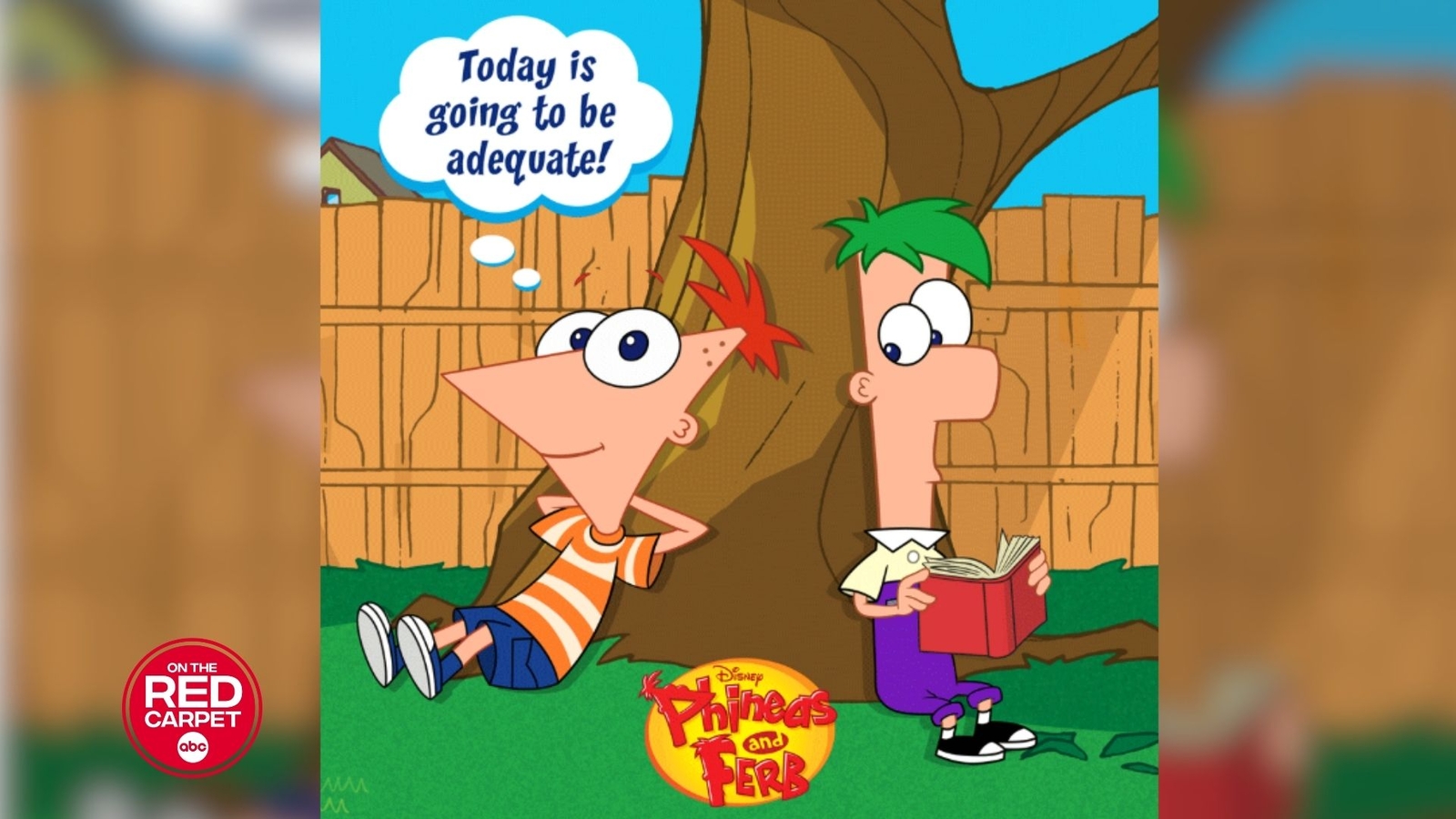
LOS ANGELES – Disney Branded Television is moving forward with a new “Phineas and Ferb” movie from co-creators Dan Povenmire and Jeff “Swampy” Marsh, built around an alternate-timeline premise that reconfigures the franchise’s central relationship: what happens if the two lead characters never meet.
The project, announced with story details and returning voice cast, is set to stream on Disney+ and air on Disney Channel. Production is scheduled to begin in 2026.
The film’s narrative engine centers on time travel and a family-origin disruption. According to the story summary provided, “Dr. Doofenshmirtz’s latest timetravel experiment backfires, erasing the moment Phineas’ mom meets Ferb’s dad – meaning the boys never become brothers, and every day is merely adequate. As reality unravels and the future hangs in the balance, Phineas and Ferb must restore the timeline before it’s too late.”
For Disney, the announcement further formalizes a dual-platform strategy for branded animation-developing franchise titles that can be windowed across direct-to-consumer streaming and linear cable, with the same property positioned for both on-demand discovery and scheduled programming. That strategy continues to unfold against a U.S. media landscape shaped by federal oversight of broadcast and cable carriage via the Federal Communications Commission and by consumer-protection scrutiny of large streaming platforms.
Franchise expansion across streaming and linear
The new movie keeps Povenmire and Marsh in the creative driver’s seat, with both creators describing the thematic focus as an explicit creative priority rather than a simple format extension. It also marks a fresh feature-length addition to a series that has been part of Disney’s animation portfolio since 2007, with multiple seasons, specials and prior films already in circulation on Disney Channel and Disney+.
“We’ve always wanted to explore a story centered on family and unconditional love, preferably in a way that’s bold and sentimental yet classically funny,” Povenmire and Marsh explained.
In a second statement, the creators added: “We’re grateful to Ayo and her team for giving us the runway to expand Danville and take these characters to a whole new level.”
Ayo Davis, president of Disney Branded Television, framed the film as an opportunity to extend the world-building beyond the series’ typical structure while maintaining the creative signatures associated with the original team. Davis said, “This movie gives Dan and Swampy the chance to stretch that world even further and play with what happens when everything gets turned on its head.”
While Disney did not provide a release date, the distribution plan-Disney+ streaming paired with a Disney Channel airing-signals an intent to treat the film as a cross-portfolio asset, with the flexibility to serve different audience behaviors: on-demand consumption on streaming and broader household reach through linear. For media buyers and regulators alike, the move underscores how a single animated title can be programmed across different business models while still falling under the same corporate compliance and standards regimes.
Alternate timelines as a structural choice
The film’s central “what if” setup uses the franchise’s established character dynamics as a point of disruption: the story removes the event that makes Phineas and Ferb brothers, then treats the resulting “merely adequate” days as the narrative baseline.
From an animation production standpoint, alternate-timeline stories can offer practical and creative advantages: they allow a property to re-stage familiar relationships in a new configuration while remaining within the same recognizable brand world. In this case, the summary makes clear that the stakes are not just comedic inversion but a time-pressure restoration plot, with “reality” unraveling and the future threatened.
For a long-running series with a global child and family audience, the choice also gives the creative team room to revisit core ideas about blended families, identity and belonging without departing from the show’s established tone. Disney’s announcement did not specify whether the movie will be a standalone entry or tied to broader franchise continuity beyond the scenario described.
Returning cast and creator voice roles
Disney said the movie will bring back a core group of voice performers tied to the franchise’s central characters, including both creators in their on-screen roles. Maintaining the legacy cast is particularly important for a show with an existing multigenerational fan base and syndicated presence, where continuity of voices can be as significant as visual style.
The returning cast listed includes:
- Vincent Martella as Phineas
- David Errigo Jr. as Ferb
- Ashley Tisdale as Candace
- Alyson Stoner as Isabella Garcia-Shapiro
- Dan Povenmire as Dr. Heinz Doofenshmirtz
- Jeff “Swampy” Marsh as Major Francis Monogram
The announcement did not include additional casting, voice direction, writers beyond the co-creators, or credits for animation production vendors. Those details typically follow later in the production cycle, once animation studios, music departments and international dubbing partners are formally locked.
Near-term programming: new episodes dated for January
Alongside the movie news, Disney set a specific near-term release date for television: new episodes of “Phineas and Ferb” will debut on Disney+ on January 17, 2026. The date places the show early in Disney’s first-quarter slate, a period closely watched by advertisers and platform partners as households reset viewing routines after the year-end holidays.
By pairing an imminent episodic rollout with a movie announcement, Disney positions the franchise in both the short-cycle cadence of series drops and the longer-cycle pipeline of animated features, which typically require extended production timelines. The company did not state the number of episodes in the January launch or whether episodes will also air on Disney Channel, leaving room for scheduling decisions closer to premiere as competitive lineups and audience data evolve.
Corporate oversight, content standards and platform alignment
The announcement identifies Disney Branded Television as the relevant business unit through Davis’ involvement as president, reflecting the division’s role in greenlighting and steering franchise titles targeted to family audiences across Disney’s platforms. That includes aligning content with internal standards and practices on issues such as age-appropriateness, advertising adjacency and regional compliance.
As a global distributor, Disney operates within a patchwork of broadcast and online-content rules in its major markets, from U.S. children’s television advertising limits to local classification boards elsewhere. The decision to develop the new “Phineas and Ferb” movie simultaneously for subscription streaming and ad-supported cable illustrates how large media companies are now designing single projects to satisfy multiple regulatory expectations as well as diverse household viewing habits.
Disney also included a corporate relationship disclosure: The Walt Disney Company is the parent company of Disney+ and the ABC station referenced in the announcement. Production on the new “Phineas and Ferb” movie is scheduled to begin in 2026, with the film set to stream on Disney+ and air on Disney Channel. For policymakers and investors tracking the consolidation of children’s entertainment under a few global brands, the project offers another data point in how intellectual property is being managed, repackaged and extended across tightly integrated media ecosystems.
Keep reading
