
DUBLIN –
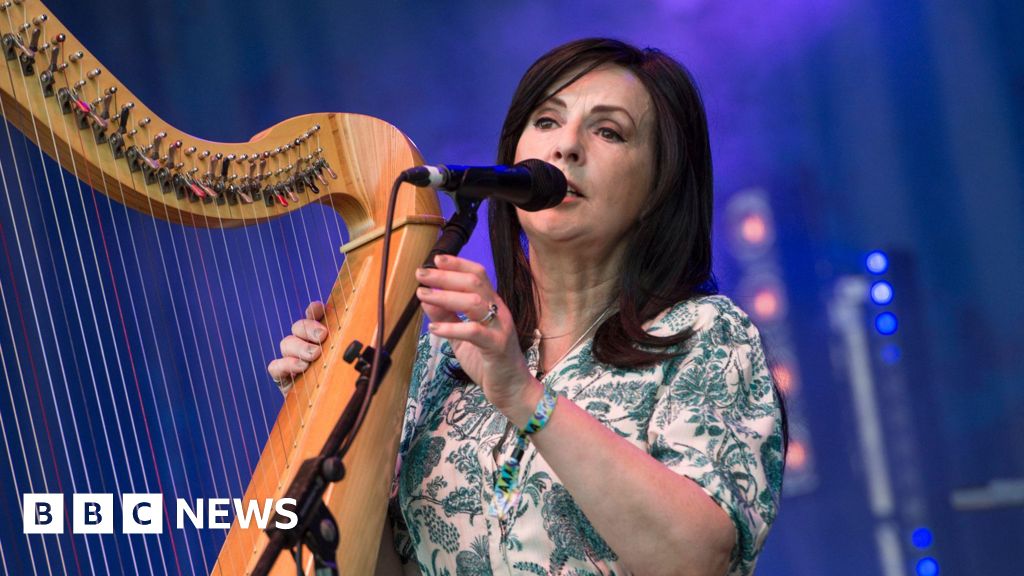
Moya Brennan, the Irish musician and lead vocalist of the family ensemble Clannad, has died at the age of 73.
Brennan’s career was central to the global commercialization of Celtic music, shifting the genre from regional folk traditions into a scalable international industry. Her work influenced the production standards of “New Age” and world music, creating a blueprint for the distribution of traditional sounds across mainstream streaming and broadcast platforms.
Commercialization of Celtic Music
As the primary voice of Clannad, Brennan contributed to a recording model that blended traditional Gaelic elements with contemporary pop and synth-production. This approach allowed the group to penetrate non-English speaking markets and secure distribution deals that reached audiences in North America and Asia.
The group’s transition from traditional folk to a more polished, studio-driven sound in the 1980s aligned with a broader industry trend toward atmospheric production. That shift widened the audience for Irish music, moving it from niche cultural circles into the broader commercial entertainment sector and into the orbit of major-label decision-making on both sides of the Atlantic.
The commercial viability of this sound was further established through placements in film and television soundtracks, which utilized Brennan’s vocal style to evoke specific geographic and emotional atmospheres. As public-service broadcasters and film funding bodies in Ireland and the United Kingdom – operating within frameworks such as the Broadcasting Act 2009 – increased support for indigenous cultural content, Brennan’s work became a recurring reference point in programming and commissioning decisions, embedding Celtic music more firmly in institutional cultural policy.
This integration into media licensing provided a consistent revenue stream and increased the institutional visibility of the Celtic genre. Music supervisors for international studios and streaming platforms treated her vocal sound as shorthand for Irish identity, helping to standardize how traditional music was cleared, packaged and exported for global use in advertising, cinema and prestige television.
Solo Production and Discography
Brennan established a prolific solo career that operated independently of Clannad, allowing her to explore specific arrangements and production techniques. Her solo output was characterized by a focus on the harp and Gaelic lyrics, targeting a global market interested in “authentic” cultural exports and aligning with national strategies that promoted Irish-language and heritage music as part of soft-power outreach.
Her recording history involves collaborations with various international producers and artists, reflecting a strategic approach to cross-genre appeal. These projects were managed through industry-standard recording contracts that positioned her as a primary representative of the Irish musical identity in the global market, particularly as digital platforms and streaming services redefined territorial licensing and rights collection. For emerging Irish acts navigating those same systems, Brennan’s career offered a case study in how traditional repertoire could travel without losing its local character.
Beyond performing, Brennan’s influence extended to the curation of world music, contributing to the institutional recognition of traditional Irish music within the global recording industry. Her advocacy for Irish-language material intersected with educational and cultural initiatives, reinforcing arguments for sustained public funding of traditional arts and for their inclusion in cross-border cultural exchanges under European cultural cooperation frameworks. A generation of arts administrators and policymakers cited her catalog when making the case that folk-rooted work could meet both commercial and public-interest mandates.
The official status of Brennan’s estate and any pending posthumous releases has not been announced. Industry observers will be watching how her catalog is managed, from future remasters to potential archival projects, as a test of evolving norms around legacy-artist rights and the stewardship of culturally significant recordings under modern copyright regimes such as the European Union’s Directive on Copyright in the Digital Single Market.
