

The Enduring Appeal of Luxury Tea Sets: A Reflection of Craftsmanship and Digital Provenance
For something so often dismissed as old-fashioned, the luxury tea set has a surprisingly strong track record.
At auction, these pieces can command extraordinary prices. A Chinese silver-gilt tea service once leapt from a €50,000 (approx. $58,718) estimate to more than €200,000 (approx. $230,870) when auctioned by Sotheby’s Amsterdam in 2011. One year later, a Half-Figure Service Meissen porcelain tea set sold in London for £541,250 (approx. $721,240) at Bonhams, cementing its place as one of the most valuable tea sets ever to come to market. Not bad for something you may consider to be something only worthy of your grandmother’s cabinet.
Investment aside, a tea set is rarely just a purchase. It’s something inherited, gifted, or chosen with the hope that it might outlast you. The slight wear on a handle, the soft fading of a pattern, even the one cup that never quite matched – all markers of an heirloom that has been loved as much as it has been preserved. With that in mind, we’ve curated a selection of luxury tea sets to buy now: pieces designed to be used, enjoyed, and passed on to live another lifetime.
The Rise of Digital Provenance and Authentication
The escalating value of antique and luxury tea sets has spurred innovation in authentication and provenance tracking. Traditional methods, relying on expert appraisal and paper records, are increasingly vulnerable to forgery, incomplete documentation and cross-border disputes over ownership.
In response, the broader art and collectibles market is turning to digital tools. Blockchain technology, in particular, is emerging as a potential solution, offering immutable records of ownership and material history. Several firms are piloting systems that assign unique digital identities to individual pieces, recording details from creation to each subsequent sale. This creates a transparent chain of custody, enhancing trust and mitigating risk for collectors, insurers and private banks that lend against such assets.
The move toward verifiable digital provenance also intersects with evolving regulatory expectations around anti-money laundering and cultural property. In major markets such as the European Union, art-market participants are now subject to customer due-diligence rules under the Fifth Anti-Money Laundering Directive, prompting galleries, auction houses and family offices to seek more robust, auditable records of high-value transactions. While a tea set may be a deeply personal object, it increasingly sits within a compliance framework that treats it as a movable store of wealth.
High-end tea sets to shop
Against that backdrop, today’s luxury tea sets occupy two worlds at once: they are objects of daily ritual and design, and potential future collectibles whose provenance will matter to heirs, trustees and advisers as much as to enthusiasts.
-
Fortnum’s cloverleaf tea set, Fortnum & Mason
Made from bone china, inspired by Fortnum’s Royal Blend, and finished by hand with Eau de Nil and 22k gold detailing, this set leans into tradition without feeling overly formal. The proportions are relaxed and forgiving, making this a collection you can put to work every weekend rather than reserve for rare occasions.
-
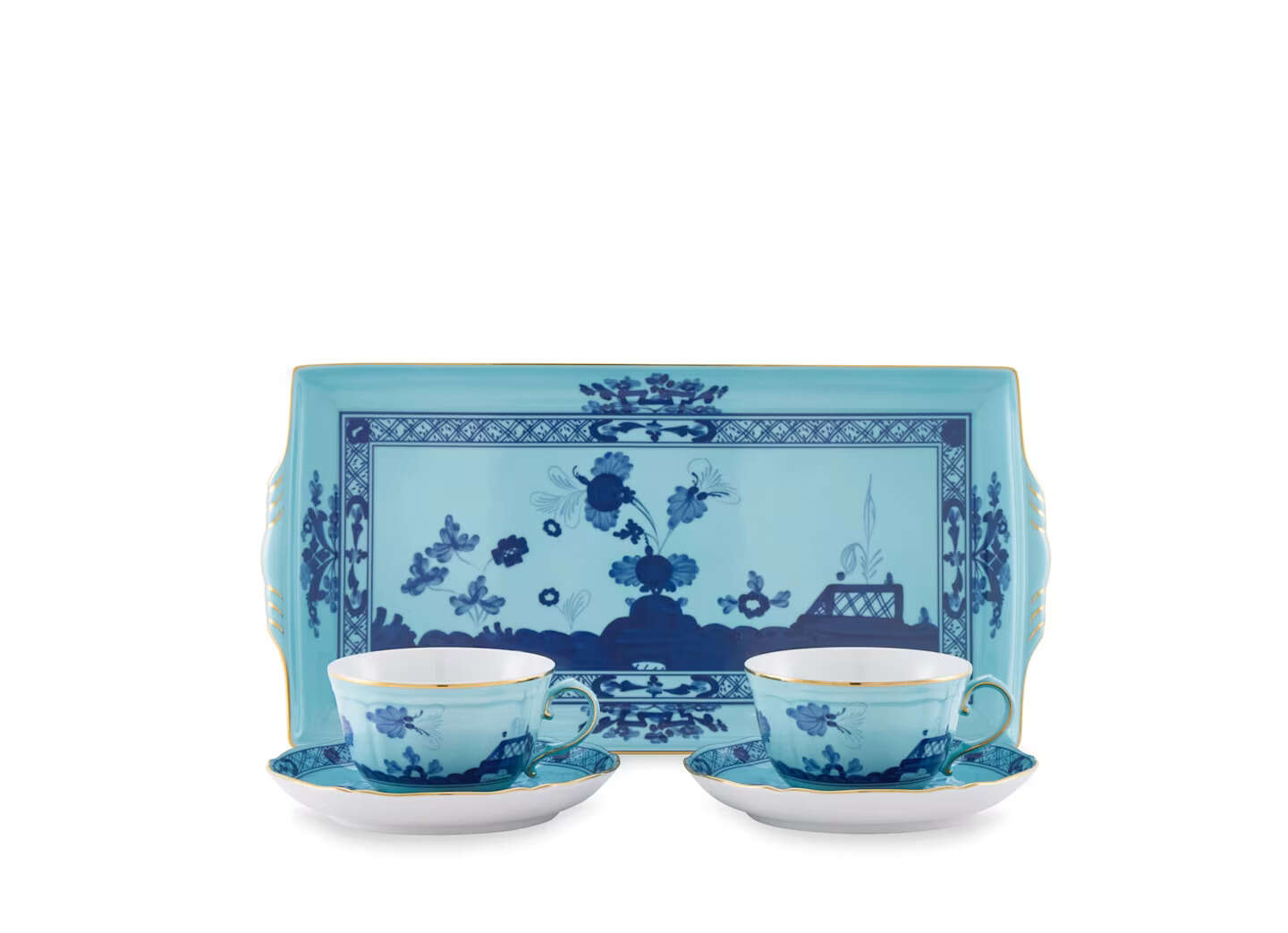
Tea set for two with tray, Ginori
For something more decorative, Ginori 1735 brings an unmistakably Italian sensibility. This whimsical blue set pairs fine porcelain with gold-plated detailing, resulting in a finish that feels suitably opulent yet intimate in scale – ideal for smaller spaces or a dedicated breakfast tray.
-
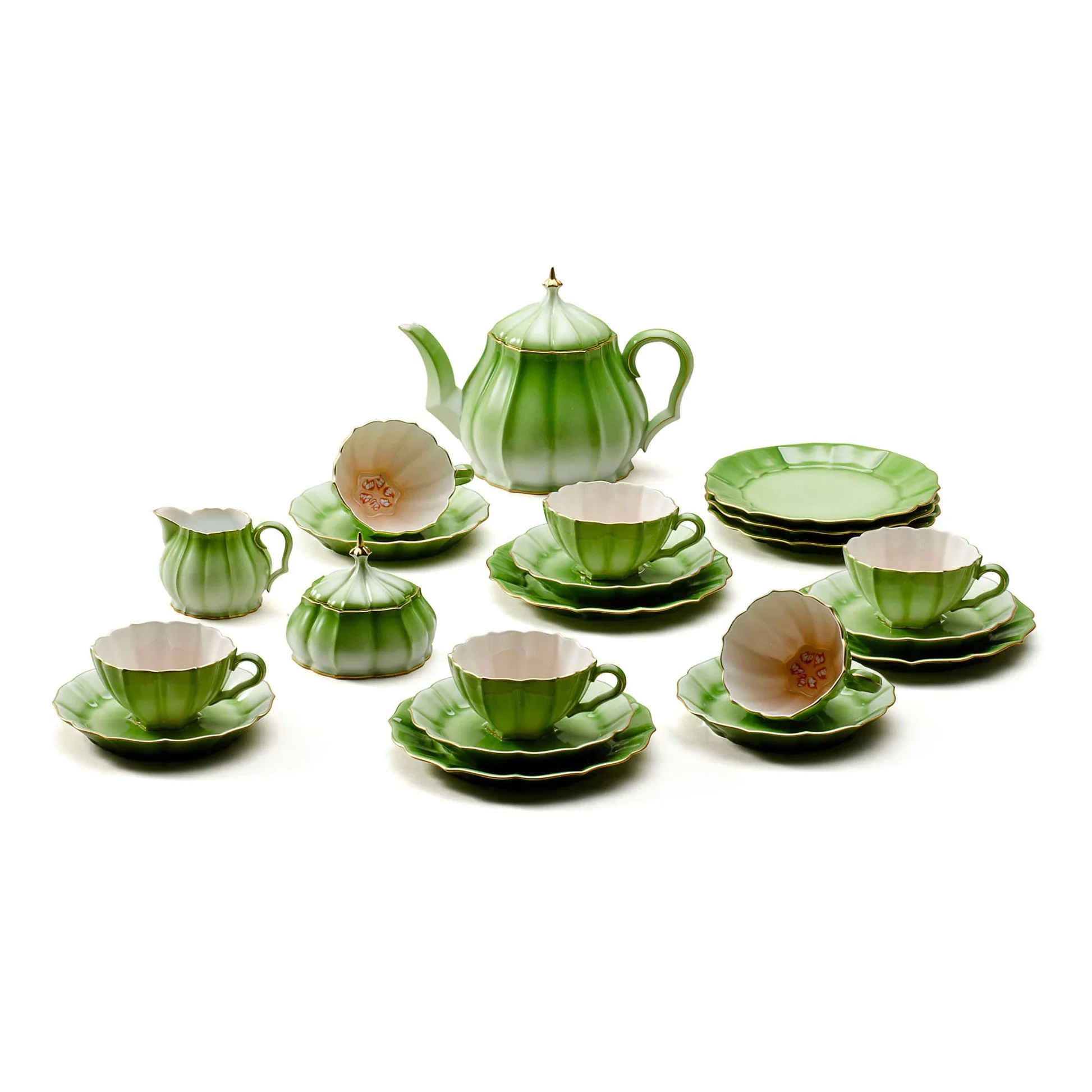
Melon tea set, Asprey
Asprey’s Melon set is one of those designs that feels instantly recognizable. Its rounded, fluted form nods to traditional Georgian tea services while still feeling sculptural and sharp. Substantial without being heavy, it’s a statement in craftsmanship – the kind of piece that can anchor a dining room sideboard and, in time, a family collection.
-
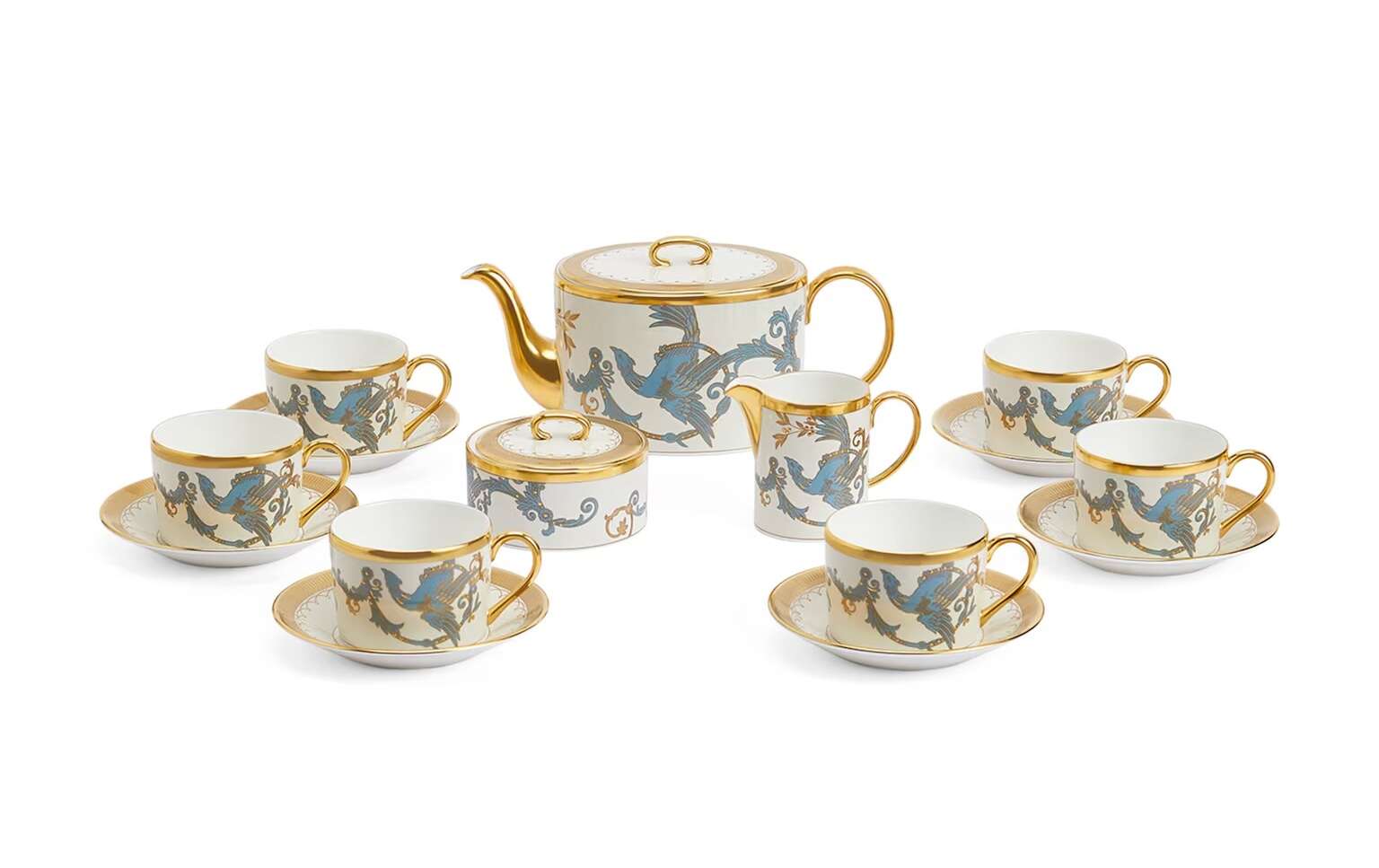
Phoenix 15-piece tea set, Wedgwood
Drawing on one of Wedgwood’s most storied designs, the Phoenix set feels like a modern heirloom in the truest sense. The motif – lifted from the house’s Florentine archive, first introduced in 1931 – sees a mythical bird sweep across fine bone china in soft jasper blue, finished with 22-carat gold detailing. It’s a fully formed service that can comfortably see you through formal tea or small celebratory gatherings.
-
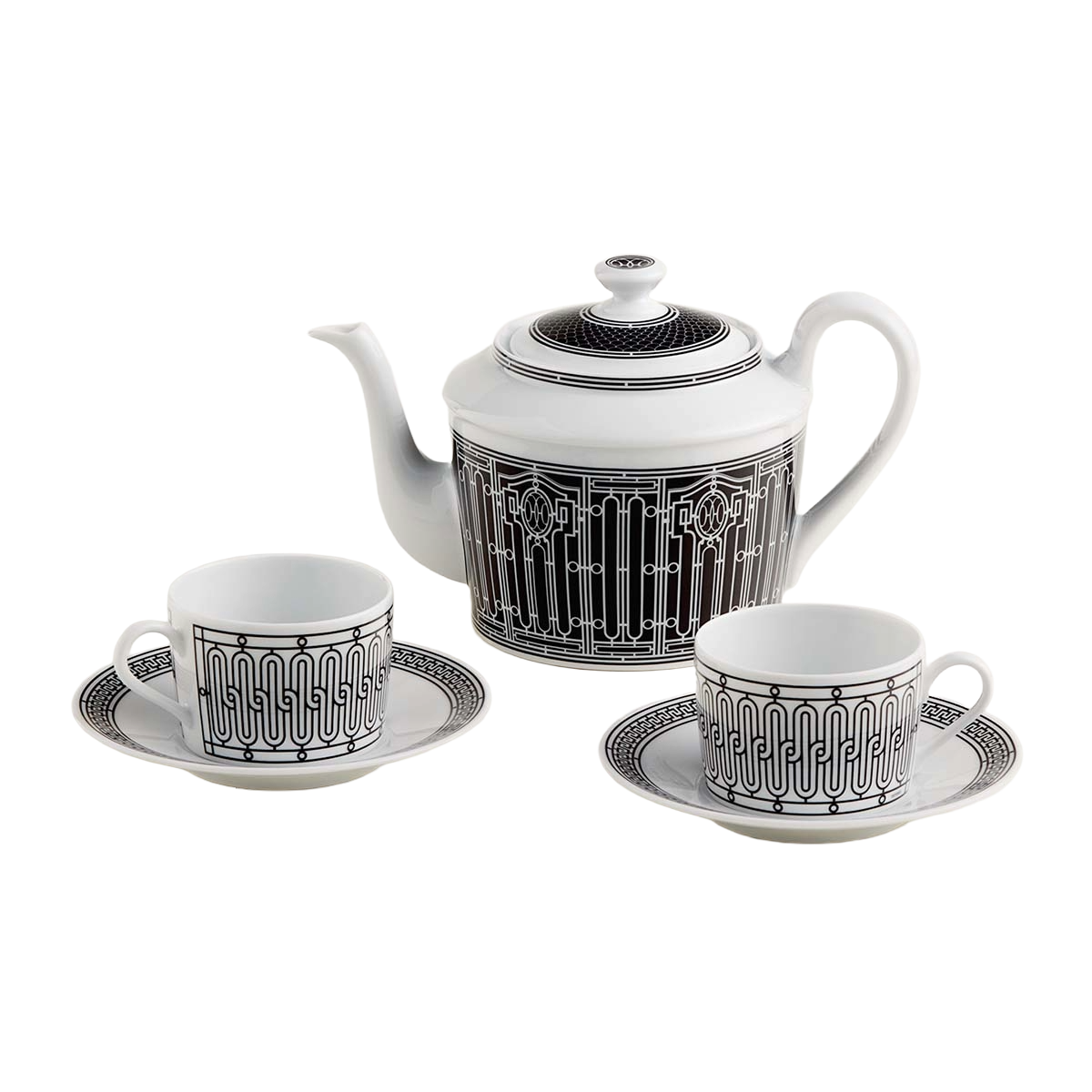
H deco tea set, Hermès
Hermès approaches tea service with a different lens. The H Deco collection draws on the Art Deco ironwork of its Paris flagship, translating architectural detail into fine porcelain through intricate, hand-applied decoration. The result is graphic and modern yet anchored in the brand’s heritage – a natural fit for contemporary interiors that still value classic codes.
-
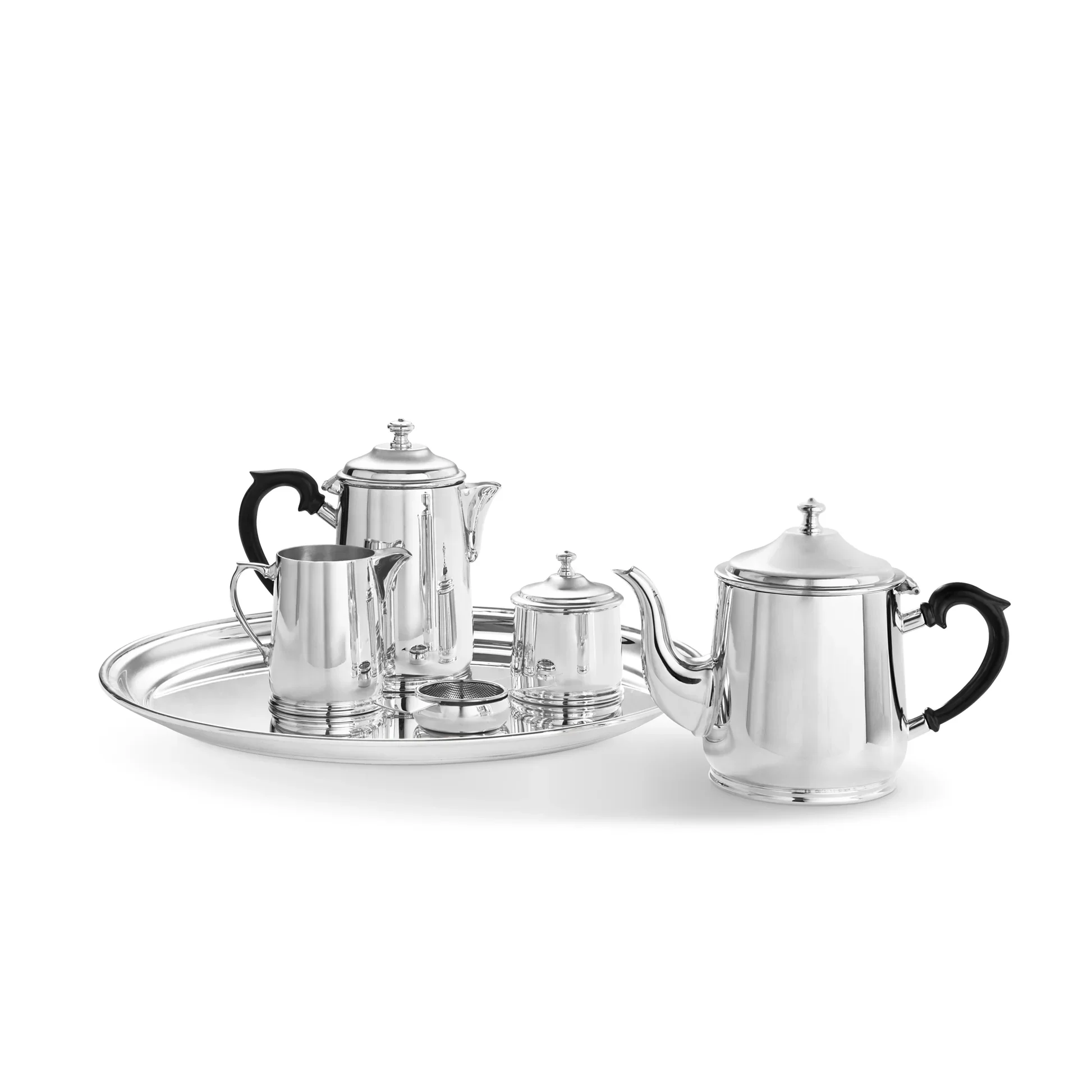
Mayfair silver-plated tea set, Asprey
For a different take on tradition, Asprey’s Mayfair set strips things back. Rendered in silver plate with clean, architectural lines, it feels closer to modern design than antique porcelain – but no less enduring. Asprey’s reputation for craftsmanship anchors it firmly in the world of heirlooms, while the minimalist silhouette offers the versatility to move between a formal dining table and a contemporary coffee table.
-
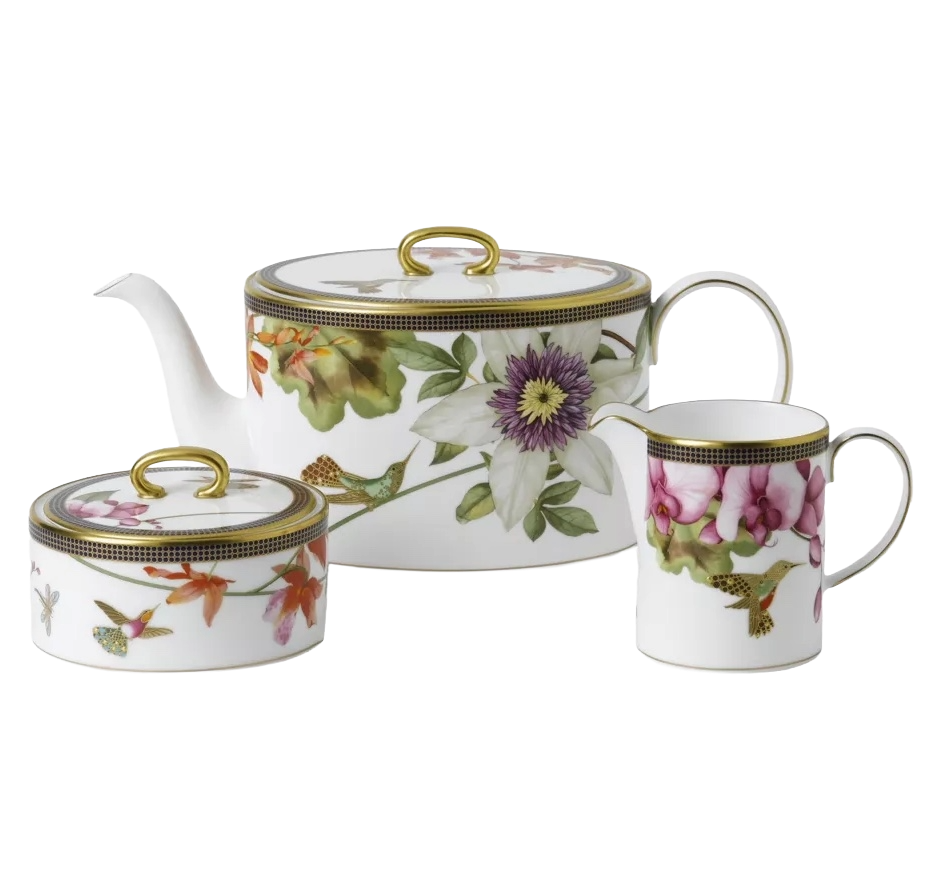
Hummingbird 3-piece tea set, Wedgwood
Lighter in mood but no less considered, the Hummingbird set leans into Wedgwood’s more romantic side. Fine bone china is decorated with trailing florals and jewel-toned birds. It’s an easier entry point into collecting – smaller, more robust, and well-suited to everyday use – but still carries the craftsmanship and heritage that give Wedgwood its staying power, whether you’re starting a personal ritual or adding a fresh chapter to an existing collection.
How we chose
Each piece featured is independently selected by Elite Traveler’s editors and contributors, who are experts in the lifestyle and collectibles space. We’ve prioritized items for their quality, design integrity and aesthetic coherence, while also considering how they are likely to age – not just in terms of patina, but in how convincingly they could sit within a future inventory, estate plan or family archive.
Worth a look
