
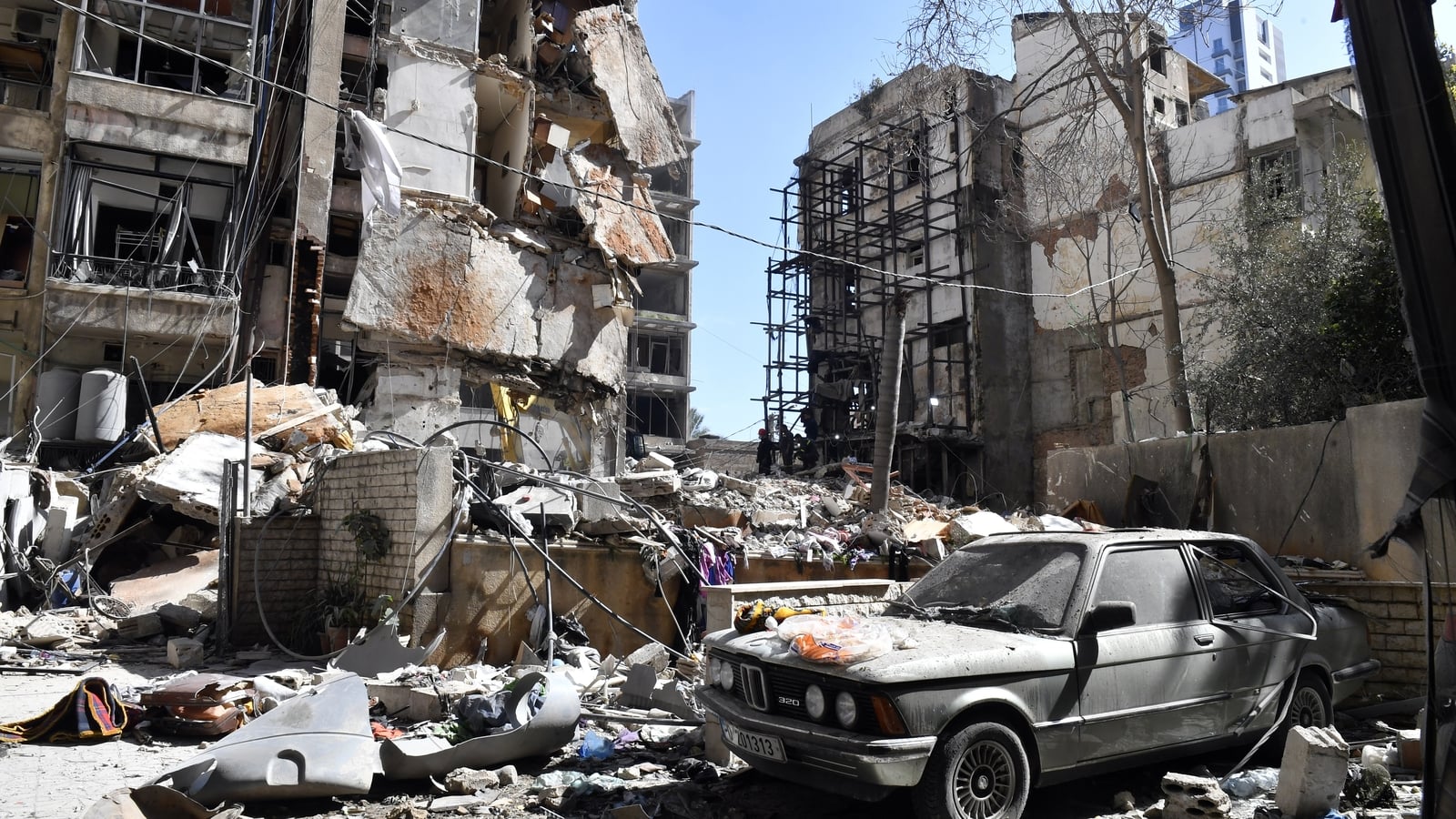
BEIRUT – Renewed Israeli airstrikes across Lebanon, including targets in the southern suburbs of Beirut, are jeopardizing the fragile ceasefire brokered earlier this week, raising fears of a wider regional conflict. The attacks, which began late Thursday and continued into Friday, come despite international calls for restraint and a widening consensus that any truce must extend to Lebanon. Lebanese state media reports more than 250 people were killed in the largest single day of attacks since hostilities escalated.
The escalating violence throws into question the terms of the ceasefire agreement, with the United States maintaining it does not cover Lebanon, a position disputed by Iran and Pakistan, the latter having acted as a key mediator in the initial truce negotiations. The European Union’s foreign policy chief, Kaja Kallas, has directly criticized Israel’s actions, stating they do not fall within the bounds of self-defense and that the ceasefire agreement “should cover Lebanon.” Kallas also called for Hezbollah to disarm, asserting the group had instigated the current conflict.
The situation is further complicated by ongoing negotiations for a potential peace summit. Iranian negotiators are expected to travel to Pakistan on Saturday to meet with a US delegation led by Vice President JD Vance. However, Tehran has indicated that any deal is contingent on a complete cessation of Israeli strikes in Lebanon, and as of Friday morning, there was no indication Iran had lifted its blockade of the Strait of Hormuz, a critical waterway for global oil supplies.
The disruption to oil shipments has already driven prices to record levels. European and Asian refineries are now paying nearly $150 per barrel for physical oil, with even steeper increases for jet fuel. The blockade represents a significant threat to the global economy, exacerbating existing energy concerns and putting added pressure on governments that subsidize fuel or rely heavily on imported crude.
The current conflict was triggered on March 2nd when Hezbollah began launching rockets into Israel, ostensibly in retaliation for the February 28th Israeli-US strike that killed Iranian Supreme Leader Ayatollah Ali Khamenei. Israel has responded with increasingly aggressive military action, culminating in Thursday’s widespread attacks. The fighting is unfolding against the backdrop of longstanding disputes over Israel’s northern frontier and its occupation of territories captured in the 1967 war, including the Golan Heights, as well as unresolved questions around the implementation of United Nations Security Council resolutions calling for respect of internationally recognized borders and the disarmament of non-state armed groups.
The Israeli military confirmed it killed the nephew of Hezbollah Secretary-General Naim Qassem, who served as his personal secretary, and targeted what it described as river crossings used by the group. Hezbollah, after initially observing the ceasefire, announced it had resumed attacks on Israel Friday morning, firing rockets across the border and at Israeli forces in southern Lebanon. The exchanges have effectively opened a second front alongside the confrontation between Iran and the US-led coalition in the Gulf, further complicating diplomatic efforts to restore calm.
US Vice President Vance, in a statement released Thursday, reiterated the US position that the ceasefire does not extend to Lebanon.
“Our agreement with Iran was focused solely on de-escalation in the Gulf region and did not include any stipulations regarding Lebanon or Hezbollah’s actions,” Vance said.
US officials have framed the talks as narrowly focused on maritime security and freedom of navigation through the Strait of Hormuz, underscoring that any broader political settlement would require separate negotiations involving Israel, Lebanon, and other regional actors.
Rescue workers in Lebanon are struggling to recover victims trapped under rubble following the Israeli strikes, which reportedly targeted heavily populated areas without prior warning to civilians. Emergency teams say fuel shortages and damaged roads are slowing their response. Naim Chebbo, a Beirut resident whose home was damaged in the attacks, described the devastation: “This is my place, this is my house, I’ve been living here like more than 51 years. So, everything destroyed. See?”
Inside Iran, large-scale commemorations are underway marking 40 days of mourning for Ayatollah Khamenei. State television showed crowds gathering in Tehran, Kermanshah, Yazd, and Zahedan, carrying portraits of Khamenei and his son and successor, Mojtaba. Officials including Mohammad Eslami, head of Iran’s Atomic Energy Organization, and Farzaneh Sadeq, the roads minister, attended the events. A large Hezbollah flag was prominently displayed in Tehran. A funeral procession was also held in Shiraz for Revolutionary Guards’ intelligence chief Majid Khademi, who was killed earlier this week in an Israeli strike.
The commemorations come as Iran seeks to project domestic stability and continuity of leadership, even as it confronts mounting external pressure over its regional activities and nuclear program. Diplomats say Tehran’s posture at the Pakistan talks will be shaped in part by how successfully the new leadership can claim to have defended Iranian sovereignty and deterred further attacks.
Despite President Trump’s declaration of victory following the initial ceasefire agreement, the US did not achieve its stated objectives: eliminating Iran’s capacity to threaten its neighbors, dismantling its nuclear program, or creating conditions for regime change. Iran continues to possess a substantial stockpile of enriched uranium – exceeding 400 kg – and maintains the capability to target regional adversaries with missiles and drones. The recent unrest, while significant, did not result in the overthrow of the Iranian government. Furthermore, Iran has demonstrated its ability to disrupt oil shipments through the Strait of Hormuz, despite a substantial US military presence in the region and existing maritime security mechanisms designed to uphold the principle of freedom of navigation under international law.
For European and Asian governments, the crisis is sharpening debates over energy security and strategic reserves, as well as over how far to align with US policy toward Iran and Israel. Analysts say any prolonged disruption in the Gulf could force consumer economies to revisit long-standing assumptions about supply diversification and emergency stockpiles.
The core issues driving the conflict remain unresolved, with both sides adhering to conflicting demands. As of Friday afternoon, Iranian negotiators were en route to Pakistan, and the situation in Lebanon remained highly volatile, with continued airstrikes and rocket fire. Without a broader framework that addresses security guarantees for Israel, the status of armed groups such as Hezbollah, and the protection of vital shipping lanes, diplomats warn that the current ceasefire risks becoming another short-lived pause rather than a step toward a durable settlement. Against that backdrop, regional capitals are watching closely for any sign that the talks in Pakistan can move beyond crisis management to a more comprehensive political track, even as violence on the ground continues to outpace diplomacy.
Keep reading
