
NEWCASTLE –
King Charles completed a series of official engagements in Northern Ireland, including a visit to the seaside resort of Newcastle to recognize the contributions of local charitable organizations.
These appearances represent the procedural function of the British monarchy’s regional tours, which utilize high-visibility public interactions and community outreach to maintain institutional presence within the United Kingdom. While the monarch’s role is largely defined by convention under the United Kingdom’s uncodified constitution and the linked arrangements for devolved government in Northern Ireland, such visits remain a visible expression of the Crown’s position as head of state within the framework of the Northern Ireland Act 1998 and related constitutional statutes.
Community Outreach and Charitable Operations
During the second day of the visit, Charles visited the Pantry Foodbank, an organization operating out of a church in Newcastle. The King participated in the facility’s logistical operations by packing grocery boxes intended for local residents, underscoring the reliance of many communities on charitable food distribution alongside formal welfare provision.
Under the guidance of Pantry chairman John O’Neill, Charles filled two boxes with a selection of toiletries, tinned goods, vegetables, and bread. While reviewing supplies destined for a family, Charles touched a toilet roll and remarked, “very important.”
Charles described the foodbank volunteers as “amazing” during the engagement, praising their role in addressing cost-of-living pressures at a local level. Palace officials framed the stop as part of a broader pattern of royal engagements that highlight frontline responses to economic hardship, rather than announcing new policy or funding.
Public Interaction and Protocol
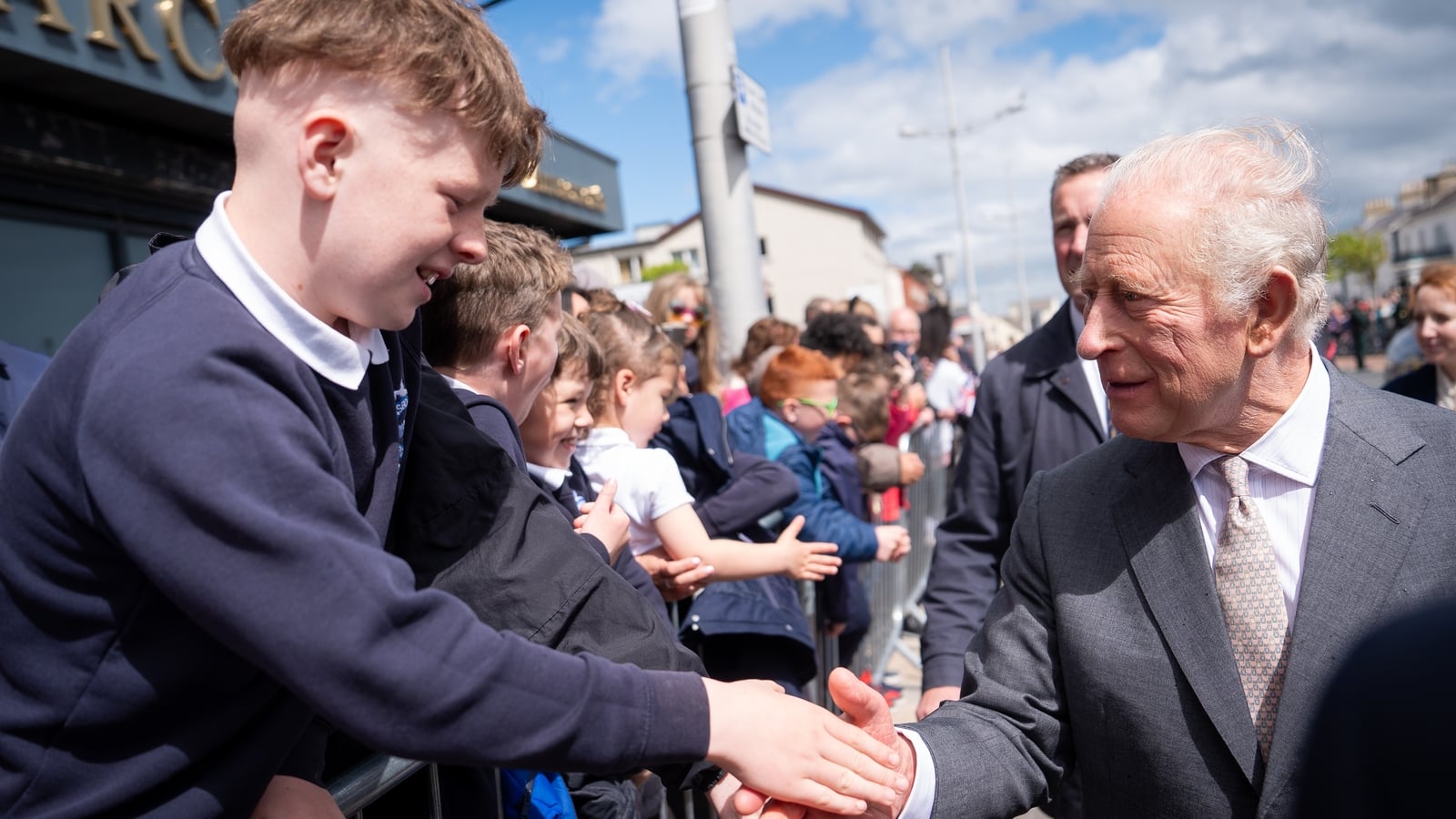
Following the charitable visit, the King proceeded to a meet-and-greet event with members of the public situated along the main street behind crash barriers. Such informal walkabouts, now a standard feature of royal programmes, are designed to project accessibility while maintaining security and clear lines of sight for police and protection officers.
During this transition, a seagull struck the King and several members of the press with droppings, which left a mark on the bottom of his suit jacket. Staff moved quickly to brush off the jacket, but the King continued along the line, appearing keen not to disrupt the schedule.
Irene Marting, a resident of the village of Dromara near Lisburn, witnessed the event while waiting in the crowd with her sister, Paula Leitch. Marting later recounted the interaction with the monarch regarding the incident.
“We were talking to the king about the seagull and he said ‘it’s well it didn’t land on my head’.”
Marting further noted that while an individual attempted to suggest the King wear a coat, he declined. She added, “being hit by a seagull it’s supposed to be good luck.” The light-hearted exchange, quickly shared on social media, contrasted with the otherwise tightly managed nature of royal public appearances.
Parallel Royal Engagements
Concurrent with the events in Newcastle, Queen Camilla conducted a solo visit to Royal Hillsborough, the official royal residence in Northern Ireland and a focal point for the Crown’s relationship with the region’s political institutions.
At the Parson’s Nose pub and restaurant, Camilla met with staff and participated in the pouring of a pint of Guinness. During the activity, she stated, “not quite the expert, but my husband is.” The appearance formed part of a programme that mixed support for local hospitality businesses with cultural diplomacy, showcasing Northern Ireland’s food and drink sector to a global audience.
The visit took place during the second day of the royal itinerary in Northern Ireland, which is coordinated with devolved authorities and local representatives but does not carry formal decision-making power. Royal officials emphasise that such tours complement, rather than substitute for, policy action by elected governments, functioning instead as a soft-power extension of the monarchy’s constitutional and ceremonial role, including its place within the wider framework of the Belfast/Good Friday Agreement.
Worth a look
- Interactive Storytelling and Immersive Audio: How Next-Gen Gaming Engines Are Transforming Contemporary Television Production
- Independent Cinema’s New Distribution Paradigms: How Direct-to-Consumer Micro-Premiers Are Shifting Box Office Dynamics
- Two Iranian nationals charged with terror plot targeting Manchester Jewish community (globallypulse.com)
