
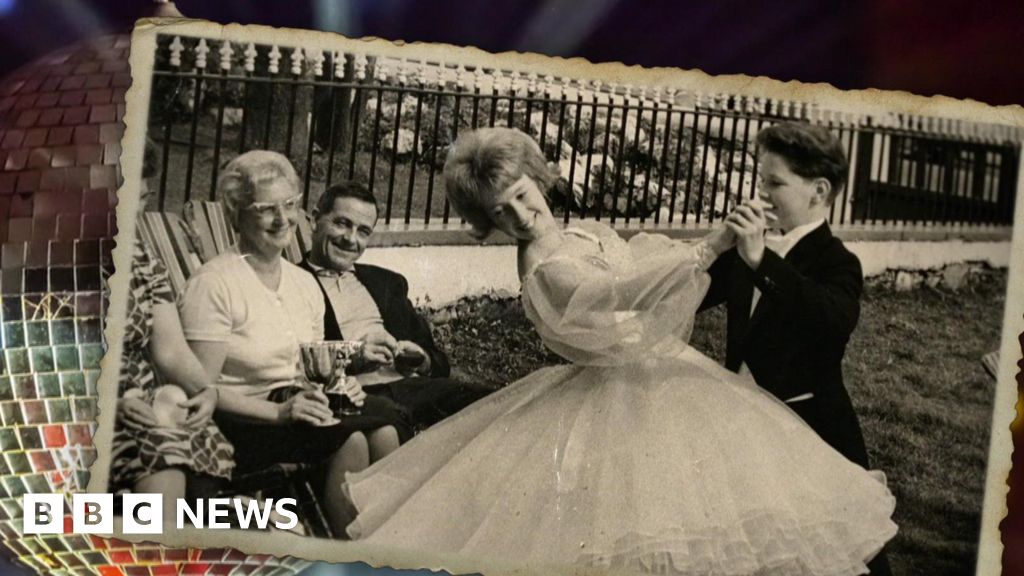
DOUGLAS – Former dance partners Jean-Pierre and Margaret have reunited in the Isle of Man 62 years after winning a competitive dance title in the region.
The reunion highlights the historical structure of the competitive ballroom circuit in the 1960s, a period characterized by international partnerships designed to maximize competitive viability and stylistic range across European competitions. Their return to Douglas, the island’s capital and traditional hub for cultural events and visiting performers, underscores the role the Isle of Man has long played as a meeting point between the United Kingdom and continental Europe.
The pairing originally formed in the early 1960s, blending French and British dance influences. The partnership culminated in a victory at a competition held in the Isle of Man in 1962, when the island was emerging as a distinctive stop on the regional ballroom calendar, drawing amateur and semi-professional dancers from across the British Isles and mainland Europe.
Following the competition, the partners lost contact, a common occurrence in the era’s freelance competitive circuit before the centralization of dance governance and digital record-keeping. At the time, competitive ballroom dancing in Europe was gradually consolidating under national and international rulebooks and judging criteria, but documentation remained fragmented and largely paper-based.
Competition History and Partnership
The 1962 victory occurred during a period of significant growth for ballroom dance as a regulated sport. International pairings, such as the one between the French national and the British dancer, were strategic assets in the competition environment of the time, as couples sought to demonstrate technical mastery that aligned with evolving standardization across borders.
Although their title pre-dated the full modern framework used by today’s elite competitors, the couple danced under early versions of rules that would later be codified by bodies such as the World DanceSport Federation, which now oversees competition eligibility, judging standards and athlete welfare in many countries.
Jean-Pierre traveled from France to the Isle of Man to facilitate the reunion. The reconnection was made possible through contemporary search methods and social media, which have increasingly been used to reconstruct historical professional associations in the performing arts. Local archives in Douglas and personal scrapbooks, including programmes and adjudication sheets from the 1962 event, helped verify that the pair were reunited at the same coastal town where they once competed.
“I have always thought about her,”
said Jean-Pierre.
The reunion focused on the shared professional history of the duo and the technical nature of their 1962 win, including the precision of their standard dances and their then-unusual fusion of French stylistic flair with British timing and footwork.
Reconnection and Documentation
The process of locating the former partner involved verifying competition records and personal archives from the 1960s. In the absence of comprehensive digital results databases, Jean-Pierre and supporters pieced together dates, venues and partner names from handwritten notes, press clippings and archived programmes – a labor-intensive reconstruction that contrasts sharply with the instant traceability expected in today’s regulated sporting ecosystem.
Margaret stated:
“I can’t believe he’s actually here.”
The event serves as a case study in the longevity of professional associations within the dance industry, where partners often shared high-stakes competitive environments for short durations before diverging into separate professional trajectories. It also illustrates how modern data practices and social tools can retroactively fill gaps left by earlier governance structures, bringing historical competitors back into contact decades after official records were first created.
The two former partners have now met in person. Their reunion comes at a time when cultural authorities on the Isle of Man are placing renewed emphasis on documenting and promoting the island’s performing arts heritage, from traditional Manx music to visiting ballroom competitions that have helped define its international profile over the past half-century.
Keep reading
- Interactive Storytelling and Immersive Audio: How Next-Gen Gaming Engines Are Transforming Contemporary Television Production
- Independent Cinema’s New Distribution Paradigms: How Direct-to-Consumer Micro-Premiers Are Shifting Box Office Dynamics
- Margaret Hamilton, Apollo software pioneer and computer scientist, dies at 90 (globallypulse.com)
- 100,000 Copies in 28 Years: What a Nobel Sticker Can Do for Carson (daybreakwire.com)
