
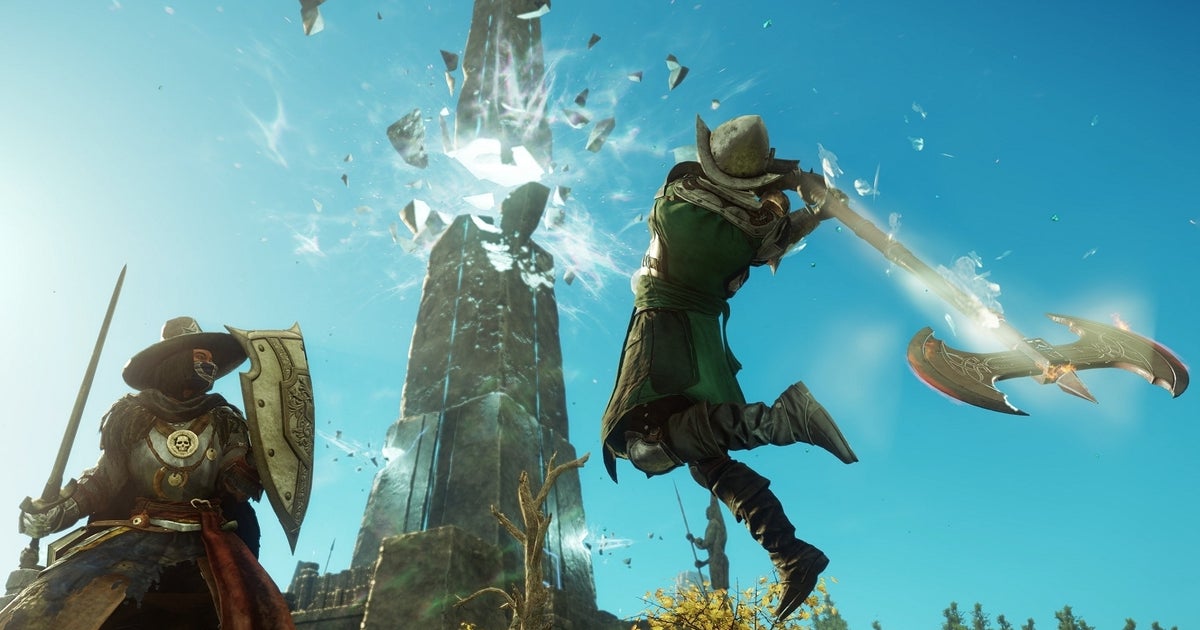
Amazon extends New World‘s final season and sets a firm shutdown date
Amazon Games will sunset New World on January 31, 2027, marking the end of the company’s first in-house PC MMO launched in 2021. Season 10, “Nighthaven,” will run until the servers go dark, and the game has been delisted from storefronts; existing owners can continue playing through the final year. The plan follows significant staffing cuts in late 2025 and a previously stated decision that the tenth season would be the last, outlined in an update on the New World website. The shutdown also places Amazon alongside a long list of publishers that have retired large-scale online titles once they fall below the economic and regulatory thresholds needed to operate them as live services.
“We want to thank the players for your dedication and passion. We are grateful for the time spent crafting the world of Aeternum with you. Together we built something special. While we are saddened to say goodbye, we’re honored that we were able to share so much with the community.
“It has been our pleasure to work on New World: Aeternum and evolve this unforgettable adventure with you all. We look forward to one more year together, and giving this fantastic adventure a sendoff worthy of a legendary hero. From the bottom of all our hearts, thank you for sharing this world with us.”
For Amazon, the decision is also a signal to investors and regulators that it is willing to wind down underperforming live products rather than maintain lightly populated servers indefinitely. Because New World accounts are tied into broader platform identities and payment systems, the company will be expected to manage refunds, data retention, and cross-border account closures in line with digital consumer rules such as the EU Directive on contracts for the supply of digital content and digital services.
For current players: what changes now
For existing players, the final year is less a sudden shutdown than a long glide path. Amazon is keeping systems online but is clearly signalling that no new, long-horizon investments should be expected.
- Access: Only existing owners can log in; no new purchases are possible while the title is delisted, and no fresh regional launches are planned.
- Season cadence: Season 10 content continues through January 31, 2027, with no further seasons or expansions on the roadmap.
- Progression: Characters, items, and achievements remain playable during the final year; all in-game progress and entitlements will become inaccessible once servers close.
- Community: Expect guilds, trading, and social systems to operate normally until shutdown; communities that want to persist beyond closure should begin planning alternate channels on external social or communications platforms.
- Spending: Consider winding down in-game purchases as the end-of-service window approaches, and review account settings for any recurring entitlements or subscriptions that might extend past the shutdown date.
Consumer-protection agencies have increasingly scrutinized how publishers communicate the end of online services-especially where real money has been spent on time-limited digital goods-making clear, date-stamped notices like this one a de facto industry standard.
Live-service reality: why MMOs close and what it takes to keep them alive
Large-scale online worlds depend on continuous content, reliable operations, and hardened security. When any pillar falters, concurrent player counts and monetization can slip below the threshold needed to fund development and infrastructure. The economics are especially sensitive for MMOs that maintain bespoke server tech and sprawling art pipelines, even when backed by a parent company with deep cloud and e-commerce revenues.
- Content velocity: Raids, seasonal gear, narrative chapters, and balance patches require multi-disciplinary teams working in parallel; if headcount drops, cadence slows and players churn.
- Operations load: 24/7 live ops, incident response, and customer support must scale with peak demand and regional regulations, including age-rating conditions and platform-holder requirements.
- Security overhead: Anti-cheat, bot mitigation, and economy integrity tooling are constant, escalating investments that rarely generate direct revenue but are essential to trust.
- Infrastructure scale: World servers, instancing layers, databases, and analytics pipelines must remain performant during updates and events, with capacity reserved for spikes even when average concurrency trends down.
In practice, these pressures mean that even a technically stable MMO can be retired once its ongoing cost profile no longer matches corporate priorities, particularly in organizations reshaping their games portfolios.
Acquisition interest surfaces-but a handover would be complex
Interest in preserving the game surfaced quickly. Facepunch’s COO Alistair McFarlane wrote, “25m, final offer” and followed with “Games should never die”. Simon Collins‑Laflamme of Hypixel Games added: “If you need tips about buying cancelled games, lmk”. A purchase, if entertained, would require more than a price tag, and any serious bid would need to address both the technical stack and the regulatory perimeter around player data.
- IP and tooling: Rights to the game code, art, audio, trademarks, engine branches, build systems, and internal developer tools would need to be clearly carved out from Amazon’s wider technology estate.
- Player data stewardship: Lawful transfer or deletion workflows for accounts and telemetry must be consistent with privacy laws across jurisdictions, including limitations on secondary use of personal data.
- Infrastructure continuity: Migration plans for world servers, databases, CDN assets, authentication, and anti-cheat to a new operator would need to avoid extended downtime that could permanently fracture the community.
- Monetization and compliance: Reinstating storefronts, payments, and age ratings would trigger new rounds of platform review, while consumer disclosures on service availability and refunds would be closely watched by regulators and class-action lawyers alike.
- Live ops handover: Knowledge transfer covering incident runbooks, deploy pipelines, rollback procedures, and GM policies would be essential if a new operator wanted to move quickly without destabilizing the live environment.
That complexity helps explain why relatively few shuttered MMOs have been successfully rescued by outside buyers, despite periodic public interest from rival studios.
New World’s platform architecture at a glance
While implementation details are proprietary, the MMO pattern that New World follows is well understood across the industry and tightly coupled to Amazon’s own cloud infrastructure. That coupling has made it easier to scale rapidly-but also raises the bar for any third party considering a takeover.
- World shards and instancing: Regional shards manage latency and population, with instanced activities used to smooth server load and tailor difficulty.
- Stateful services: Character inventories, trading posts, and guilds are backed by persistent databases with strong consistency guarantees to protect the in-game economy.
- Stateless microservices: Matchmaking, chat relay, and presence services scale horizontally behind load balancers, allowing Amazon to respond to concurrency spikes without full-system redeploys.
- Content delivery: Patch distribution via CDN, with delta updates and integrity checks to prevent tampering, underpins the ability to ship frequent balance and content updates.
- Security controls: Anti-cheat agents, server‑side validation, rate limiting, and anomaly detection for economy exploits are layered to discourage abuse while remaining largely invisible to compliant players.
This architecture has become a template for contemporary live-service games, and any decision to retire or donate parts of the stack will be watched closely by other studios weighing how much of their own infrastructure to build versus rent.
If preservation becomes the goal, viable technical paths exist
If Amazon or a successor decides that preservation-rather than pure shutdown-is the end state, there are several credible options that balance intellectual property control, player expectations, and regulatory risk.
- Licensing the live service: Keep official servers running under a new operator with a revenue share and explicit service-level terms, while Amazon retains ultimate IP ownership.
- Sunset build for archival: Ship a limited “museum” client with offline exploration or private hosted sessions, minus monetization and competitive features that are expensive to moderate.
- Community servers with guardrails: Release server binaries or a managed server program that protects IP while enabling self-hosting, possibly with restrictions on commercialization and data collection.
- Data export options: Provide players with character snapshots or cosmetic inventories for posterity-subject to privacy and platform constraints-so that years of play do not disappear without trace.
None of these options are straightforward, but they echo approaches already used in other online titles where publishers have sought to balance business realities with cultural and archival responsibilities.
Key dates and milestones
For players, employees, and policymakers tracking how large platforms treat long-running digital services, the life cycle of New World offers a compact case study.
- 2021: New World launches as Amazon Games’ first in-house PC MMO, briefly peaking as one of Steam’s most-played titles.
- Late 2025: Major staffing reductions at Amazon’s games division mark a shift in the company’s ambitions for first-party online worlds.
- January 2026: Season 10 “Nighthaven” is confirmed as the final season, signalling a transition from growth to managed decline.
- January 31, 2027: Servers are scheduled to shut down, with players losing access to the live world and online progression systems.
The multi-year arc from launch to sunset underlines how quickly live-service projects can move from strategic flagship to carefully wound-down asset.
A final year to land the plane
Extending the last season gives developers a stable runway to maintain service quality, close narrative threads, and support community-led farewells. Internally, it also provides time to redeploy staff, complete compliance work, and document infrastructure for either decommissioning or transfer.
Whether the world of Aeternum receives a second life under a new operator or becomes a preserved artifact, the next twelve months will determine how one of the most ambitious modern MMOs is remembered: as a cautionary tale about the volatility of live-service economics, or as an example of how a platform holder can retire a digital world with transparency and a degree of care.
Worth a look
