
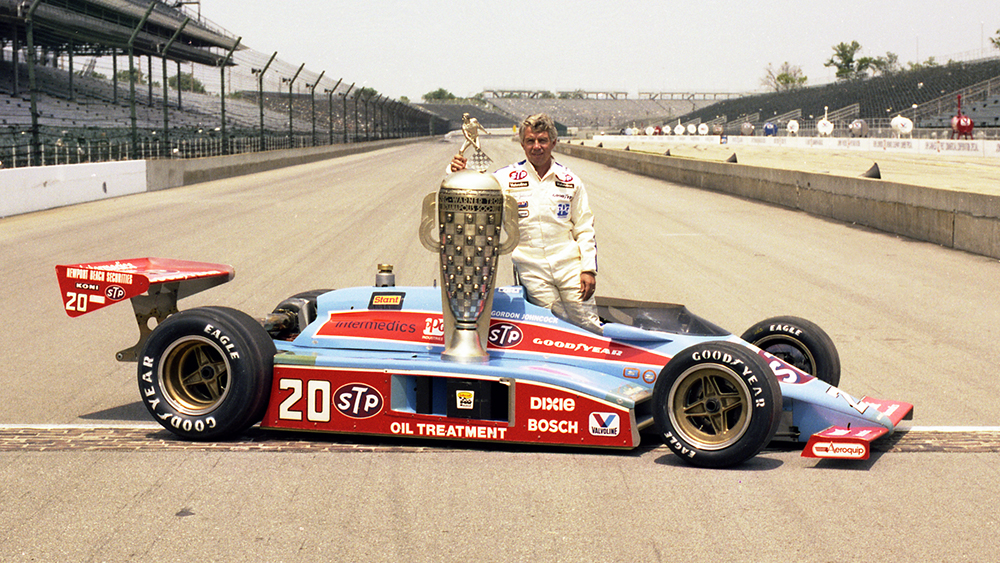
Gordon Johncock, Two-Time Indianapolis 500 Winner and INDYCAR Champion, Dies at 90
Gordon Johncock, whose stirring drive late in the 1982 Indianapolis 500 earned him a second victory in “The Greatest Spectacle in Racing,” died of natural causes on Sept. 28 at his home in South Branch, Michigan. He was 90.
Born Aug. 5, 1936, in Hastings, Michigan, Johncock remained closely tied to his home state throughout his life. He became one of American open-wheel racing’s defining figures of the 1970s and early 1980s, winning the INDYCAR SERIES national championship in 1976 and taking 25 victories in the series. He built much of that success with Patrick Racing, the team with which he captured both of his Indianapolis 500 wins.
His achievements came within the framework of North American single-seater racing governed today by INDYCAR, which oversees the Indianapolis 500 and the championship in which Johncock became a benchmark for consistency and versatility on ovals, road courses and dirt tracks alike.
Defining Finish in the 1982 Indianapolis 500
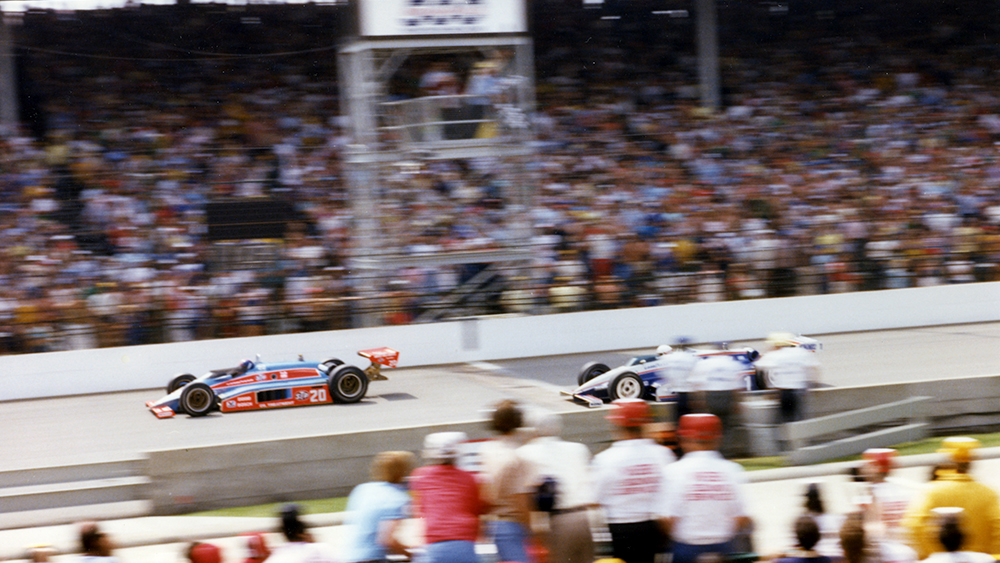
Johncock’s reputation on the global motorsport stage is inseparable from the 1982 Indianapolis 500, a race still cited as one of the event’s most dramatic conclusions. In the closing laps he engaged in a tense duel with Rick Mears, the 1979 winner, setting up a finish that television audiences around the world watched unfold in real time.
Renowned broadcaster Jim McKay said he had “never seen anything like it” as Johncock, nursing worn tyres and a light fuel load, defended track position with precise lines and minimal margin for error. Mears launched a final-lap passing attempt into Turn 1, but Johncock covered the move, then held off his rival in the flat-out run to the yard of bricks.
The gap at the checkered flag was a then-record 0.16 of a second, a margin that still ranks as the seventh closest finish in Indianapolis 500 history. For international audiences used to photo finishes in Formula One or sports car racing, that 1982 duel helped reinforce the Indy 500’s status as a race where championship-level stakes and season-defining reputations can turn on a fraction of a second.
Johncock later reflected that the result was far from guaranteed. On the final lap, running lower than usual on the track, he struck an unfamiliar bump in Turn 3 that unsettled the car and allowed Mears to close rapidly.
“I pretty near lost it,” he told The Indianapolis Star in 2016. “Ask Rick; he saw it (because) he was right there.
“I had never run that low before in Turn 3, but I knew I had to if I was going to be able to stay in the throttle. It was just a little rougher down there than I expected.”
That ability to operate on the limit, adjust in real time and still deliver under pressure is a key reason the 1982 race is regularly cited by drivers and engineers when discussing the tactical and mental demands of the Indianapolis 500 era in which Johncock competed.
Triumph in the Midst of Tragedy: The 1973 Indianapolis 500
The other Indianapolis 500 victory that defined Johncock’s career came in 1973, a year remembered more for its tragedy and disrupted schedule than for its on-track competition. Persistent rain forced the race to be postponed by two days, altering preparation routines and raising questions about safety and scheduling at a time when Indy cars were becoming faster but circuit infrastructure and medical response were still evolving.
Starting 11th, Johncock took his first lead on Lap 40. The race was then overshadowed by two separate and horrifying accidents involving his Patrick Racing teammate Swede Savage and crew member Armando Teran. Against that backdrop, Johncock continued to manage his race at the front of the field, demonstrating the concentration required to perform amid emotional and competitive upheaval.
He led 64 laps and was ahead of Bill Vukovich II when rain returned and ended the race on Lap 133. There was no traditional celebration; the annual Victory Banquet was canceled. Johncock and his Patrick Racing crew instead marked the achievement quietly with hamburgers at a local Burger Chef after visiting Savage in hospital, an understated conclusion that underlined the human cost that often sat alongside sporting success in that era.
From Dirt Tracks to INDYCAR Champion
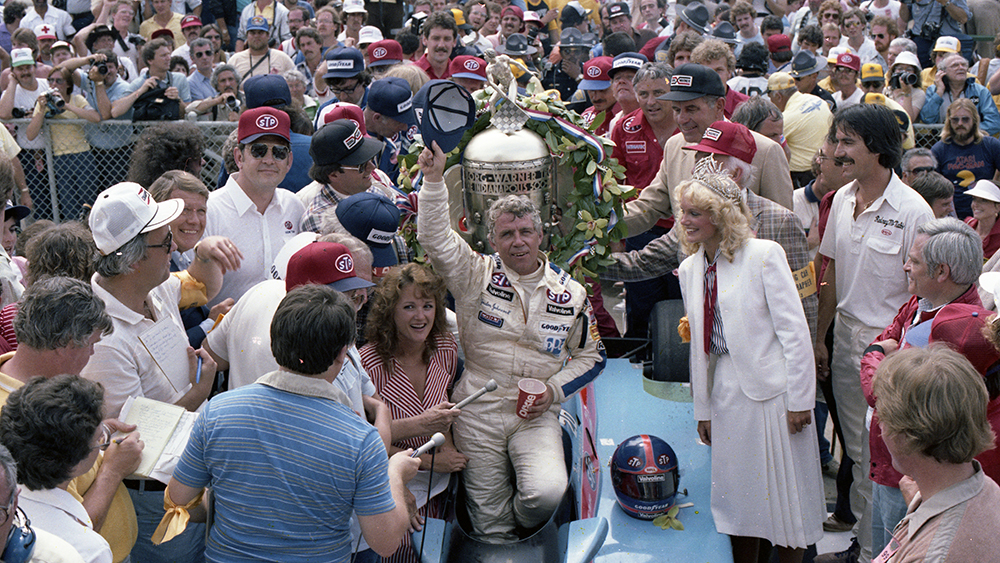
Before reaching the peak of American open-wheel competition, Johncock built his reputation in sprint cars, a category that has long served as a proving ground for drivers aiming at the Indianapolis 500. That background helped him adapt quickly when his INDYCAR SERIES career began in 1964 with a dirt race in Springfield, Illinois.
By 1965, he was already delivering standout results. In his first Indianapolis 500 start that year, he finished fifth as a rookie, driving a roadster in a race remarkable for the depth of new talent: five rookies finished in the top nine. Nine races later, he claimed his first series victory at the Milwaukee Mile and added the first of his 20 career poles that same year, illustrating both his one-lap speed and his race-day craft.
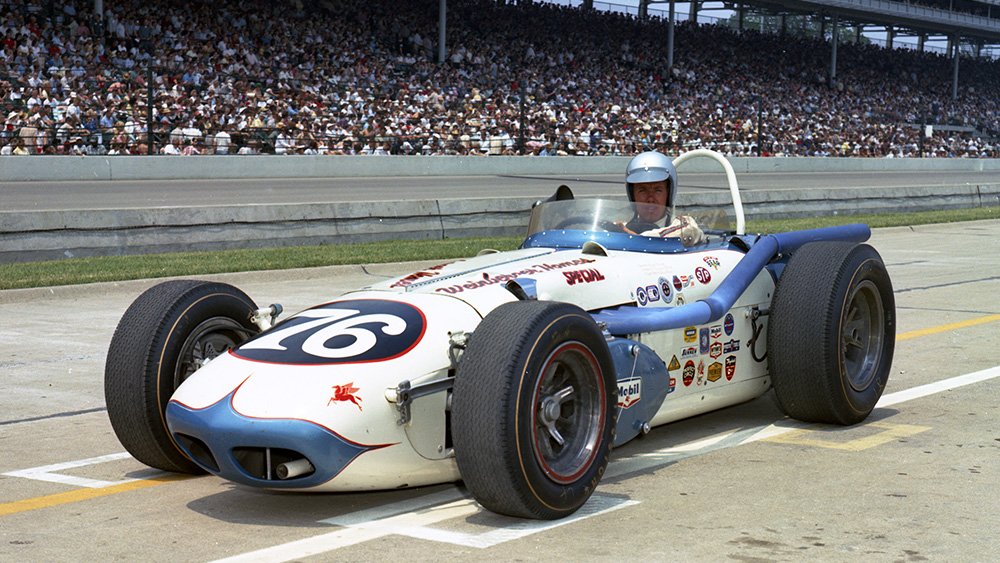
In 1967, Johncock took on the dual role of owner/driver, a demanding combination that is increasingly rare in modern elite motorsport. Joining A.J. Foyt as the sport’s only other owner/driver at the time, he won six races over a three-year span. Balancing car preparation, commercial responsibilities and race performance underscored his understanding of the sport’s technical and operational demands.
Near Misses at Indianapolis and Enduring Consistency
Across his career, Johncock consistently placed himself in contention at Indianapolis beyond his two victories. He finished third in the 500 in 1976 and 1978 and took fourth in 1966 and 1974, results that underlined how frequently he adapted to changing technical regulations and car designs while remaining in the lead group.
In 1977, he appeared poised to add a third Indianapolis 500 win. Johncock was leading A.J. Foyt, who would go on to take victory, with 16 laps remaining when his car’s crankshaft failed. He had led 129 laps that day, a stark example of how mechanical reliability could still determine outcomes in an era when teams balanced aggressive setups with the demands of 500 miles at sustained high speed.
Over 25 seasons, Johncock made 262 starts in the INDYCAR SERIES, an indicator of both his durability and his value to leading teams. He officially stepped away from competition for the first time during the opening week of Indianapolis 500 practice in 1985 and shifted temporarily to the broadcast side, serving on the IMS Radio Network for that year’s race.
Yet his competitive instincts drew him back. Two years later, in 1987, he returned to the cockpit to replace the injured Jim Crawford and finished 22nd in that year’s 500. That comeback reinforced how, even as the field evolved and younger drivers entered the series, Johncock’s experience and race management remained assets that teams could call upon when needed.
The Final Indianapolis 500 Starts and Place in the Record Books
Johncock’s final Indianapolis 500 appearance came in 1992. He retired on Lap 60 with engine failure and was classified 29th, closing a record that still stands out statistically and historically.
His 24 starts in the Indianapolis 500 rank fifth among all drivers, tied with Johnny Rutherford and Scott Dixon. Across those starts, he led 339 laps, placing him 15th on the all-time list for laps led in the race. For an international audience, those figures place Johncock alongside some of the most recognisable names in Indy history and illustrate his sustained presence at the front of the field over multiple technical eras.
Johncock was also one of the last living drivers to have competed in both front-engine and rear-engine Indy cars, a distinction that spans a key transition in single-seater technology. That experience linked him directly to the sport’s traditional roadster days and to the modern aerodynamic and rear-engine era that still shapes the Indianapolis 500 today.
Competitive Beyond INDYCAR: NASCAR Forays
Johncock’s versatility extended beyond open-wheel competition. He made 21 starts in NASCAR’s top-division series, including three appearances in the Daytona 500. In 1973, he underlined his adaptability by qualifying fifth for the Daytona 500, a race that demands different racecraft, drafting skills and car dynamics compared to Indy cars.
Across his NASCAR outings he registered three top-five finishes, highlighted by fourth place in the 1973 Firecracker 400 at Daytona International Speedway. He also claimed a pole position at Atlanta Motor Speedway that year. For teams and observers, those results demonstrated that his pace was transferable across disciplines, strengthening his reputation as a complete racing driver capable of stepping into unfamiliar machinery and still competing near the front.
Life After Racing and Lasting Legacy
After his second retirement from racing, Johncock stepped away from the high-profile environment of major events and focused on his timber business in South Branch, Michigan, located roughly 200 miles north of Detroit. The shift highlighted a recurring theme in his life: a preference for practical work and relative anonymity once the helmet was off.
He led such a quiet life that some employees were surprised to learn their employer had once been a professional racing driver, let alone a two-time Indianapolis 500 winner. Most of his racing memorabilia remained in the basement of his home. In the living room, his two Indianapolis 500 winner’s plaques shared wall space with artwork of the 1982 victory, the race’s checkered flag and a stuffed deer head, a juxtaposition that reflected both his competitive history and his rural lifestyle.
Johncock seldom attended the Indianapolis 500 after retiring, explaining his perspective on his career with characteristic understatement.
“It was a job I used to have,” he said of racing. “Now I have a different job.”
Even as he stepped back from the paddock, his contribution to the sport was formally recognised. Johncock was inducted into the Indianapolis Motor Speedway Hall of Fame in 1997 and the International Motorsports Hall of Fame in 1999, institutional confirmations of a career that left a lasting mark on both the Indianapolis 500 and top-level American single-seater racing.
Impact on the Modern INDYCAR Landscape
Johncock’s era spanned a period of rapid change in safety standards, car construction and event management for the Indianapolis 500 and the broader championship. His 1973 victory came during a season that intensified scrutiny on race procedures and weather-related decision-making, while his 1982 win highlighted how close competition and strategic risk-taking could be under the existing technical regulations.
For current INDYCAR teams and drivers, his career provides several reference points:
- how veteran drivers adapt to evolving chassis and engine rules over multiple decades;
- the importance of balancing outright speed with mechanical sympathy in a 500-mile race;
- the competitive value of experience in both front-engine and rear-engine platforms.
Those lessons remain relevant as modern drivers chase the same Borg-Warner Trophy Johncock lifted twice, under a regulatory structure that has continued to evolve while preserving the core challenge that defined his most famous performances.
Family
Gordon Johncock is survived by his wife, Sue; three daughters (Patsy, Pamilee and Peggy); two sons (Gordon Jr. and Wally); a stepdaughter (Valerie); 12 grandchildren; 17 great-grandchildren; and one great-great grandchild.
