
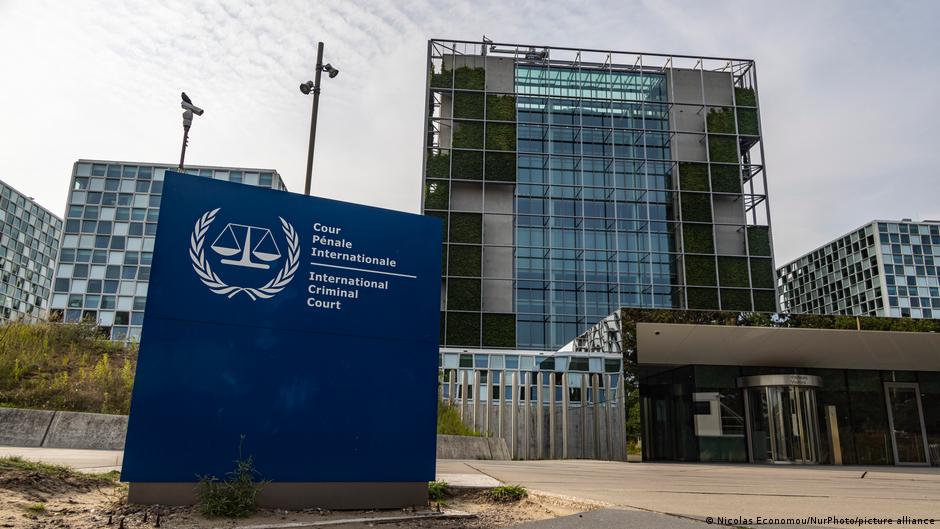
THE HAGUE – US Secretary of State Marco Rubio has launched a systemic campaign to undermine the International Criminal Court (ICC), threatening to dismantle the institution “brick by brick” through a combination of diplomatic coercion, financial sanctions, and visa restrictions.
The escalation marks a pivotal shift in Washington’s relationship with the Hague-based tribunal, moving from sporadic legal disputes to a strategic effort to neutralize the court’s perceived authority over American citizens and interests. The move arrives as the ICC continues to navigate high-profile investigations into global leaders, creating a friction point between the United States’ pursuit of national sovereignty and the international community’s push for legal accountability.
The State Department has outlined a series of aggressive measures currently under consideration to execute this campaign. These include:
- The imposition of visa restrictions on ICC staff and officials.
- Enhanced sanctions targeting the court itself and its affiliated organizations.
- Increased diplomatic and financial scrutiny of non-US countries that “refuse to reject the ICC’s illegitimate authority” while remaining recipients of US assistance.
“What the US and Marco Rubio have now essentially done is make public something that has been going on for more than a year,” said Andreas Schüller, co-director of the International Crimes and Legal Accountability Program at the European Center for Constitutional and Human Rights (ECCHR) in Berlin. “The fact that it is now being declared a campaign shows that it is being pursued strategically, that it is broader in scope, and that other countries – including those that are not ICC members – are also being brought on board to help apply pressure.”
The Legal Divide: ICC vs. ICJ
The current tensions highlight a common point of confusion regarding the two primary judicial bodies based in The Hague. While both operate within the city, their mandates are distinct and sit within different corners of the international legal order.
The International Court of Justice (ICJ) is the principal judicial organ of the United Nations. Based in the historic Peace Palace, the ICJ settles legal disputes between sovereign states and issues advisory opinions requested by UN organs and specialized agencies. In contrast, the International Criminal Court (ICC), established in 2002 under the Rome Statute, is an independent treaty-based body designed to prosecute individuals for the most serious crimes of concern to the international community: genocide, war crimes, crimes against humanity, and, in defined circumstances, the crime of aggression.
The ICC currently has 125 member states. The United States, Russia, and China are among the most prominent global powers that have not joined the treaty, meaning the court has no automatic jurisdiction over crimes committed on their soil and relies instead on territorial or personal links to states that have ratified the statute.
Accountability and the Principle of Complementarity
Despite the US’s non-member status, the ICC can exercise jurisdiction if alleged atrocities are committed on the territory of a member state or by a national of a member state. This legal mechanism is what enabled the court to issue arrest warrants for Russian President Vladimir Putin and Israeli Prime Minister Benjamin Netanyahu when alleged crimes were tied to situations formally under ICC investigation.
The court operates on the principle of complementarity, meaning it only intervenes when national legal systems are “unwilling or unable” to genuinely carry out the investigation or prosecution. In practice, that standard forces prosecutors and judges in The Hague to assess the quality, independence, and good faith of domestic proceedings – a judgment that states like the US insist should remain squarely within their own sovereign control.
“It cannot be that such serious crimes are committed, regardless of the conflict, and those primarily responsible – above all government leaders and other figures in power – go unpunished. Nothing happens. That is unacceptable for victims, but ultimately for all of us,” said Kai Ambos, an international law expert at the University of Göttingen.
For governments, that tension goes beyond symbolism: an active ICC investigation can complicate military cooperation, arms transfers, and diplomatic engagement, and can expose serving officials to arrest if they travel to member states willing to execute ICC warrants.
Sovereignty and the ‘Hague Invasion Act’
The current US hostility is rooted in a long-standing fear that the ICC could be used as a political tool to target US personnel, particularly in conflict zones where American forces operate alongside treaty members. This sentiment was previously codified in the American Service-Members’ Protection Act of 2002 – colloquially known as the “Hague Invasion Act” – which authorizes the US president to use “all means necessary” to free US personnel detained by the ICC and places strict limits on US cooperation with the court.
Secretary Rubio has framed the court’s existence as a direct threat to the American legal framework and to Congress’s control over the deployment and accountability of US forces. In a recent video address, he argued that Border Patrol agents and US Marines would be “left at the mercy of foreign judges thousands of miles away” if the court is not checked.
While no formal cases are currently pending against US citizens, legal friction persists regarding specific operations. Former ICC prosecutor Luis Moreno Ocampo recently characterized the targeted killing of alleged drug smugglers in the Caribbean by US forces as potential crimes against humanity. Since last summer, US forces have killed at least 177 alleged smugglers in precision strikes, often without prior judicial contest, sharpening the question of whether external scrutiny could one day extend beyond rhetoric to concrete indictments.
Institutional Resilience and Political Paradoxes
The ICC has already begun adapting to US pressure. After the State Department imposed sanctions on ICC judges during a previous administration, the court sought to reduce its operational dependence on US technology, replacing Microsoft Office software with German open-source alternatives and reviewing its exposure to US-based financial and cloud-service providers.
However, legal experts warn of a “chilling effect” where prosecutors may avoid pursuing US suspects to avoid retaliation, or where third-party companies cease working with the ICC to avoid risking their US business interests. For a court that depends on state cooperation for arrests, evidence-sharing, and funding, even informal pushback from Washington can reshape how cases are prioritized and pursued.
The European Union and the German government have issued immediate support for the ICC following Rubio’s threats, with German Foreign Minister Johann Wadephul asserting that the court makes the world “safer and more just.” European diplomats describe the court as a cornerstone of rules-based multilateralism and privately warn that sustained US sanctions could force the bloc to design workarounds in procurement, secure communications, and financial channels to keep the tribunal functioning.
The current campaign also reveals a stark reversal in US domestic politics. In 2022, the US Senate passed a resolution describing the ICC as “an international tribunal that seeks to uphold the rule of law” and welcomed its investigations into Russia’s invasion of Ukraine. That resolution was co-sponsored by the late Republican Senator Lindsey Graham and current Secretary of State Marco Rubio, underscoring how quickly US policy toward the court can swing when national interests and political incentives change.
For now, the ICC remains operational in The Hague, continuing its investigations into multiple global conflicts while the US State Department evaluates the implementation of its proposed sanctions. The confrontation is emerging as a test case for whether a powerful non-member state can, through sustained political and economic pressure, blunt the reach of a court designed to sit above national politics – and whether other governments will ultimately choose alignment with Washington’s campaign or with the system of international criminal justice it is seeking to constrain.
Related reading
