
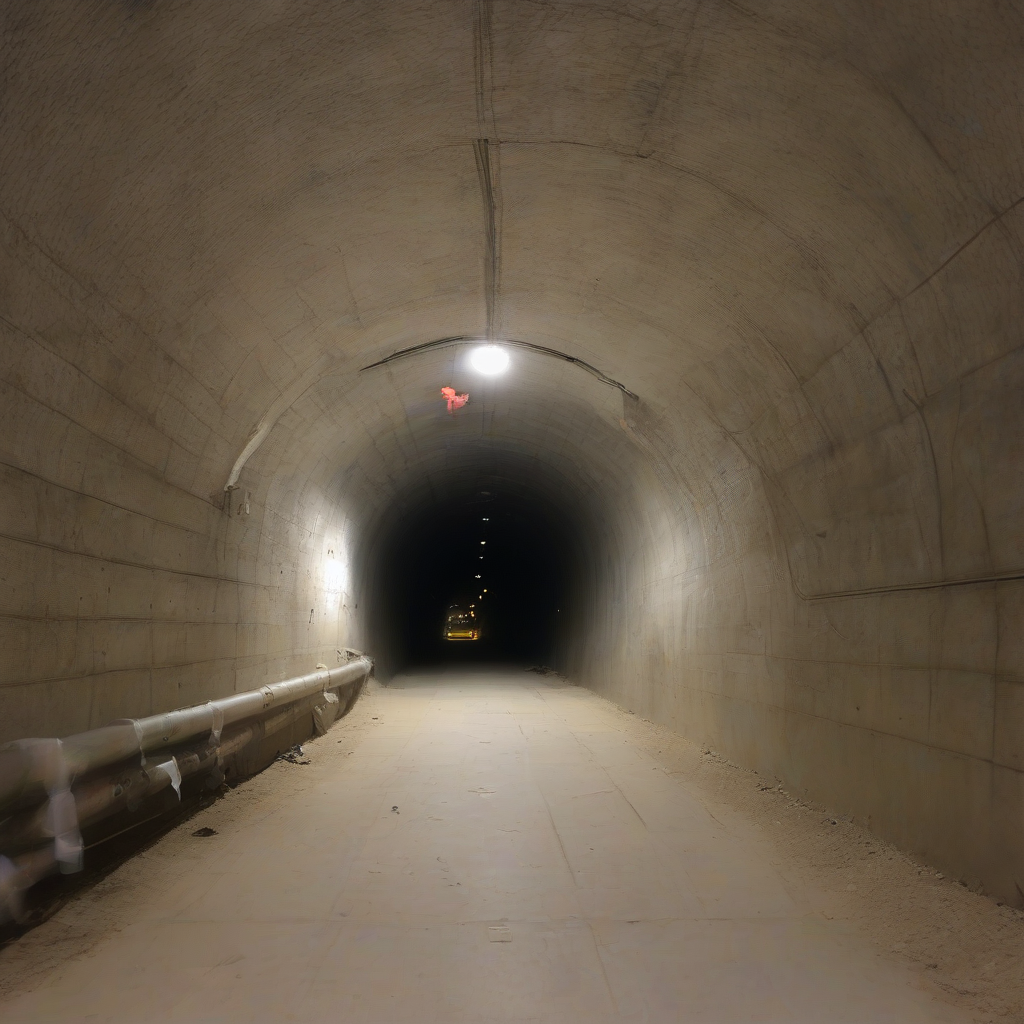
RAFAH – The Israel Defense Forces (IDF) have completed the permanent sealing of a strategic underground tunnel complex in southern Rafah that served as a detention site for LT Hadar Goldin.
The operation marks the final structural elimination of a facility that functioned as a high-level command-and-control center for Hamas. The sealing follows the return of Goldin’s remains to Israel in November 2025 as part of a framework for the return of hostages.
LT Hadar Goldin was killed in battle in the Gaza Strip and abducted on August 1, 2014, during Operation Protective Edge.
Strategic Scale of the Rafah Complex
The tunnel complex was identified as a critical node for the Hamas military wing, specifically utilized by the Commander of the Hamas Rafah Brigade to plan and advance terrorist operations. Military officials say the network formed part of the wider system of cross-border and intra-Gaza tunnels that Israel has long described as central to Hamas’s military infrastructure and decision-making.
Engineering troops from the Gaza Division and the Southern Command spent three months executing the sealing process. The operation required the use of more than 30,000 cubic meters of concrete to ensure the structure was rendered unusable, in line with Israel’s declared objective of degrading Hamas’s ability to regroup in areas previously cleared by ground forces.
The decision to neutralize the complex is also being framed in Jerusalem as a measure consistent with Israel’s obligations under the laws of armed conflict and its own Basic Laws, which together underpin the government’s responsibility to protect Israeli citizens and soldiers while operating within the framework of Common Article 3 of the Geneva Conventions.
Technical specifications of the neutralized complex include:
- Total Length: Exceeding 16 kilometers (approximately 10 miles).
- Internal Infrastructure: Approximately 80 individual living quarters.
- Primary Function: Command-and-control center for Hamas operations.
Israeli defense officials argue that the scope and scale of the Rafah site illustrate how deeply entrenched Hamas command assets had become in the southern Gaza Strip, complicating both military planning and post-conflict reconstruction efforts.
Operational Coordination and Execution
The location of the tunnel was identified through a joint operation by the IDF Southern Command, involving the Yahalom combat engineering special forces unit and Shayetet 13, the naval commando unit. The mission drew on intelligence from multiple branches of the security establishment, according to officials, and formed part of a broader campaign against cross-border smuggling and military build-up in Rafah.
The complex was situated near the Philadelphi Corridor, the strategic buffer zone separating the Gaza Strip from Egypt. Control and monitoring of this corridor have been a recurring focus of Israeli-Egyptian security coordination and feature in arrangements tied to the implementation of the 1979 Egypt-Israel Peace Treaty and subsequent security protocols.
According to the IDF, the tunnel network was constructed beneath several civilian sites, including:
- Residential neighborhoods
- Mosques and kindergartens
- Medical clinics and a school
- A UNRWA clinic
Military spokespeople say that construction beneath such civilian infrastructure complicated both targeting decisions and engineering work, requiring prolonged clearance, evacuation, and verification phases meant to reduce harm to non-combatants. Humanitarian agencies, meanwhile, have warned that extensive subterranean operations and subsequent sealing can further damage already fragile basic services in densely populated urban areas.
The neutralization of the site concludes a multi-month effort by the Yahalom unit to permanently obstruct the subterranean corridors used by Hamas leadership in the southern sector of the territory. Israeli officials contend that closing the Rafah complex is intended not only to prevent future military use but also to signal that any attempts to reconstitute similar infrastructure will face sustained, coordinated action by security forces and their regional partners. For Gaza’s future governance and reconstruction, diplomats say, the dismantling of such large-scale military assets will be a central element in any negotiated security arrangements for the enclave’s southern border and its critical Rafah crossing with Egypt, which the United Nations recently reported had reopened in a limited capacity after a prolonged closure.
Keep reading
