
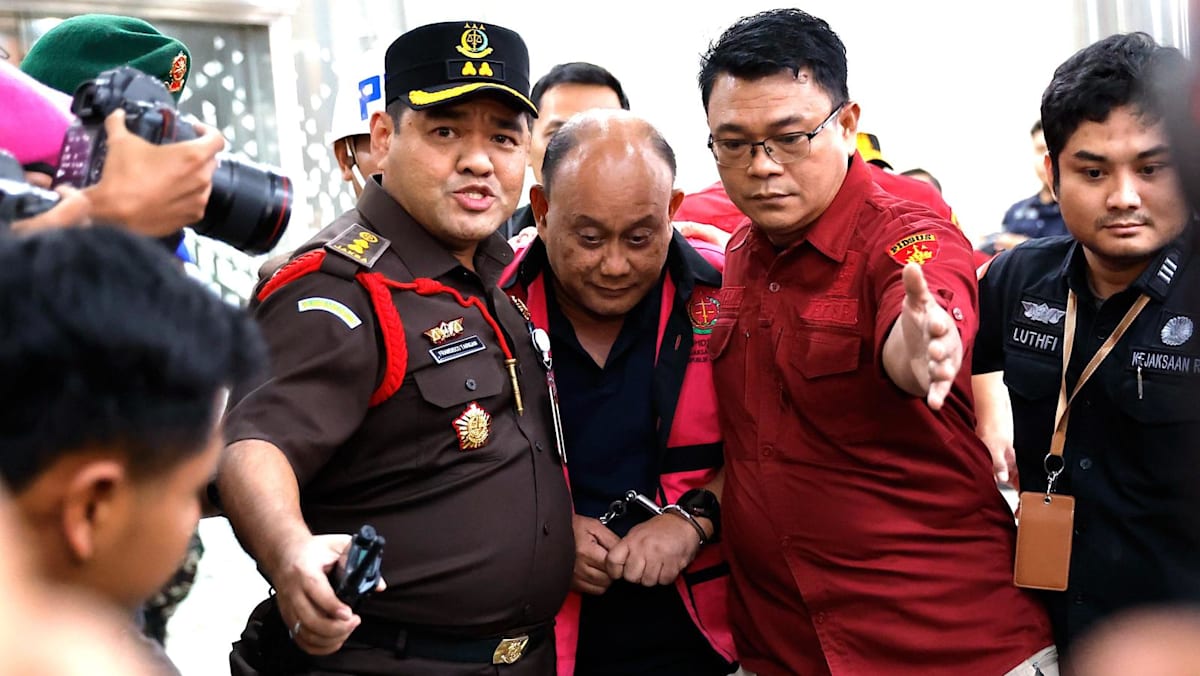
JAKARTA – Indonesian authorities have arrested the former head of the National Nutrition Agency, Dadan Hindayana, as part of a sweeping corruption probe into the government’s flagship free school meals program. The arrests, which include two deputy heads, come less than 24 hours after President Prabowo Subianto dismissed the officials amid reports of systemic graft and mass food poisonings.
The collapse of the agency’s leadership represents a significant early crisis for the Prabowo administration. The nutrition initiative was the centerpiece of his 2024 electoral campaign, framed as a generational investment to eradicate stunting and malnutrition across the archipelago. The subsequent scandal now links the program’s failure not only to administrative incompetence but to high-level criminal mismanagement.
Syarief Sulaeman Nahdi of the attorney general’s office (AGO) confirmed the arrests on Wednesday, stating that the officials stand accused of “crimes in the management” of the program.
Allegations of Procurement Fraud
The AGO investigation centers on claims that Hindayana, an entomologist who led the agency from its inception in August 2024, leveraged his position to steer lucrative contracts toward specific foundations. According to Syarief, Hindayana allegedly influenced the selection of entities to manage the program’s kitchens despite those foundations failing to meet established government standards. Investigators believe Hindayana maintained secret ownership of these foundations through external intermediaries.
The National Nutrition Agency, a non-ministerial body reporting directly to the president and funded through the state budget, was granted broad discretion over procurement under Indonesia’s state finance and public procurement framework. That autonomy is now at the center of the probe.
Beyond the operational management of kitchens, the investigation has uncovered an extensive procurement scheme involving items unrelated to nutritional delivery. The AGO alleges that the agency oversaw the marked-up procurement of:
- Over 21,000 electric motorbikes
- 32,000 pairs of shoes
- 5,400 television sets
Officials say these goods were justified internally as “supporting infrastructure” for outreach and monitoring, but investigators are examining whether they were instead used to divert funds and cultivate political support networks ahead of regional elections.
The scale of the raids underscores the severity of the allegations. AGO personnel executed a 2:00 a.m. raid on the agency’s headquarters on Wednesday using multiple vehicles. The building remained under lockdown through the morning, with staff barred from entering the premises as investigators secured evidence and copied internal records.
A Public Health Crisis
While the financial corruption has drawn the attention of the AGO, the program has been plagued by a simultaneous public health failure that has shaken public confidence in the state. The initiative was designed to serve 82.9 million children, as well as pregnant and breastfeeding women-nearly one-third of Indonesia’s total population-through daily meals distributed via schools and community health posts.
Instead, the rollout was marred by widespread illness and uneven quality control. According to the Network for Education Watch, a non-governmental organization, cases of food poisoning linked to the state-provided meals have affected at least 33,000 children as of April. Local health authorities in several provinces have reported clusters of vomiting, diarrhea, and dehydration, prompting temporary suspensions of meal distribution in some districts.
Parents’ groups and school administrators have criticized the agency for failing to publish clear food safety protocols and inspection results, and for outsourcing preparation to little-known foundations with limited track records in large-scale catering.
“Throughout the ongoing evaluation process, all programmes of the National Nutrition Agency will continue to run as they should,” stated State Secretary Prasetyo Hadi during the announcement of the dismissals.
The statement has done little to reassure critics, who warn that keeping the program running without visible reforms risks compounding both the health risks and the financial exposure.
Fiscal Tension and Market Stability
The scandal arrives as the Indonesian government grapples with the immense cost of the program, which carries a budget of at least US$15 billion over its initial phase. The scale of the spending has created friction between Prabowo’s populist domestic goals and the requirements of international fiscal discipline under Indonesia’s long‑standing legal deficit cap of 3 percent of gross domestic product.
Global investors and ratings agencies have expressed concern that the program’s expenditures, if poorly controlled, could push Indonesia’s fiscal deficit toward or beyond those thresholds, forcing the Finance Ministry to either trim other social spending or increase borrowing. These anxieties were compounded by the broader geopolitical climate, as Jakarta has recently been forced to implement budget cuts to mitigate the economic volatility caused by the conflict in the Middle East and higher global interest rates.
The National Nutrition Agency was intended to be the primary vehicle for achieving “Golden Indonesia 2045,” a state vision to transform the country into a top-five global economy by its centenary. The free meals program was pitched as both a human capital investment and a visible symbol of a more assertive welfare state, echoing earlier nationwide initiatives such as the expansion of universal health coverage.
The current corruption probe instead suggests a gap between the administration’s ambitious social engineering and its internal oversight mechanisms, including the capacity of line ministries, the national audit board and parliament’s budget commission to scrutinize accelerated spending programs.
President Prabowo has publicly acknowledged the failures of the rollout and vowed to discipline those found guilty of wrongdoing. His aides have signaled that the palace will review the governance structure of the National Nutrition Agency, raising the possibility that future phases of the program could be shifted back under an existing ministry or tied more closely to established school feeding schemes overseen by international partners.
The three defendants remain in custody in Jakarta as the AGO continues its investigation into the flow of funds, the pricing of procurement contracts, and the identity of the third-party intermediaries used to mask the ownership of the managing foundations. Further indictments against private contractors and regional officials are widely expected, leaving the fate of Indonesia’s most visible new social program – and its credibility with voters and markets – still in the balance.
Keep reading
