
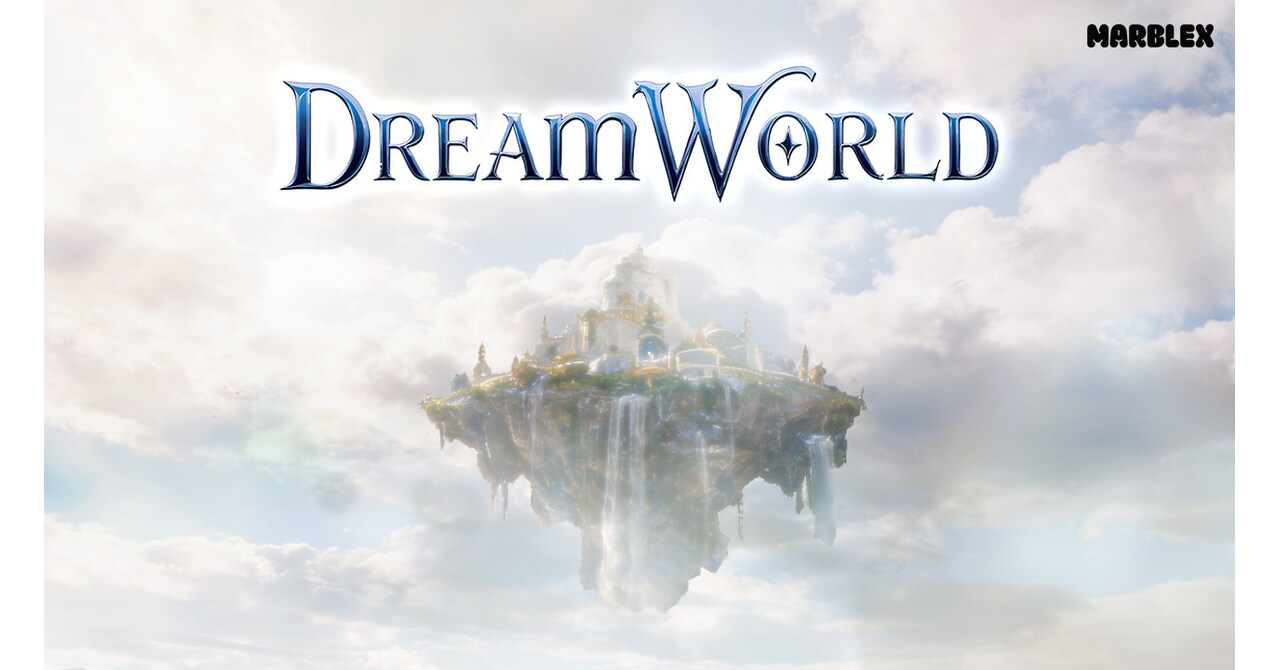
MARBLEX brings DreamWorld to Steam Early Access
MARBLEX, a blockchain‑powered subsidiary of South Korea’s Netmarble, is taking a flagship swing at PC with DreamWorld, a creator‑driven sandbox MMO built on Unreal Engine 5. Announced as an Early Access title for Valve’s Steam platform, the game is positioned as both a technical showcase and a stress test for large‑scale, real‑time co‑creation in a single shared world.
“DreamWorld has been five years in the making, built by a team obsessed with one goal: letting massive numbers of players create and build together in real time. We’re excited to bring that vision to Steam, and to collaborate with MARBLEX as our global marketing partner.”
Players can wishlist and sample the build via the Steam store page, with community updates centralized on the game’s official Discord. The publisher frames this first PC push as part of a broader MARBLEX effort to move beyond Web3 mechanics and toward mainstream, fun‑first game experiences.
A single‑shard sandbox built on Unreal Engine 5
The project targets a “one world for everyone” model more often associated with experimental MMOs than with blockchain‑adjacent publishers. Instead of spinning up parallel instances, the simulation persists continuously and streams content as players explore, build, and interact.
- Single persistent world: no regional servers or shards; all players share the same logical space, with concurrency limits still to be proven in live conditions.
- Infinite procedural generation: terrain and biomes are generated and streamed to support ongoing exploration across the single shard.
- Real‑time co‑creation: large‑scale building tools are designed for simultaneous collaboration, enabling groups to shape shared spaces rather than isolated plots.
- UE5 toolchain: features such as World Partition, Nanite, and Lumen aim to support large worlds, high scene complexity, and dynamic lighting while maintaining performance targets on consumer hardware.
For regulators and policymakers watching large‑scale online worlds, the single‑shard design concentrates community behavior—and risk—into one continuous environment rather than spreading it across many small servers.
AI‑driven building meets MMO progression
DreamWorld layers an MMO progression loop on top of the sandbox foundation, with resource collection, crafting, and combat supplemented by broad mobility options intended to keep traversal fluid even as the world expands.
- Creation systems: player‑built structures from small contraptions to city‑scale projects, with support for interactive mini‑games and shared public spaces.
- AI text‑to‑3D: players can generate custom structures on the fly, a feature that hinges on fast inference, robust content safety, and rights management to avoid infringing replicas of protected works.
- Progression: resource gathering across varied biomes, crafting of weapons and spells, and traversal including running, swimming, climbing, gliding, flying, diving, and mounts.
That blend of AI‑generated assets and persistent player economies places DreamWorld within a growing class of titles that must navigate evolving guidance on AI content, online safety, and digital consumer protection rather than treating them as afterthoughts.
Timeline and availability
MARBLEX is tying the rollout closely to Steam’s existing discovery machinery, using festival visibility as a ramp into paid Early Access.
| Date (2026) | Milestone |
|---|---|
| February 23 | Playable demo featured during Steam Next Fest |
| March 10 | Global Early Access release on Steam |
During Early Access, MARBLEX and the DreamWorld team will be judged not only on feature cadence but on how quickly they can respond to live‑ops incidents, moderation challenges, and balance issues surfaced by a mixed global player base.
Architecture and scale considerations
Single‑shard MMOs trade operational simplicity for significant engineering complexity. Keeping tens of thousands of players in one world state demands careful partitioning of simulation, state, and network traffic, as well as rapid recovery plans when any of those layers fail.
- Interest management: dynamically limits updates to the entities and players that matter for each client, reducing bandwidth and CPU load.
- Geographic partitioning: distributes world regions across server nodes while preserving seamless traversal, so players do not experience visible “zone lines.”
- Authoritative state and rollback: protects game integrity and enables smooth recovery from faults, exploits, or cheaters without wiping legitimate progress.
- Content streaming: pipelines assets and terrain data continuously to avoid loading screens, a prerequisite for DreamWorld’s exploration pitch.
- Load‑shedding tactics: mechanisms such as temporary soft caps, instanced interiors, or time dilation during extreme events to preserve stability when large communities converge on the same location.
For institutional investors and platform partners, these architectural choices will determine not just player experience but also infrastructure cost, incident response complexity, and the feasibility of long‑term live operations.
Compliance, safety, and market implications
Large‑scale user‑generated worlds carry obligations that go beyond rendering performance. As DreamWorld opens to a wider audience, several compliance and governance layers are material, particularly in jurisdictions tightening rules on online platforms and AI‑assisted creation.
- UGC moderation: pre‑ and post‑publication filters for hate, harassment, and illegal content; reporting tools; rapid takedown workflows; and clear appeals processes to align with emerging platform accountability expectations.
- IP risk controls: AI‑assisted and human review to reduce trademarked or copyrighted replicas produced via text‑to‑3D prompts, in line with existing copyright regimes and current debates over generative models.
- Privacy and age gating: account controls, parental settings, and data minimization consistent with frameworks such as the EU General Data Protection Regulation when processing personal data of players in the European Economic Area.
- Payments and platform rules: Early Access monetization, refunds, and DLC must align with storefront policies and consumer law; any optional web3 features, if activated, will need careful separation from on‑platform transactions to avoid confusion around custody, volatility, and loss.
- Resilience: DDoS protection, anti‑cheat, and secure build pipelines to maintain service continuity as concurrency grows and as DreamWorld becomes a more visible target for attacks and exploits.
Regulators are already scrutinizing loot boxes, opaque recommendation systems, and cross‑border data flows. A single‑world, AI‑augmented MMO gives them a new test case for how those concerns play out in practice when creation tools and economies are fully in players’ hands.
Signals to watch during Early Access
For institutional stakeholders—from regulators and consumer‑protection bodies to investors and platform partners—the Early Access window will provide critical data on whether DreamWorld’s technical and governance stack can scale.
- Concurrency stability: size and duration of synchronized play sessions the backend can sustain without degradation or frequent emergency restarts.
- Creation throughput: how quickly player‑made structures and AI‑generated assets propagate across the shared world, and whether that velocity triggers moderation or performance bottlenecks.
- Economy balance: resource rarity, crafting progression, and safeguards against duping or inflation, all of which can influence player trust and potential regulatory attention to virtual economies.
- Moderation velocity: time from user report to action for problematic builds, prompts, or social behavior, as well as transparency around enforcement decisions.
- Roadmap cadence: clarity on feature unlocks, server performance targets, cross‑platform ambitions, and export tools for creators who may treat DreamWorld as both a game and a quasi‑work platform.
The Netmarble factor
MARBLEX operates within Netmarble’s broader ecosystem, which has supported large‑scale live operations across multiple franchises. The company’s MBX infrastructure has powered community and asset systems in titles such as Meta World: My City, A3: Still Alive, and Ni no Kuni: Cross Worlds, giving MARBLEX experience in managing persistent economies and digital ownership at scale.
That operational track record—and the marketing reach that comes with it—gives DreamWorld a runway to validate its single‑world thesis in front of a global PC audience. If MARBLEX and Netmarble can pair technical ambition with credible governance and compliance, DreamWorld’s Early Access phase could become a reference point for how AI‑enhanced, user‑generated MMOs are built and regulated over the next decade.
Worth a look
