
A compressed crew rotation kept the U.S. segment fully staffed
When a departing crew undocked on January 15, 2026, the International Space Station briefly entered an unusual posture: just one NASA astronaut, Chris Williams, was left to cover the sprawling U.S. Orbital Segment. Williams had arrived in November aboard a Soyuz with Roscosmos crewmates Sergey Kud‑Sverchkov and Sergei Mikaev, inheriting an outpost where many subsystems are now well past their second decade in service. The workload tilted toward inspections, preventative maintenance, and watchstanding to keep science racks, life support, and power systems stable.
For NASA, that short interval functioned as a live test of how lean the U.S. segment can safely run while the agency balances ISS operations with the ramp‑up of commercial stations and Artemis. It also put into practice long‑standing policies under the station’s intergovernmental framework, which commits partners to shared responsibilities for crew safety, vehicle access, and continued operations.
Why NASA and SpaceX advanced the next launch window
NASA and SpaceX accelerated the next Crew Dragon rotation to compress the solo interval. That decision balanced operational risk with schedule reality: launch site readiness, Eastern Range availability, orbital phasing to the station, and the program’s human‑rating checks had to line up without compromising flight rules. Program managers also had to ensure that any adjustment to dates stayed within agreed crew‑time and risk limits that are reviewed by NASA’s independent safety panels and international partners.
- Launch readiness gates: vehicle build status, propulsion green runs, parachute and heat‑shield closeouts, and spacecraft‑to‑Falcon 9 integration reviews.
- Safety governance: Flight Readiness Review, mission‑specific hazard analyses, and integrated simulations with mission control and crew.
- Licensing and range: commercial launch licensing and range safety constraints, plus weather commit criteria at both pad and abort zones.
- Orbital mechanics: day‑of‑launch phase angle to enable a same‑day or next‑day rendezvous while preserving multiple propulsive abort opportunities.
The compressed schedule did not change who makes the final call: launch authority still rests with the NASA launch director and SpaceX flight director, advised by engineering and safety boards that have veto power if risk creeps beyond certified limits.
Solo coverage on an aging platform changes the risk profile
Running the U.S. segment with a single astronaut is sustainable for short periods, but it narrows margins. Some tasks can be shifted to ground controllers; others require bodies, especially when hardware outside the hull is involved. The program’s long‑standing policy of “integrated crews” with Roscosmos protects against single‑vehicle grounding risks and helps ensure at least one U.S. and one Russian specialist are always on orbit to keep both halves of the station viable.
Internally, managers characterize this not as an emergency posture but as a deliberately bounded configuration: acceptable for days or weeks, but not something to normalize as a steady‑state operating model. The interval with Williams as the only NASA astronaut underscored how quickly routine station life can hinge on one person’s health, workload, and sleep schedule.
| Area | Impact with one U.S. astronaut | Safeguards |
|---|---|---|
| Extravehicular activity (EVA) | Planned U.S. spacewalks pause; two qualified crew are required for EVA operations. | Defer tasks; use robotic workarounds via Canadarm2 where possible. |
| Payload operations | Reduced hands‑on experiment turnover and maintenance. | Ground commanding for many racks; prioritize time‑critical science. |
| Station maintenance | Higher share of time goes to inspections, filters, and fluid system checks. | Pre‑planned maintenance kits; remote procedure support from ground. |
| Visiting vehicles | Tighter timelines for cargo transfer and hatch operations. | Staggered transfer plans; additional support once new crew arrives. |
| Contingencies | Lower surge capacity during off‑nominal events. | On‑call assistance from Russian segment; robust emergency procedures. |
Reinforcements arrived on a tight, predictable cadence
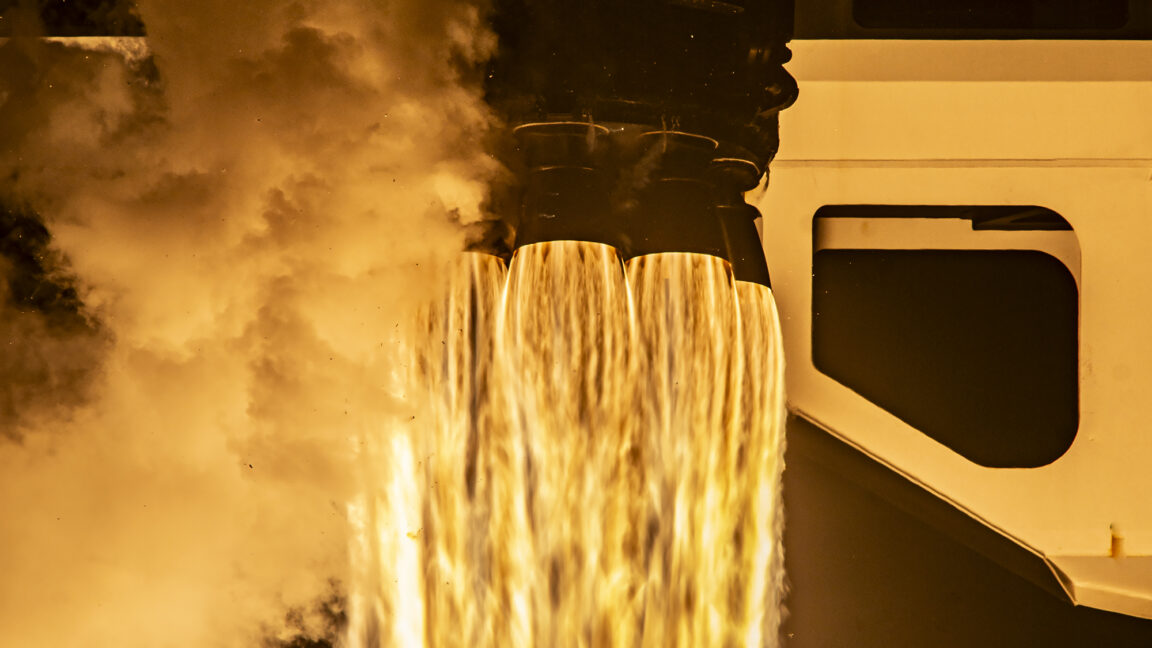
With the rotation pulled forward, Dragon lifted off early Friday, February 13, 2026, and reached station on Saturday evening, February 14, 2026. The fresh crew—Jack Hathaway and Jessica Meir from NASA, Sophie Adenot from ESA, and Andrey Fedyaev from Roscosmos—restored full shift coverage across life support, power, robotics, and science operations. Their arrival also brings back immediate readiness for U.S. EVAs; Meir is already EVA‑qualified from an earlier expedition, shortening the time to resume exterior work if needed.
The cadence also matters politically. Regular, on‑time crew rotations are a visible metric of how well NASA and its partners are managing the hand‑off from ISS as a government‑run laboratory to a future ecosystem of commercial platforms in low‑Earth orbit, even as national budgets tighten and priorities shift toward lunar and Mars ambitions.
NASA’s human‑spaceflight programs are sharing the same production line
Standing up a crew rotation while preparing the next lunar test flight draws on many of the same engineering and operations disciplines—systems safety, integrated simulations, and mission assurance. The same mission control teams, trajectory experts, and safety professionals are asked to toggle between sustaining ISS, certifying commercial crew vehicles, and closing out open work on Artemis test objectives.
The agency’s message after the launch underscored that parallelism: “This mission has shown, in many ways, what it means to be mission focused at NASA,” a senior official said during a post‑launch news conference. “In the last couple of weeks we brought Crew 11 home early, we pulled forward Crew 12, all while simultaneously making launch preparations for the Artemis II mission. It’s only possible because of the incredibly talented workforce we have here at NASA alongside our contractors, and our commercial and international partners.”
What the new crew enables—immediately
- Deferred maintenance burn‑down: battery bay checks, ammonia loop inspections, and filter swaps proceed without compressing science timelines.
- Robotics tempo returns to normal: Canadarm2 and Dextre tool changeouts that require crew‑assisted setup can be scheduled more flexibly.
- Science throughput rises: hands‑on experiment servicing and sample handling recover from a single‑operator backlog.
- Visiting vehicle flow: cargo unpacking and trash loading can run in parallel, reducing berthed vehicle dwell time.
- EVA readiness: two qualified crew can be brought to suit‑up posture within standard timelines if an external anomaly emerges.
Behind those bullet points sit very terrestrial considerations: congressional oversight of NASA’s safety culture, international expectations that ISS science time be fully used, and pressure from emerging commercial station providers that are watching how the agency juggles operations and transition planning.
The governance takeaway: redundancy is a policy, not just a design choice
The brief solo interval on the U.S. segment highlights why the station’s operating model prizes dissimilar redundancy—multiple vehicles, multiple partners, and cross‑trained crews. Hardware redundancy keeps systems alive; policy redundancy keeps the crew mix resilient when a return is advanced or a launch is pulled forward. By tightening the rotation window without skipping safety gates, the program preserved both.
As NASA and its partners debate the end date for ISS operations and the terms of commercial replacements, episodes like this one will shape future crew‑rotation rules, required backup capabilities, and how much margin must be written directly into operating agreements—not just left to engineering judgment in the weeks before launch.
Key timeline
- November: Chris Williams arrives on Soyuz with Sergey Kud‑Sverchkov and Sergei Mikaev.
- January 15, 2026: Prior crew departs; Williams becomes the sole NASA astronaut on orbit.
- February 13, 2026: Crew‑12 launches on Dragon.
- February 14, 2026: Crew‑12 docks and full U.S. segment staffing resumes.
Worth a look
