
Algorithmic Synchronization in Underwater Robotics
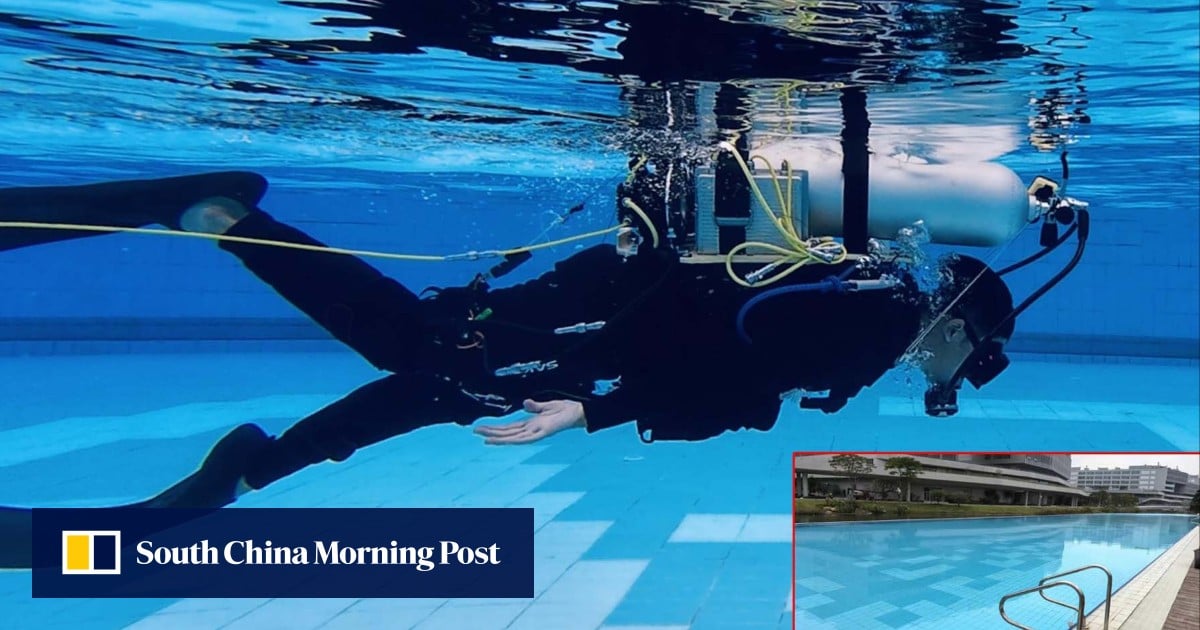
The evolution of maritime exploration is shifting from passive gear toward active, robotic integration. Researchers at the Shenzhen Institute of Advanced Technology, Chinese Academy of Sciences, have developed a specialized exoskeleton diving suit designed to minimize the physical toll of underwater propulsion. Unlike traditional diving equipment, which often adds bulk and resistance, this system utilizes a sophisticated algorithm to shadow a diver’s movements in real-time.
This synchronization ensures that the robotic assistance does not fight the user, but rather augments their natural swimming rhythm. By aligning the exoskeleton’s mechanical output with the swimmer’s cadence, the system significantly boosts underwater agility, allowing for more precise maneuvering in high-pressure environments. In practice, that means the exoskeleton behaves less like an external machine and more like an extension of the diver’s own musculature, a shift with direct implications for how underwater work is planned, supervised, and insured.
Operational Efficiency and Physiological Impact
The primary constraint in professional diving is the metabolic cost of movement. Increased physical exertion leads to rapid oxygen depletion, which shortens “bottom time” and increases the risk of decompression sickness or fatigue-related errors. The integration of an assistive exoskeleton directly addresses this physiological bottleneck by offloading a share of the propulsion burden from the diver’s muscles to powered actuators.
| Metric/Feature | Impact and Capability |
|---|---|
| Oxygen Consumption | Reduced by nearly 40 per cent, allowing longer safe working intervals |
| Control System | Predictive algorithm for precise motion shadowing, tuned to individual gait and kick patterns |
| Movement Profile | Adaptive synchronization with the diver’s natural rhythm, even under changing currents and load |
| Primary Goal | Increase agility and reduce metabolic exertion, lowering the likelihood of fatigue-related mistakes |
For employers, regulators and insurers, these gains translate into a different risk profile: longer task windows at depth, potentially fewer emergency ascents, and new benchmarks for what constitutes “safe” workload in commercial and scientific diving.
Strategic Utility in Maritime Infrastructure and Security
The application of this technology extends far beyond recreational diving, touching on critical infrastructure, environmental monitoring and national security. In the maintenance of subsea cables and pipeline inspections governed by international maritime law, the ability to maintain a steady rate of maneuverability without exhaustion is a safety imperative and a compliance issue. More precise, less fatiguing movement enables divers to adhere more reliably to operational procedures, inspection protocols and reporting requirements.
Beyond industrial utility, the exoskeleton has profound implications for covert military missions and coast guard operations. The reduction in oxygen consumption allows divers to remain submerged longer and move with greater stealth and efficiency, reducing the need for noisy propulsion vehicles. This capability is essential for salvage operations and seabed surveys where precise movement is required to avoid detection or accidental damage to sensitive equipment, including fiber-optic cables and offshore energy installations that are increasingly treated as strategic assets by governments.
Engineering Constraints and System Vulnerabilities
While the algorithmic assistance provides a clear advantage, the deployment of wearable robotics in saltwater environments introduces significant technical risks. The system must contend with extreme hydrostatic pressure and the corrosive nature of saline water, which can degrade actuators and sensors and complicate maintenance cycles.
- Power Density: The reliance on an algorithmic control system requires onboard power, creating a trade-off between battery weight, operational duration and diver mobility.
- Algorithmic Latency: Any lag between the diver’s movement and the exoskeleton’s response could lead to disorientation or physical instability, especially during complex tasks or emergency maneuvers.
- Failure Modes: A mechanical seizure or software crash in a high-pressure zone could potentially trap a diver, necessitating redundant manual release mechanisms that are simple enough to be triggered under stress.
- Data Integrity: In military or law-enforcement applications, the electronic signatures of the exoskeleton must be managed to avoid detection by acoustic or electromagnetic sensors and to protect operational data from interception.
The transition toward soft, bio-inspired robotics in maritime gear represents a broader trend of merging human biology with machine precision, fundamentally changing how humans interact with the deep ocean. As regulators and standards bodies begin to consider exoskeletons not just as equipment but as extensions of the human operator, decisions made now on certification, liability and data governance will shape how quickly this technology moves from experimental labs into everyday use beneath the surface.