
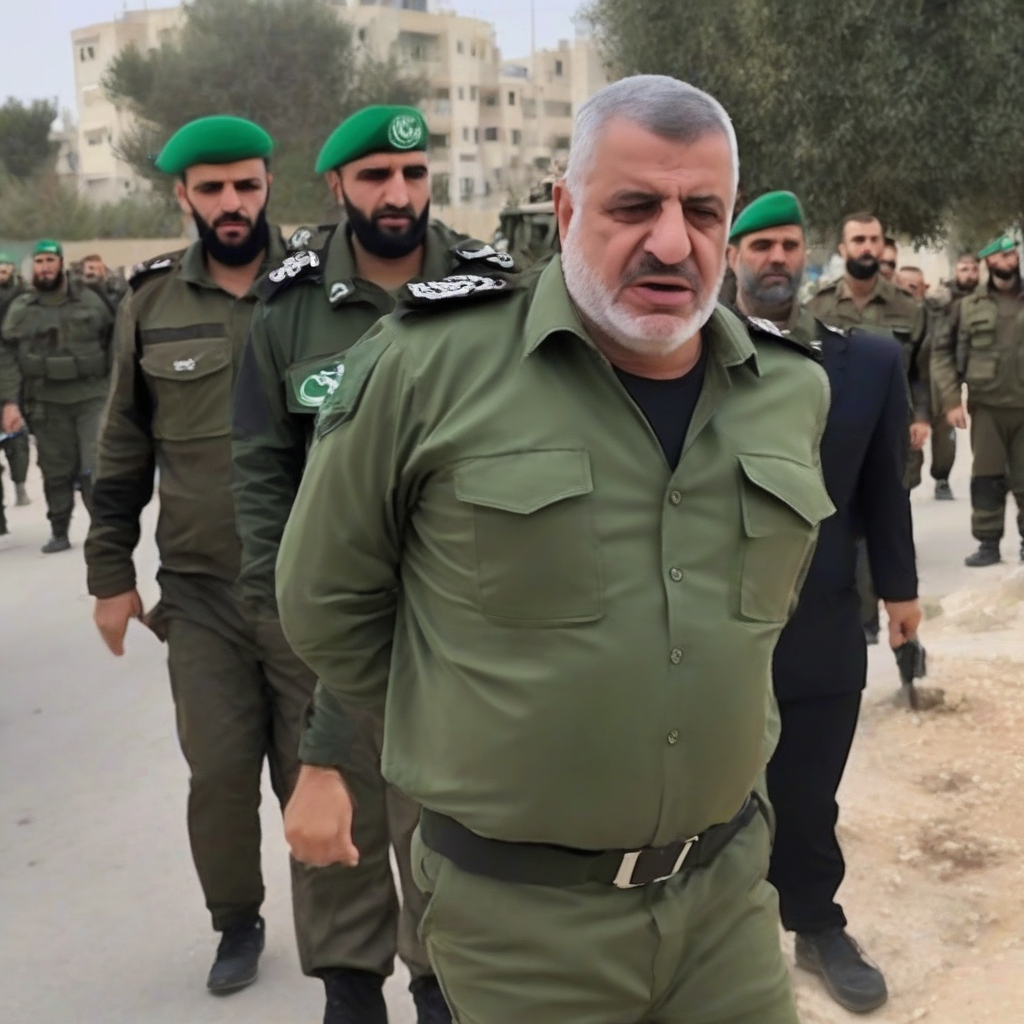
GAZA CITY – Israeli forces killed Mohammed Odeh, the newly appointed military chief of Hamas in the Gaza Strip, in a precision strike on the evening of May 26, 2026.
The operation, which targeted the Rimal neighborhood of western Gaza City, represents the second killing of a Hamas military chief in Gaza within 11 days. The strike follows the May 15 assassination of Odeh’s predecessor, Izz al-Din al-Haddad.
Defense Minister Israel Katz confirmed the death on the morning of May 27, 2026, describing the operation as a “brilliant execution” by the Israel Defense Forces (IDF) and the Shin Bet.
“The fourth commander of the Hamas terror organization’s military wing in Gaza was eliminated yesterday and sent to meet his partners in the depths of hell,” Katz said in a post on X. “We pledged to eliminate everyone who led the October 7 massacre, and that is what we will do. They are all marked for death, everywhere.”
Details of the Rimal Neighborhood Strike
The strike targeted several buildings in the Rimal neighborhood, a densely built commercial and residential district that has been repeatedly hit during the war, which the IDF and Shin Bet identified as hideouts used by Odeh. The security agencies stated that the operation was the result of months of intelligence tracking regarding the movements of Odeh and his aides.
In addition to the primary target, a nearby apartment belonging to another Hamas operative involved in the October 7 attacks was also struck, according to Israeli authorities.
Casualty reports from the ground vary and could not be independently verified by GlobalHeadlinez:
- Gaza’s civil defense agency reported at least three people killed and 20 wounded.
- Media outlets affiliated with Hamas reported that Odeh was killed alongside his wife and sons.
Videos posted to social media appeared to show emergency crews and residents searching through rubble in the aftermath of the strike, as smoke rose above the Rimal area. GlobalHeadlinez was unable to authenticate the footage or confirm the timing of the images.
Intelligence and Command Role
Odeh, estimated to be in his late 40s or early 50s, was a lifelong member of Hamas. He previously served in the group’s internal security unit tasked with identifying suspected Israeli informants and tracking collaborators inside the Gaza Strip.
Prime Minister Benjamin Netanyahu and Defense Minister Katz stated that Odeh served as the head of Hamas intelligence during the October 7, 2023, attacks, in which militants breached the Gaza perimeter fence and entered southern Israel. The IDF asserted that he played a central role in the planning and coordination of the onslaught and continued to direct intelligence operations against Israeli troops throughout the ensuing war.
The leadership succession of the military wing in Gaza has seen rapid and unusually public turnover, as Israel pursues what it calls a campaign to dismantle Hamas’s command structure:
- Yahya Sinwar: Killed by the IDF in May 2024, according to Israeli officials.
- Muhammad Deif and Muhammad Sinwar: Assassinated during the war in separate targeted strikes.
- Izz al-Din al-Haddad: Killed May 15, 2026, while serving as the Gaza military chief.
- Mohammed Odeh: Appointed last week; killed May 26, 2026.
Reports from the Saudi outlet A-Sharq Al-Awsat indicated that Odeh worked closely with al-Haddad to renew Hamas’s organizational structure following the loss of previous leaders. The outlet cited a source claiming Odeh was approached to lead the Izz ad-Din al-Qassam Brigades after the assassination of Muhammad Sinwar in May 2025, though other sources could not confirm this detail, underscoring the opacity of Hamas’s internal decision-making.
Strategic Targeting of October 7 Leadership
The elimination of Odeh is part of a broader Israeli strategy to target every individual involved in the October 7 massacre, during which approximately 1,200 people were killed and 251 taken hostage in the deadliest single day for civilians in Israel’s history.
Israeli authorities have maintained this campaign despite a ceasefire that has been in place in Gaza since October, framing it as a continuing counterterrorism effort rather than a resumption of large-scale hostilities. Officials say the list of targets is derived in part from Israeli security files and surveillance, and in part from information gathered during interrogations of captured fighters and released hostages.
The targeting policy is formally grounded in Israel’s interpretation of its right to self-defense under Chapter VII of the UN Charter, as well as domestic counterterrorism legislation, even as critics argue that repeated strikes in densely populated areas heighten the risk of violations of international humanitarian law.
Odeh had been a target of Israeli operations for several years. In 2025, a strike on his father’s house in Gaza resulted in the death of his eldest son, Amr, according to Palestinian accounts cited by regional media.
“Odeh was responsible for the murder, abduction and injury of many Israeli civilians and IDF soldiers,” Netanyahu and Katz stated. “We will continue to pursue everyone who took part in the October 7 massacre. Sooner or later, Israel will reach them all.”
Israel has also reiterated its long-term goals of removing Hamas from power and facilitating “voluntary emigration” from the enclave “at the right time and in the right manner.” Those stated aims have placed Israeli policy at odds with much of the international community, which has repeatedly affirmed that any future arrangement for Gaza should be consistent with a negotiated two-state framework outlined in past UN Security Council resolutions and the Oslo accords.
The IDF continues to operate in Gaza, having announced the killing of another unnamed October 7 operative last week alongside the death of al-Haddad. Israeli officials have signaled that, despite mounting diplomatic pressure and calls for restraint, the campaign to eliminate what they describe as the “October 7 leadership” will proceed irrespective of formal ceasefire arrangements.