
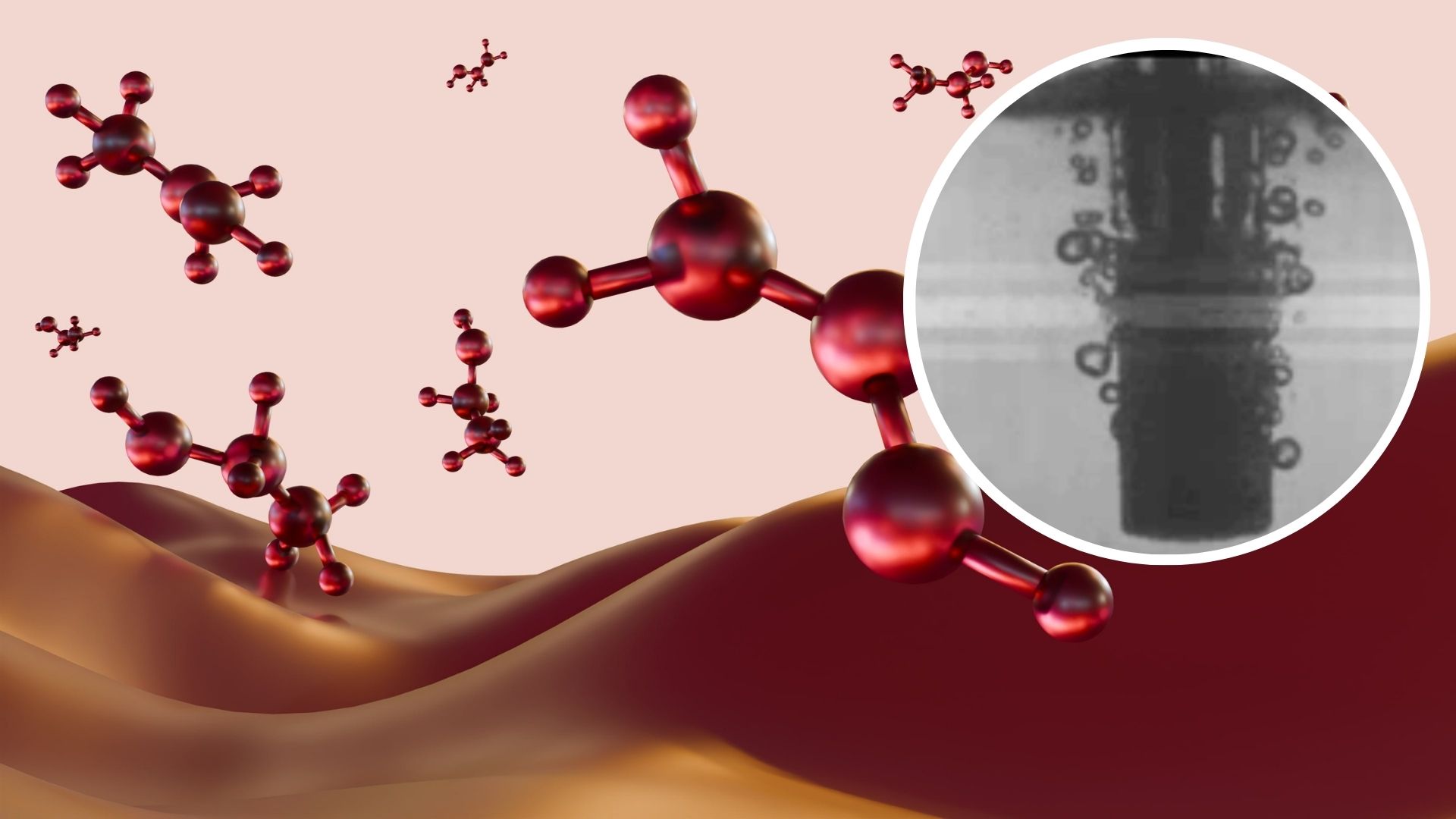
The global push toward decarbonization has placed a spotlight on methane, a potent greenhouse gas and the primary component of natural gas. While methane is an abundant energy source, its stability makes it difficult to convert into liquid forms without immense energy expenditure. A breakthrough from Northwestern University is challenging this paradigm by utilizing plasma chemistry to streamline the production of methanol, a critical industrial building block and emerging green fuel.
Plasma-Induced Synthesis of Liquid Fuels
Traditional chemical synthesis often relies on extreme heat to force unreactive molecules into new configurations. The new approach replaces bulk heating with targeted, high-voltage electrical discharges. By creating mini “lightning bolts” within glass tubes submerged in water, researchers can trigger the conversion of methane directly into methanol in a single step, potentially allowing future plants to be switched on and off in response to renewable power supply rather than continuous fossil-fuel heat.
“We’re using pulses of high-voltage electricity,” said Northwestern’s Dayne Swearer, the study’s corresponding author. “If the electrical potential is high enough, lightning bolts form inside of our reactor the way they do during a summer thunderstorm. We’re taking advantage of that chemistry to break methane’s bonds without heating the entire system to extreme temperatures.”
This process utilizes a copper-oxide catalyst and water, offering a path to electrification in a sector that has historically been dependent on fossil-fuel-powered heat. By decoupling the reaction from the need for massive furnaces, the system reduces the carbon footprint associated with the manufacturing process and aligns more naturally with power grids that are adding large volumes of intermittent wind and solar capacity.
Overcoming the Thermal Barriers of Methane
The stability of the carbon-hydrogen bond in methane is a significant hurdle for chemical engineers. Current industrial standards overcome this through a resource-heavy, multi-stage sequence. This typically involves steam reforming, where methane is subjected to temperatures above 800 degrees Celsius to create a mixture of carbon monoxide and hydrogen, which is then compressed under immense pressure.
“The extreme temperatures are needed to break the unreactive chemical bonds between carbon and hydrogen in methane,” Swearer said. “Then, you must use high pressure to squeeze all those molecules together onto the catalyst in order to make the methanol molecule. It works, but it’s not the most straightforward path to making methanol from methane.”
The differences between the legacy industrial method and the plasma-driven approach are stark in terms of energy application and environmental output:
| Feature | Traditional Steam Reforming | Plasma-Pulse Synthesis |
|---|---|---|
| Process Steps | Multi-step (Reforming → Synthesis) | Single-step direct conversion |
| Temperature Requirements | Exceeds 800°C | Low bulk temperature |
| Pressure Levels | 200 to 300 atmospheres | Ambient/Low pressure |
| Primary Energy Source | Thermal/Combustion | Electricity |
| Carbon Footprint | High CO2 emissions | Potential for near-zero emissions (via renewables) |
Industrial Integration and the Maritime Transition
Methanol is more than just a chemical intermediate; it is a cornerstone of modern manufacturing, essential for the production of adhesives, paints, and plastics. However, its most significant growth potential lies in the transport sector. As the International Maritime Organization tightens emissions standards for global shipping under MARPOL Annex VI, methanol is emerging as a viable alternative to heavy fuel oil due to its lower sulfur emissions and reduced particulate matter.
The ability to produce methanol more efficiently and with a lower carbon intensity changes the economic calculus for shipping fleets and port authorities. If production can be electrified and scaled, methanol can serve as a liquid carrier for hydrogen, allowing for easier storage and transport than gaseous hydrogen or cryogenic fuels, and giving regulators a clearer pathway to setting lifecycle-based fuel standards rather than focusing solely on tailpipe emissions.
Infrastructure Scaling and System Risks
Transitioning from a laboratory glass tube to an industrial-scale reactor presents several engineering challenges. The primary concern is the stability and longevity of the copper-oxide catalyst when subjected to continuous plasma pulsing. Furthermore, the integration of such systems into existing natural gas infrastructure requires a shift toward modular, electrified chemical plants rather than centralized, heat-intensive refineries – a change that would touch utility regulation, grid planning and, ultimately, industrial permitting.
The transition to this technology involves several critical system layers and risks:
- Energy Input: The viability of the process depends on the availability of low-cost, renewable electricity to ensure the “green” status of the resulting methanol and to satisfy emerging lifecycle accounting rules for low-carbon fuels.
- Catalyst Degradation: Ensuring the copper-oxide catalyst remains active over thousands of hours of operation to avoid frequent system downtime and unplanned capital expenditures.
- Scaling Architecture: Designing reactor arrays that can maintain uniform plasma distribution across larger volumes of methane and water while remaining compatible with existing pipeline gas specifications and safety codes.
- Regulatory Compliance: Aligning new production methods with International Energy Agency metrics for low-carbon fuel pathways, as well as with national clean fuel standards that increasingly require verified reductions in upstream emissions.
If these hurdles can be managed, methane-to-methanol plasma reactors could give policymakers and industrial planners a new tool: a way to reduce methane’s climate impact while preserving liquid-fuel logistics that today’s global economy still depends on.