
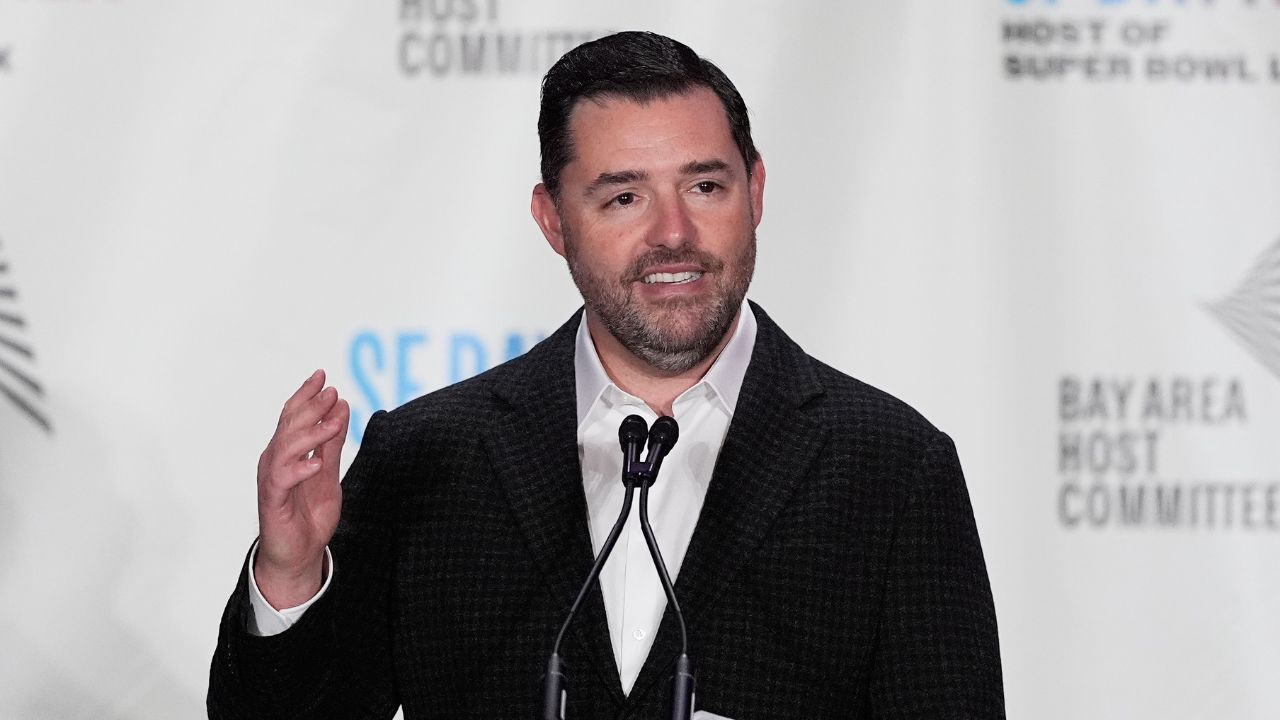
49ers Owner Jed York’s Ohio Arrest Puts NFL Conduct Standards Back Under Spotlight
San Francisco 49ers owner Jed York was arrested over the weekend in Ohio and has pleaded no contest to misdemeanor charges of disorderly conduct and possessing criminal tools, placing one of the NFL’s most prominent franchises at the centre of fresh scrutiny over leadership conduct.
Arrest, Charges and Plea Agreement
Court records show York was initially charged with engaging in prostitution, but prosecutors later amended that allegation to disorderly conduct. Prosecutors said the charge of possessing criminal tools stemmed from York’s use of his mobile phone to respond to an undercover online prostitution advertisement.
York was arrested on Sunday morning at a mobile home community in East Palestine, Ohio, a short distance from Youngstown, where he was born and raised. He was released after posting a $5,000 bond.
As part of the case’s resolution, York was sentenced to one day in jail on each of the two counts, to be served concurrently. He received credit for one day already served when he entered his no-contest plea on Monday morning and was also fined $1,150.
Court records further indicate that York’s cellphone was returned to him and that $160 seized during the arrest is to be directed to the Mahoning Valley Human Trafficking Task Force under the terms of the plea agreement. York also completed an online course as part of the resolution of the case.
How the Case Fits Typical Local Practice
Columbiana County Prosecutor Vito Abruzzino said most cases of this type in the region conclude with plea agreements rather than trials.
“Each case is looked at individually and for specific facts of the conduct, what evidence the police provide, and input from the arresting officer,” Abruzzino said in an email. “You also have to factor in criminal history of the defendant, and whether or not they have committed these types of offences in the past, and importantly, what the judges will allow.”
This framework helps explain why the original prostitution-related allegation was refiled as disorderly conduct, a step that still leaves York with criminal responsibility on his record while avoiding a contested hearing that could have extended the matter closer to the NFL season.
NFL Personal Conduct Policy and Possible League Response
The NFL has acknowledged York’s arrest and said the matter will be reviewed under the league’s personal conduct policy, which applies to owners as well as players, coaches and executives. Under the policy, owners can face fines, suspensions or other sanctions if the league determines their behaviour has damaged the integrity of the sport or its public reputation.
The personal conduct framework, which is overseen by the league office and can be consulted in full through the NFL’s own regulatory documentation, grants the commissioner wide discretion to act even in cases where criminal penalties are relatively minor or fully resolved in court.
In practice, enforcement involving club owners has been rare. New England Patriots owner Robert Kraft, for instance, was investigated but not punished by the league after his 2019 arrest in Florida on allegations he paid for sex at a massage parlour. The charge was later dropped after a court ruled that police had violated the rights of Kraft and other customers by secretly installing video cameras inside massage rooms.
York’s case now becomes another test of how consistently the league applies its own standards at ownership level, a point of interest for players’ unions, sponsors and international audiences monitoring governance in major North American sports.
49ers Maintain Silence as Franchise Stability Questioned
The 49ers organisation has declined to expand on the legal developments, keeping public messaging tightly controlled at a time when the team remains among the NFL’s most visible brands on and off the field.
“As this is a legal matter, which has been resolved, we will not be providing any further comment at this time,” the franchise said in a statement. The club has otherwise indicated it will not comment on the situation.
For now, there is no indication from the team that York’s role in day-to-day operations has changed. However, any subsequent league decision under the personal conduct policy could affect how visible or involved the owner is during upcoming league events, including owners’ meetings and potential future Super Bowl or major event bids.
York’s Role in the 49ers’ Modern Era
York assumed day-to-day control of the 49ers from his parents in 2008 and became the franchise’s principal owner in 2024. His tenure has tracked a period in which the club has oscillated between instability and sustained contention.
After uneven early years under his stewardship, the 49ers found long-term stability with the hiring of head coach Kyle Shanahan and general manager John Lynch in 2017. Under that leadership structure, the team has been a consistent presence in the NFC playoff picture and a regular factor in the conference title race.
San Francisco has reached the Super Bowl three times with York in a leading ownership role: once in the 2012 season under then-head coach Jim Harbaugh, and in the 2019 and 2023 seasons with Shanahan and Lynch guiding the football operation. All three appearances ended in defeat, but the runs cemented the club’s status as one of the league’s most competitive organisations during the last decade-plus.
Stadium Project and Commercial Profile
Off the field, York oversaw the planning and construction of Levi’s Stadium in Santa Clara, California, and the team’s relocation from San Francisco to the new venue in 2014. The move reshaped the franchise’s commercial footprint, placing the club in a purpose-built facility positioned to host global events.
Levi’s Stadium has since staged two Super Bowls, a World Cup fixture and a College Football Playoff national championship game, illustrating how NFL venues operate as multi-event hubs with economic and reputational impact beyond the league itself. That profile means any controversy involving club leadership can reverberate through local authorities, event partners and governing bodies involved in awarding major competitions.
Implications for a Global NFL Audience
From a competitive standpoint, York’s legal case does not directly affect the 49ers’ roster, coaching staff or immediate on-field preparations. However, it adds a layer of uncertainty around one of the NFL’s flagship franchises at a time when the league is intensifying its international presence through games in Europe and beyond.
For global audiences, the episode highlights how ownership conduct intersects with wider questions of governance, brand stewardship and accountability in elite sport. In a league where franchises are valued in the billions and owners sit at the apex of decision-making on media rights, stadium deals and community initiatives, any legal development involving a principal owner inevitably becomes part of the broader story of how the sport is run.
How the NFL ultimately interprets York’s conduct within its personal conduct framework will be watched closely inside and outside the United States, not only for its effect on the 49ers but as a marker of the standards the league is prepared to apply to those who control its most successful clubs.
Worth a look
