
Texans Complete High-Stakes Move for Marvin Harrison Jr. as 0-4 Start Forces Offensive Rethink
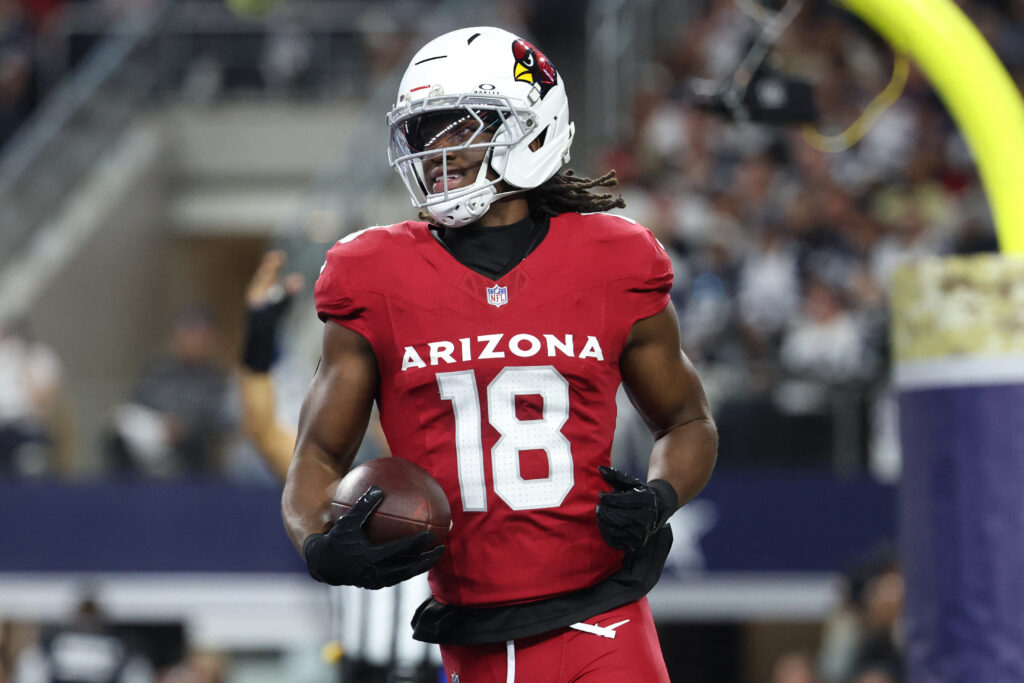
The Cardinals and Texans’ Marvin Harrison Jr. trade is now official, with the third-year wide receiver passing his Houston physical on Monday and beginning preparations for his Texans debut.
Arizona will receive 2027 second- and seventh-round picks from Houston for the former No. 4 overall selection. For a period, the expectation was that a 2028 second-rounder would anchor a Texans proposal, but the NFC West side ultimately secured the more immediate 2027 second-round choice from a then-winless AFC South team. That concession, combined with Harrison’s Sunday deactivation amid widespread reporting that a move was imminent, prompted the Cardinals to end a deteriorating on-field relationship with a player they had already removed from the game-day plan.
How the Deal Took Shape
While other franchises such as the Colts, Raiders and Ravens were linked as potential destinations, veteran insider Jordan Schultz indicated that substantive negotiations were confined to the Cardinals and Texans. The fact the agreement was not completed before the start of Week 5 action briefly left open the possibility that another team could attempt to better Houston’s offer.
Harrison’s name surfaced in trade discussions in late September, and the talks between Arizona and Houston stretched over several weeks. A second-round pick was consistently viewed as the key asset Arizona required. Houston initially resisted paying that price and was tied to a 2028 second-round pick proposal before moving to the 2027 second-rounder that closed the deal. The Texans’ 0-4 start sharpened their focus on adding receiving help, with the urgency to support the offense increasing as losses accumulated.
The Texans are believed to have informed Arizona that a win over the Titans in Week 5 would trigger their willingness to include the second-round pick the Cardinals regarded as non-negotiable. Historically, no team has reached the postseason from an 0-5 start, and only one – the 1992 San Diego Chargers – has qualified after opening 0-4, winning the AFC West in that season. Against that backdrop, and with the Jaguars beginning 4-1, Houston faces a demanding climb within the AFC South.
The expanded seven-team playoff format in each conference, adopted by the National Football League from 2020, at least structurally widens the path for clubs attempting to recover from poor starts. Houston’s decision to part with significant draft capital for a wide receiver at 0-4 reflects a strategic calculation that the additional wild-card spot keeps their season’s competitive objectives alive, even with an early deficit in the standings.
Cardinals Choose Finality Over Prolonged Standoff

The conditional nature of Houston’s draft offer created an unusual dynamic. A defeat to the previously winless Titans could have stalled the trade, underlining how directly the Texans linked Harrison to their 2026 competitiveness. That stance differed from a Sunday report suggesting Houston was prepared to complete the deal regardless of the Week 5 outcome, but the final structure underlines how game results and front-office risk tolerance intersect in-season.
Once informed that Houston would release the second-round pick only in the event of a victory, the Cardinals anticipated that benching Harrison for Week 5 would draw league-wide attention and might prompt rival bids at a similar level. No such competing proposal emerged. Faced with the prospect of reintegrating a high-profile receiver after a public wave of trade speculation and a game-day deactivation, Arizona opted for a clean break rather than carrying a potentially unsettled asset deeper into the year.
Texans Double Down on Stroud Era
Through five games – two of them without leading receiver Nico Collins – C.J. Stroud ranks 17th in Total QBR and 12th in passer rating. He has yet to throw an interception this season and is averaging 7.6 yards per attempt, a profile that suggests the passing structure is functioning but still lacks explosive depth and margin for error.
Houston’s move for Harrison reunites a 2022 Ohio State connection between quarterback and receiver and reshapes the Texans’ depth chart around that partnership. Harrison will be deployed alongside Collins, framing him as a primary outside complement rather than a solitary focal point. For a franchise that has already invested heavily at wideout, this is a deliberate concentration of resources around a young quarterback they view as their long-term anchor.
In recent drafts, the Texans used second- and third-round selections on Iowa State products Jayden Higgins and Jaylin Noel. Higgins’ ACL injury, suffered as Tank Dell remained on injured reserve and had not fully convinced staff he was ready to return, was a turning point that intensified Houston’s search for external receiving help.
Even after adding Kayshon Boutte before the season, the Texans pivoted to a far larger acquisition in Harrison. From a roster-building perspective, it marks a shift from depth-based solutions to a star-level infusion, sacrificing future draft flexibility in an attempt to rescue a season that had drifted toward the margins of contention within a month.
Defensive Play-Calling Change Underscores All-In Approach
Houston’s front-office strategy has unfolded alongside a notable sideline adjustment. Head coach DeMeco Ryans has reclaimed defensive play-calling responsibilities, taking the call sheet back from defensive coordinator Matt Burke. The move signals a renewed emphasis on recapturing the unit’s 2025 standards after a surprisingly modest start on that side of the ball in 2026.
By combining a major offensive trade with a structural coaching change on defense, the Texans have effectively tied their medium-term outlook to the current core: Stroud at quarterback, a rebuilt receiving group now headlined by Harrison and Collins, and a defense placed more directly under Ryans’ control.
Harrison arrives on a contract running through 2027, with a potential fifth-year option extending club control through 2028. Houston will have 12 games to assess his fit before the May deadline to decide on that option, giving the franchise a defined evaluation window that extends beyond immediate results. The decision to invest in him now, rather than wait for the offseason, also reflects how the modern NFL trade landscape allows clubs to reshape skill positions mid-season while remaining within the league’s salary-cap and roster-management framework.
Broader Competitive Impact
For Arizona, the trade converts a high draft investment at wide receiver into two picks in 2027, including a second-rounder that can accelerate a broader roster reset. It also removes the risk of carrying a prominent, recently benched player into the second half of the season, simplifying both their depth chart and dressing-room dynamics.
For Houston, the acquisition is more than a headline move: it is a test of whether aggressive in-season trading, enabled by the current NFL rules on draft-pick transfers and fifth-year options for first-rounders, can materially change a team’s trajectory after an 0-4 start. With the Jaguars setting the early pace in the AFC South and wild-card competition expected from across the conference, the Texans have chosen to invest heavily in an offensive ceiling play rather than accept a longer-term reset.
The outcome will be measured not only in wins and losses this season but also in how Harrison develops as a long-term partner for Stroud, and how effectively both franchises convert this deal into sustainable progress within an increasingly quarterback- and passing-game-driven league.
Related reading
