
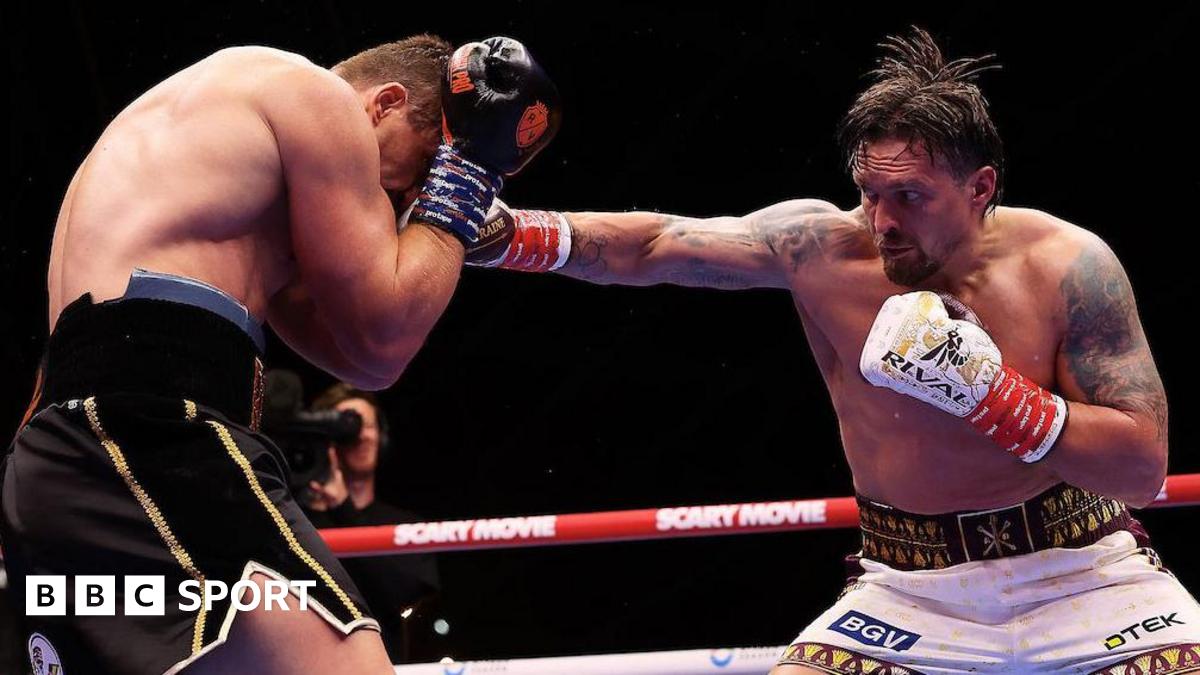
Usyk Survives Verhoeven Onslaught to Retain Titles After Controversial Stoppage in Egypt
Oleksandr Usyk struck lucky to retain his world heavyweight titles in Egypt with a highly controversial 11th-round stoppage win against boxing novice Rico Verhoeven.
Verhoeven, in just his second professional boxing fight, was the clear aggressor for long spells, stunning generational great Usyk in a way few expected and forcing the champion to dig far deeper than anticipated.
Late Knockdown, Immediate Controversy
In a surprisingly tight contest, Ukrainian Usyk produced a late surge and landed a sharp left uppercut that sent the Dutchman to the canvas.
Verhoeven beat the count and appeared steady enough to continue, but a follow-up flurry in the closing seconds of the round prompted the referee to step in and wave it off – a decision that looked extremely harsh on the challenger given the balance of the action and the time remaining in the session.
The scorecards at the time of the stoppage reflected just how fine the margins were: 95-95, 95-95 and 96-94 to Verhoeven.
“This fight was hard. It was a good fight,” Usyk said in the immediate aftermath, offering a brief acknowledgment of the challenge he had just come through.
Match Facts
- Location: Egypt
- Result: Oleksandr Usyk def. Rico Verhoeven – 11th-round referee stoppage
- Knockdown: Verhoeven down from a left uppercut in round 11, beat the count
- Scorecards at stoppage: 95-95, 95-95, 96-94 Verhoeven
- Titles on the line: WBC heavyweight title and defence counting towards WBA “super” heavyweight title (Verhoeven not eligible to win WBA “super” belt)
Champion Pushed to the Limit
In a contest many expected to expose the gulf between elite boxing pedigree and crossover ambition, unbeaten Usyk looked uncharacteristically laboured for long stretches.
The 39-year-old – a three-time undisputed champion who has ruled at cruiserweight and heavyweight – nonetheless found a way to win his 25th professional fight. Yet the manner of victory, with the challenger competitive on the cards and pressing the action, ensured that the performance will be dissected as closely as the result is celebrated.
For a fighter of Usyk’s standing, being outworked at times by an opponent with only one previous professional boxing bout raises questions about mileage, adaptation between weight classes, and how he manages tempo against physically imposing rivals. It also reinforces that even the most decorated champions remain vulnerable in high-risk, high-profile title defences.
Verhoeven’s Boxing Credibility Grows
Kickboxing legend Verhoeven, 37, arrived with an established reputation from another combat sport but only minimal experience under boxing rules. Over the course of the fight he was the clear aggressor for long spells, backing Usyk up and forcing exchanges that disrupted the champion’s rhythm.
Verhoeven described the finish as an “early stoppage” and called for a rematch, while stressing that any second meeting would ultimately depend on Usyk’s willingness to grant it.
“I wanted the referee to let me go out on my shield or let me go in the 12th. I felt we were pretty even on the scorecards,” Verhoeven said, pointing to the drawn and narrow score totals as evidence that he had earned the right to see the final bell.
For Verhoeven’s camp, the night simultaneously delivered frustration and validation: he left without the belts, but with tangible proof that his skill set, conditioning and competitiveness can translate to the boxing ring at the highest level. That combination is likely to fuel demand for further marquee crossover contests, whether a rematch with Usyk materialises or not.
Titles, Sanctioning and Regulatory Context
Usyk’s WBC heavyweight title was formally at stake in Egypt, with the bout also counting as a defence of his WBA “super” belt. Under the WBA’s tiered system of champions, the “super” designation is reserved for fighters who hold multiple titles or meet specific criteria set by the association, and Verhoeven would not have been eligible to win that version of the title even in the event of an upset.
The International Boxing Federation (IBF) granted permission for the contest but did not sanction its own heavyweight title for the event. That decision highlighted how major sanctioning bodies can take different positions on crossover bouts and championship status, even when the same fighter holds their belts simultaneously.
The involvement and limits set by the leading governing organisations, including the World Boxing Council, shape not only which titles are on the line but also the commercial and legacy stakes for fighters. A result like this, where a champion retains through a disputed stoppage in a non-traditional matchup, is likely to feed into ongoing debates about how and when crossover contests should be approved at full championship level.
Officiating Under the Microscope
The referee’s decision to halt the fight in the final seconds of the 11th round, after Verhoeven had already beaten the count and was still throwing punches, instantly became the focal point of post-fight discussion.
On the one hand, the stoppage can be viewed through the sport’s growing emphasis on fighter safety, particularly in late rounds when accumulated damage and fatigue heighten risk. On the other, the combination of competitive scorecards and Verhoeven’s insistence that he wanted the chance to continue ensured that many observers will question whether the challenger was denied a fair opportunity to close out a near-level title fight.
For boxing’s regulatory landscape, such high-visibility controversies tend to intensify scrutiny on refereeing standards, communication between officials and commissions, and how quickly crossover fighters are moved into world-title level assignments. While the result stands, the sequence that ended the contest will linger in conversations around officiating consistency and transparency.
Career and Market Implications
For Usyk, the outcome preserves his status as world heavyweight champion and extends his unbeaten professional record. However, the nature of the win – and the rounds he conceded – may influence how future opponents and broadcasters assess his current form.
For Verhoeven, the performance enhances his leverage in negotiations for further high-profile boxing opportunities. Going the better of many exchanges against a generational champion, even in defeat, strengthens his case as more than a novelty crossover act.
Promoters and broadcasters, seeing a competitive fight that produced both drama and controversy, are likely to view this matchup as a commercially viable property should serious talks over a rematch begin. The scorecards and the manner of the stoppage provide a ready-made narrative for a second meeting, while also positioning both fighters as central figures in the broader conversation about where elite boxing ends and crossover experimentation begins.
Related reading
