
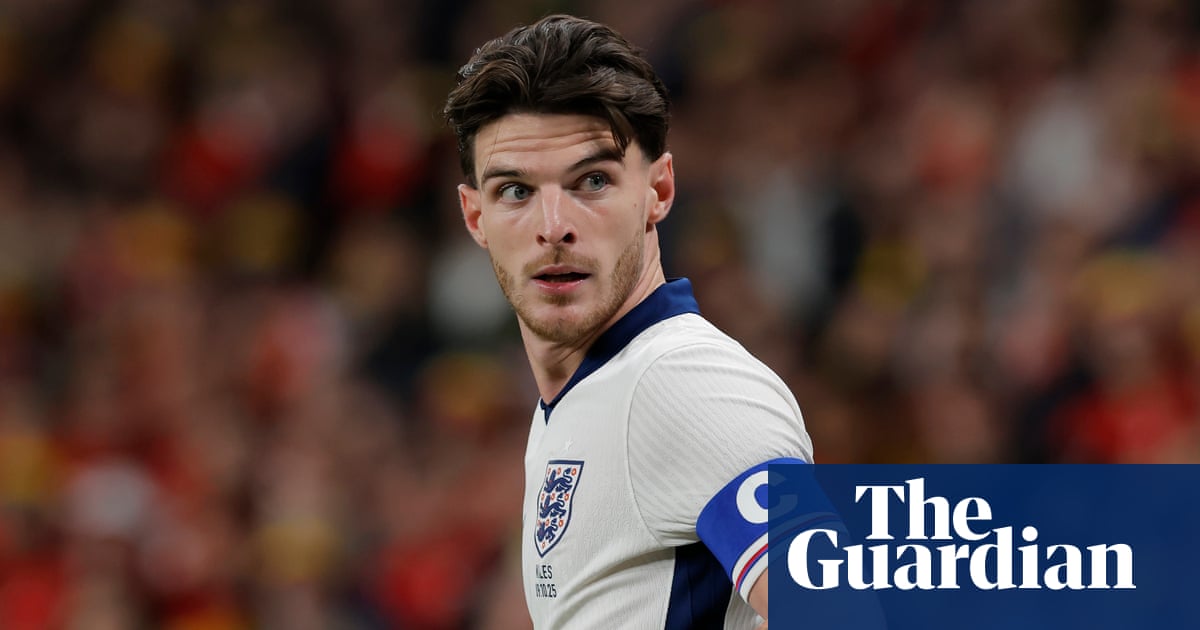
Declan Rice: The Architecture of a Modern Leader
Three years ago, Declan Rice appeared as a guest at a Soho House event focusing on effective leadership. At the time, the midfielder was preparing for a European semi-final with West Ham and expressed uncertainty regarding why his perspective on leadership was in such high demand among CEOs and marketing directors.
The appeal, it appears, lies in a specific duality: the ability to maintain an “everyman” authenticity while operating at a world-class professional level. Now 27, Rice enters the 2026 World Cup as England’s vice-captain, coming off a Premier League title victory with Arsenal and stepping into a role where his decisions and temperament will be dissected not just by supporters but by the broader leadership class that increasingly treats elite sport as a live case study in strategy and governance.
Foundations of Resilience
Rice’s trajectory was not linear. An early product of the Chelsea academy, he was released by his boyhood club at age 14. This period of rejection served as a critical inflection point for his mental resilience, leading to an immediate move to West Ham, a club that had tracked him since the age of nine.
During his school years at Grey Court in Ham, Rice demonstrated leadership traits long before his professional breakthrough. His former PE teacher, Stephen Willmore, notes that Rice consistently prioritized his school team, often balancing school matches with Chelsea training sessions, earning respect for his commitment and charisma.
This grounded approach continues into his adult career; Rice eschews traditional agents, relying instead on a tight-knit circle consisting of his father, two older brothers, and close friends. In an era when footballers’ careers are frequently intermediated by complex representation structures, his choice to keep decision-making close mirrors best practice in corporate governance: a small, trusted inner board that can challenge, rather than simply endorse, major career calls.
Tactical Evolution: From Anchor to No. 8
Rice’s development is marked by a significant shift in tactical responsibility. At West Ham, he operated primarily as a defensive shield, a role that culminated in leading the club to the Conference League title in June 2023. However, his move to Arsenal for £105m-making him the most expensive British player in history-precipitated a shift in his game.
Under Mikel Arteta, Rice has transitioned from a purely defensive facilitator to a dynamic “No 8.” This evolution has increased his attacking threat, as evidenced by his ability to crash the box and contribute goals, such as his opening strike in England’s recent 3-0 friendly victory over Costa Rica. The change has required him to become not just a reader of danger but a director of tempo, toggling between risk and control in ways that echo the trade-offs policymakers confront when balancing growth against stability.
Key milestones in his technical progression include:
- Set-Piece Specialization: His delivery became a vital asset in Arsenal’s Premier League winning campaign, where dead-ball routines are now treated with the same detail and pre-planning as corporate contingency exercises.
- Clutch Performance: Scoring two free-kicks against Real Madrid in the 2024-25 Champions League quarter-finals, marking the first free-kick goals of his career and underscoring his capacity to execute under extreme pressure.
- International Versatility: Utilizing the presence of Elliot Anderson in the England midfield to find more forward freedom, a redistribution of responsibility that reflects the modern emphasis on shared, rather than purely hierarchical, leadership structures.
The Commercial and Cultural Profile
Beyond the pitch, Rice has cultivated a global superstar profile. He currently manages 10 commercial partnerships, ranging from high-fashion brands like Burberry and L’Oréal to consumer products such as Müller Rice and JBL headphones. Those relationships sit within a football economy increasingly shaped by financial fair play rules and club licensing standards overseen by governing bodies such as UEFA, which treat players not only as athletes but as core assets on multimillion-pound balance sheets.
This commercial viability is paired with a personal life that emphasizes relaxation through golf, where he plays off a handicap of six. The contrast between global visibility and private routine reinforces the image of an elite performer who still appears recognisably ordinary to fans and sponsors alike.
Despite the scrutiny and the pressure of high-value transfers, Rice is noted for maintaining a professional yet playful demeanor. Former teammate Aaron Cresswell describes him as a player who can “carry the team” during difficult moments while remaining approachable and connected to his roots, often spending time with young fans and former teammates. In a national team dressing room that doubles as a soft-power projection of English football culture, that balance between authority and accessibility is central to how the squad is perceived by counterparts, sponsors and the administrators who steward the game.
World Cup Aspirations
Rice’s career has been characterized by “near misses,” including losses in the Euro 2020 and 2024 finals, as well as consecutive second-place finishes with Arsenal before their eventual title win. This history of consistency over immediate gratification has shaped his current mental approach, instilling an emphasis on process and standards rather than single moments of triumph.
As England prepares for the FIFA World Cup, staged under the global regulatory umbrella of FIFA’s Statutes, Thomas Tuchel has positioned Rice as the primary deputy to captain Harry Kane. This appointment signals a strategic trust in Rice’s ability to manage the dressing room, represent the squad in conversations with referees and tournament officials, and help translate technical plans into on‑field discipline as England chase the objective of adding a second star to the national-team shirt.
Rice is expected to earn his 74th cap during England’s Group L encounter with Croatia on Wednesday. With his tactical evolution complete and his leadership credentials solidified, the midfielder is no longer questioning why people are interested in his leadership-he is now the one implementing it on the world’s biggest stage, offering a live demonstration of how resilience, shared responsibility and clear decision-making travel from the training ground to the boardroom and, in this case, onto football’s most scrutinised field.
