
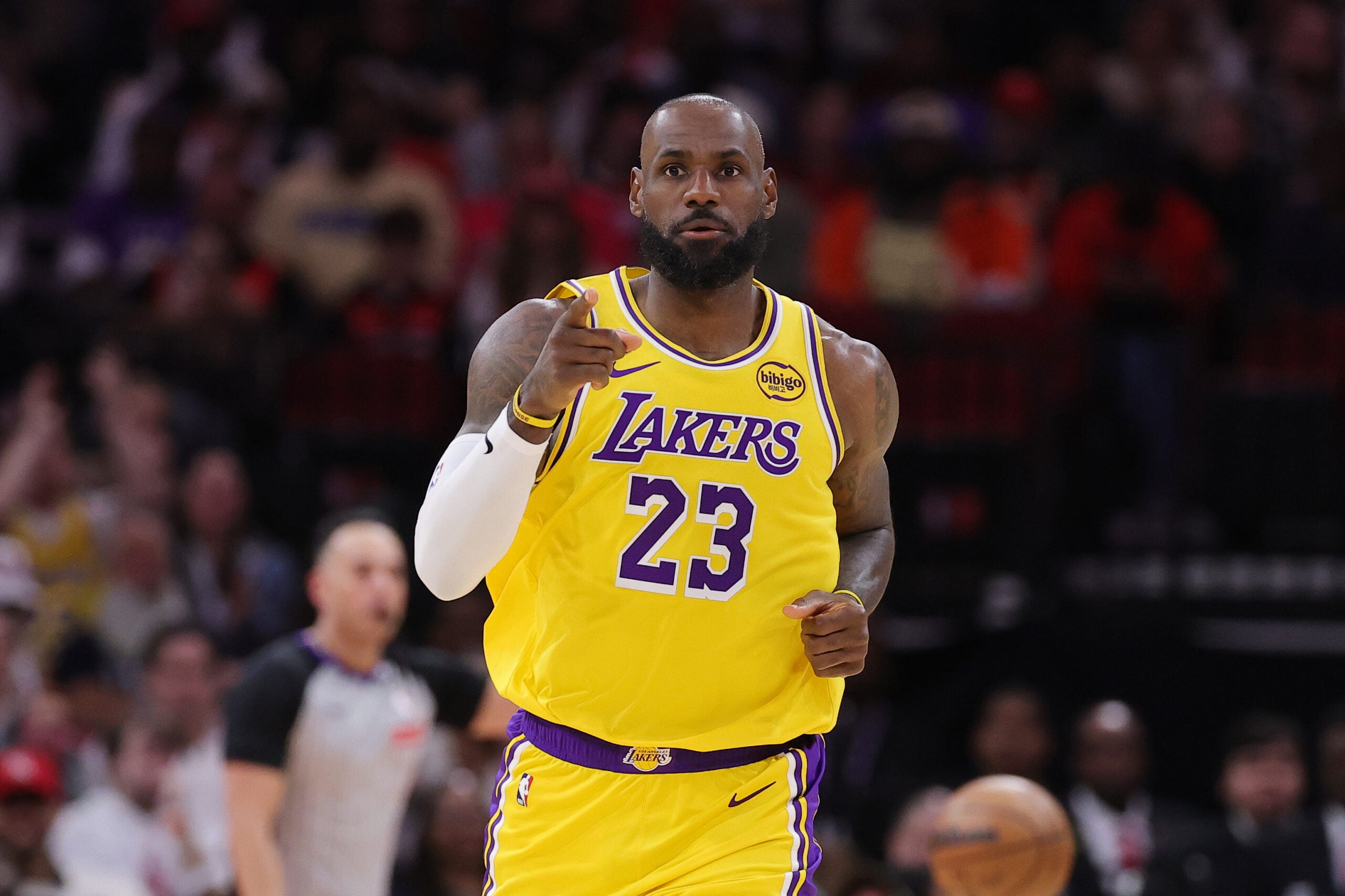
LeBron James continues applying his own stamp to the NBA’s record books on a game-by-game basis.
LeBron James is redefining the record book – and the requirements to chase it
Every autumn, the “Official NBA Guide” lands as a near‑thousand‑page ledger of the sport’s past and present. It is where two names dominate in different ways. Wilt Chamberlain – cited 473 times – still owns 79 regular‑season and playoff records, from the iconic 100‑point game to a career without a single disqualification. LeBron James, meanwhile, appears 295 times and is still adding entries, a live feed of milestones in an era when availability, efficiency and longevity are the hardest combination to sustain.
For readers tracking the history as it happens, the league’s official statistics archive offers the clearest running account of these marks and their challengers: NBA all‑time leaders. Those numbers sit within the broader competitive framework of the league’s collective bargaining agreement and the rules the Board of Governors adopts through the Official NBA Playing Rules, which govern everything from game length to player participation thresholds.
Two eras, two templates of dominance
Chamberlain’s portfolio is quantitative mass: seven straight scoring titles, four MVPs, and three retired jerseys. He owns single‑game and single‑season standards – 55 rebounds in a game, 50.4 points per game in 1961‑62 – that are as much about era and role as they are about individual force. In a smaller league with fewer teams, a faster pace and different defensive rules, volume was often the clearest expression of dominance.
James’ imprint is range. He was the youngest to seemingly every scoring and playmaking milestone – including the youngest with a 30‑point game, a 40‑point triple‑double and consecutive triple‑doubles – and, now at 41, he has flipped the arc to become the oldest to post feats such as a 30‑point game, a 30‑point triple‑double, a 20‑point/20‑rebound performance and a 50‑point double‑double. The span of firsts and lasts is the point: he has defined what stardom looks like for both the teenager breaking in and the veteran outlasting his peers.
Longevity as a competitive advantage
James has 20 seasons averaging at least 25 points. Only 11 other players have logged 20 NBA seasons at all. Kevin Durant has 17 such 25‑point seasons; Kobe Bryant, Karl Malone and Michael Jordan each reached 12. In an era of load management, tighter award eligibility criteria and a year‑round media cycle, sustaining that scoring level across decades is not simply a function of usage – it is endurance within the league’s calendar, travel and scouting cycles, and a willingness to adjust style of play as the three‑point era and defensive schemes evolve.
That durability also has institutional consequences. Star availability underpins national broadcast schedules, local revenues and labor negotiations. When the league and players’ union agree on thresholds that tie awards and supermax contracts to games played, they are, in part, responding to the standard James and a handful of peers have set for what long‑term participation at the top actually looks like.
The active benchmarks shaping the chase
- Regular‑season points: 43,229 (and counting) – James passed Kareem Abdul‑Jabbar’s record after it stood for 13,074 days. Volume here is a product of peak and persistence; few players reach 20 seasons, fewer still average 25 across them. For front offices and ownership groups, this level of scoring reliability simplifies roster‑building decisions for more than a decade.
- Playoff points: 8,289 – Across 292 postseason games, James has outpaced Michael Jordan’s total by 2,302 points – roughly the gap between second‑place Jordan and 18th‑place Dirk Nowitzki (3,663). Among under‑30 players, Jayson Tatum (age 28) has 2,936 playoff points through 121 games, underscoring both his early‑career volume and the runway required to mount a realistic pursuit.
- All‑NBA selections: 21 – Two decades at top‑15 level is a rarity. With the 65‑game eligibility threshold now shaping ballots, the margins to extend such streaks are thinner for future candidates who miss time. Voters – and the league office that codified the rule – are effectively defining how often a superstar must be on the floor to be considered central to the product.
- Career playoff wins: 184 – A single player being the constant behind that many postseason victories demands sustained contention from early in a career. James began stacking playoff wins by age 21 and reached the Finals in his fourth season. The league has not seen a repeat champion since the 2017‑18 Warriors, a sign of how parity stretches the timeline for any modern dynasty and makes such continuity harder to replicate.
- Consecutive 10‑point games: 1,297 – The streak ran from January 6, 2007, to its end on December 4 against Toronto. Jordan’s previous record was 866 (concluding December 26, 2001). Only 25 players have even appeared in at least 1,297 regular‑season games; Durant holds the longest active double‑figure streak at 315, with Shai Gilgeous‑Alexander next at 206. The gap between James and the field illustrates why “just being there” has become an organizational priority as much as a personal one.
A profile that resists positional labels
Among the NBA’s 42 players with at least 6,000 career assists, only James and Magic Johnson stand 6‑foot‑9 or taller. Of the 45 to grab 10,000 rebounds, James is the only one to also reach five‑figure assists. He was the youngest to 10,000, 20,000 and 30,000 points before becoming the first to 40,000. On the defensive ledger, he is one of three players – alongside Hakeem Olajuwon and Karl Malone – with at least 2,000 steals and 1,000 blocks, and he has made more than 2,500 more three‑pointers than Olajuwon and Malone combined.
This all‑court profile predates today’s formal talk of “positionless basketball” and helps explain why current front offices draft and develop with less regard for traditional roles. James has effectively been a use case for multi‑positional stars who can initiate offense, anchor lineups and toggle between defensive assignments, giving coaches and general managers wider latitude in how they design systems and allocate cap space.
Availability, awards and the future of milestones
Cumulative records are, at their core, attendance records. On the winning front, only Abdul‑Jabbar (1,074) has more regular‑season victories than James (1,040). James also belongs to the short list of Finals MVPs with multiple franchises – Abdul‑Jabbar (Bucks, Lakers), James (Heat, Cavaliers, Lakers) and Kawhi Leonard (Spurs, Raptors). The all‑time games‑played mark set by Robert Parish is within the neighborhood James now occupies, a reminder that durability is both a talent and a tactical choice.
The modern calendar, travel demands and defensive scouting reduce variance and punish slippage. With award eligibility now tied to minimum appearances in the league’s governing rules, younger stars face structural hurdles to replicating the sheer volume of James’ accolades, even as sports science extends careers. Parity further distributes playoff minutes across more teams and seasons, complicating any single‑player run at postseason totals and forcing ownership groups to think in cycles rather than dynasties.
The wider competitive picture
The next wave – from Tatum and Jaylen Brown to Gilgeous‑Alexander, Victor Wembanyama and Anthony Edwards – profiles as long‑term challengers to at least portions of the James ledger. For team governors, these players represent long‑horizon bets: decisions on supermax contracts, roster control and coaching continuity are being made with James’ template of sustained excellence as the implicit benchmark.
But James’ advantage has never been just skill; it is the aggregation effect across categories that rarely overlap: teenage prodigy benchmarks, peak‑prime productivity, late‑career resilience, and team success spread across markets. That blend has influenced not only how franchises value versatility, but also how the league packages and markets its product domestically and abroad.
The legacy in numbers
Chamberlain’s file reads like a mountain of absolutes. James’ dossier reads like a map of the league’s evolution – positionless roles, multi‑threat offense, and careers that demand year‑over‑year reinvention. His records sit at the crossroads of individual brilliance and institutional design: how many games are on the schedule, how awards are defined, how long superstars can remain central to a team’s plans.
However the next era unfolds, the records that define James today are less a single summit than a chain of ridgelines. For anyone planning to follow, the route is clear, the distance considerable, and the altitude unforgiving – not only for the players chasing him, but for the executives, voters and governors whose decisions will determine whether another career is ever built to last this long.
- Montreal Canadiens Face Key Absence as Ivan Demidov Sidelined with Lower-Body Injury
- Declan Rice Managed Carefully Amid Neural Hamstring Pain and Post-World Cup Fatigue
- Bijan Robinson’s Strong Start: Is the Falcons Star Pacing for NFL Records? (archysport.com)
- NY Attorney General Letitia James named special prosecutor in Cornell case (globallypulse.com)
