
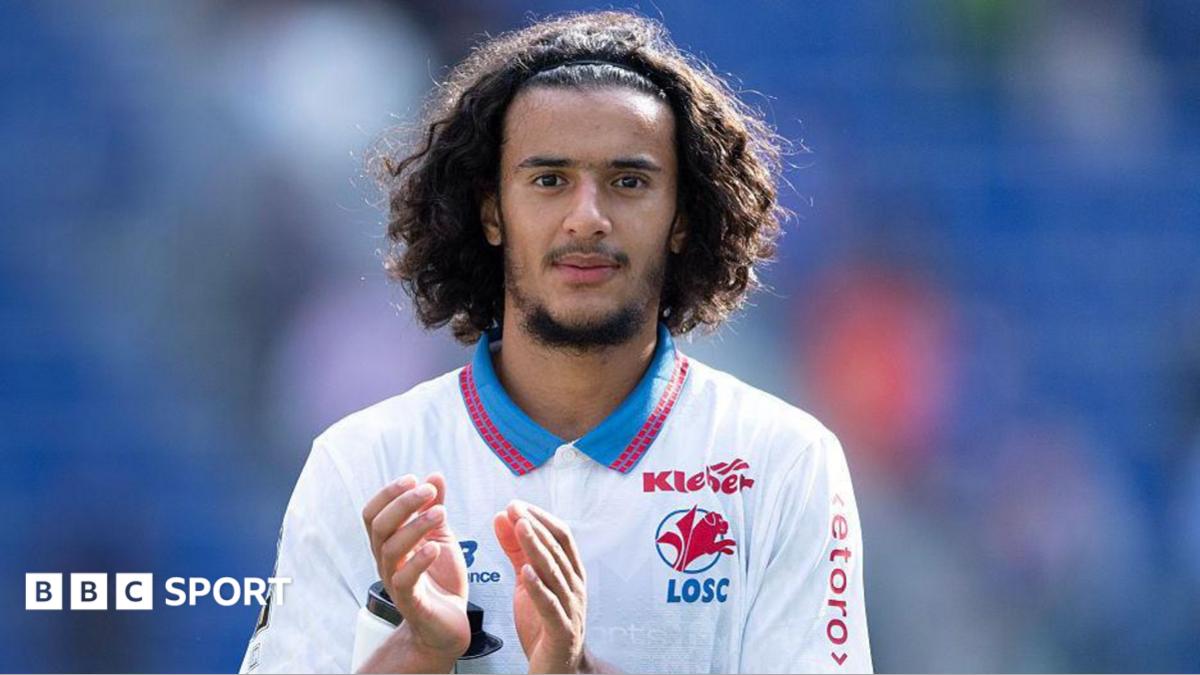
Bouaddi’s Rapid Rise from Lille Record‑Breaker to World Cup Midfield Anchor
Ayyoub Bouaddi’s emergence over the past three seasons has shifted him from promising academy graduate to one of the most closely watched young midfielders in the European game.
The Lille midfielder first drew global attention with a standout display in a UEFA Champions League victory over Real Madrid in 2024, a night that coincided with his 17th birthday and ended with supporters inside the Stade Pierre-Mauroy serenading him from the stands. That performance was followed this summer by a prominent role on the international stage, where he started five of Morocco’s six matches in their run to the World Cup quarter-finals.
From Record Debutant to Ligue 1 Mainstay
Bouaddi’s impact at senior level has been defined by precocity and continuity. He made his professional debut for Lille in October 2023 against KÍ, just three days after his 16th birthday, becoming the youngest footballer ever to play for the club.
Since that first appearance, he has amassed 88 matches for Lille and played a part in helping the team finish third in Ligue 1 last season. That top‑three finish, within the framework set by the Ligue de Football Professionnel, positions Lille for European competition and underlines how quickly Bouaddi has moved from prospect to regular contributor.
His consistency was further underlined when he reached 50 Ligue 1 appearances for Lille at just 18, breaking a club mark previously held by Eden Hazard. For a club long regarded as a producer of elite attacking talent, having a midfielder surpass a record once associated with Hazard is a notable internal benchmark.
Deep‑Lying Conductor at Club and Country
On the pitch, Bouaddi operates as a deep‑lying conductor. His role is built less on headline numbers and more on shaping tempo, offering passing options to defenders, and linking phases of play.
That profile has translated seamlessly to international football. At this summer’s World Cup he started five of Morocco’s six games on their way to the quarter-finals, entrusted with responsibility in a tournament where single errors in build-up can alter entire campaigns.
For Lille, his ability to organize possession from deep has been central in navigating the physical and tactical demands of Ligue 1, where midfields are often congested and transitions rapid. In European competition, notably against Real Madrid in 2024, the same skill set allowed Lille to manage periods without the ball and then retain it when chances to break pressure appeared.
Tactical Fit Alongside Anderson
Bouaddi’s profile has also been framed in terms of how he might complement other midfielders at the highest level. He is viewed as a player whose metronomic passing and positional discipline would dovetail with a partner such as Anderson, a midfielder comfortable operating box‑to‑box as well as in the number six role he performs for England.
In such a partnership, Bouaddi’s deeper positioning and distribution would in theory free Anderson to step higher and attack space between the lines, or to press more aggressively, while still ensuring that the structure behind the ball remains intact. For modern clubs managing congested calendars across domestic leagues, national cups and European competitions, that kind of balance is a core part of medium‑term squad planning rather than a purely stylistic preference.
Implications for Club Ambition and Squad Planning
Bouaddi’s accelerated development carries several concrete implications for Lille. First, having an 18‑year‑old with 88 club appearances and World Cup knockout-stage experience provides a rare level of continuity in a key position. In a league where clubs outside the traditional giants often rebuild midfields every two or three years, the presence of a home‑developed starter in his teens offers short‑term stability and a medium‑term strategic asset.
Second, his role in helping Lille to third place in Ligue 1 last season matters directly in sporting and financial terms. Finishing in the top positions in France’s top tier is linked to access to UEFA club competitions and the associated revenue, which in turn influences how a club structures contracts, succession planning and investment in its academy pipeline.
Third, the breaking of Hazard’s appearance record adds a layer of internal expectation. Within a club culture that has seen academy graduates become leading figures in European football, Bouaddi’s milestones at 16, 17 and 18 inevitably place him at the centre of discussions about Lille’s medium‑term sporting project and their approach to potential future transfer offers.
World Cup Platform and National‑Team Dynamics
For Morocco, a midfielder able to dictate rhythm at club level and sustain that form at a World Cup has clear selection consequences. Starting in five of six matches at a global tournament places Bouaddi near the core of the national set‑up’s medium‑term planning, with continuity in central areas historically critical for teams aiming to return to knockout rounds in successive editions.
In tournament play governed by the FIFA regulations covering squad size, substitution rules and disciplinary thresholds, coaches often hedge against risk in central midfield by favouring players with strong tactical discipline and high concentration levels. Bouaddi’s usage across Morocco’s World Cup campaign suggests a level of trust in his suitability for those demands at a relatively early stage of his career.
A Career Already Defined by Milestones
From his debut three days after turning 16, through a Champions League victory over Real Madrid on his 17th birthday, to breaking an Eden Hazard record and anchoring Morocco’s midfield on the World Cup stage, Bouaddi’s trajectory has been unusually compressed.
What remains unchanged across those milestones is the core picture: a deep‑lying midfielder, already entrusted with structural responsibility for club and country, whose development is now closely tied to Lille’s competitive position in Ligue 1 and Morocco’s ambitions at major tournaments.
Worth a look
