
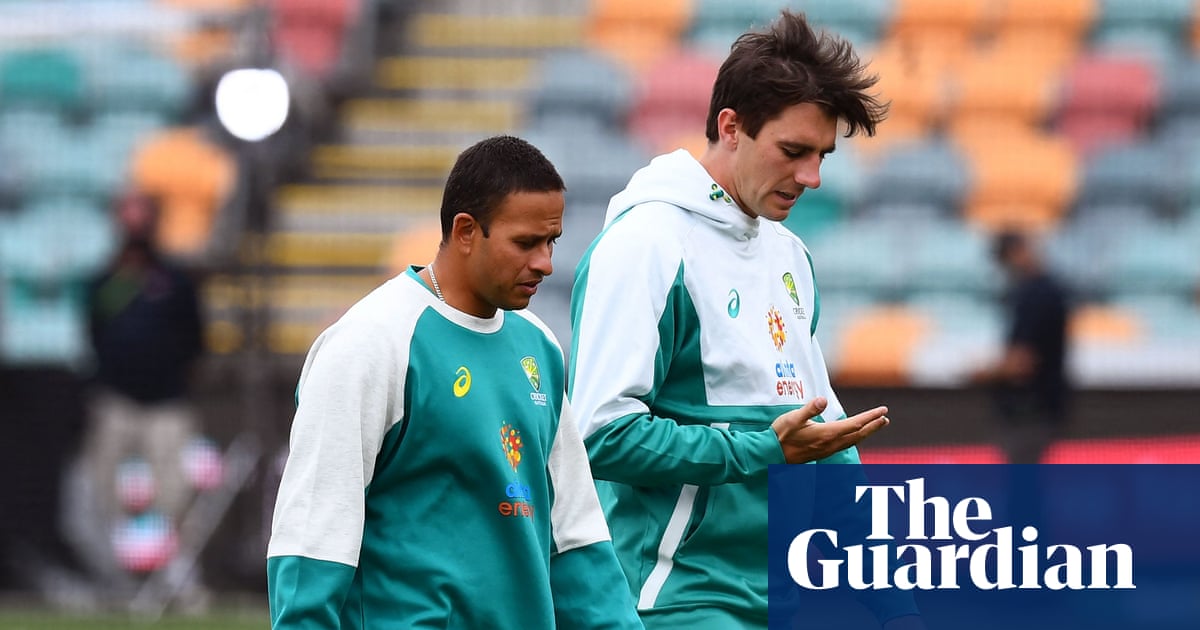
Cummins Stands Firm as Khawaja Book Revives Sandpaper Questions on Return to South Africa
Pat Cummins has suggested he is unfazed by the prospect of the sandpaper scandal being raised in Usman Khawaja’s autobiography, which will be the first from any Australian player who featured in that 2018 Cape Town Test.
Cummins confirmed that Khawaja had called to inform him he would be writing the book, which is due for release days after the end of Australia’s first Test tour of South Africa since the infamous match. The timing ensures the game’s most debated controversy of recent years will again sit alongside a high‑stakes series between two of the sport’s leading Test teams.
A scandal that reshaped modern Australian cricket
How much Khawaja chooses to revisit the ball‑tampering scandal that rocked Australian cricket remains to be seen, but any fresh detail will inevitably be read against the backdrop of sanctions and reforms that followed. Under the authority of the International Cricket Council, ball‑tampering sits within the game’s Code of Conduct as a serious offence, and the Newlands incident accelerated tougher scrutiny of fielding tactics and equipment checks by match officials.
Khawaja is a childhood friend of former opening partner David Warner, who received a 12‑month ban in the fallout from the scandal. At the time, Warner was cast as the architect of the ploy, with captain Steve Smith also suspended for a year and Cameron Bancroft ruled out of international cricket for nine months.
There was a report during the crisis that Khawaja had suggested the wider team should take joint responsibility, rather than leaving the burden with the three sanctioned players. That debate – whether the wrongdoing was confined to a small leadership group or symptomatic of a broader dressing‑room culture – has shadowed the side ever since and will give his book particular resonance inside Australian cricket.
Investigations, denials and an unresolved public narrative
However, a Cricket Australia investigation found no other player had knowledge of the plan to apply sandpaper to the ball, a conclusion the governing body has consistently maintained. Australia’s bowlers later issued a collective statement denying any knowledge that “a foreign substance” would be taken onto the field, an intervention that was designed to protect the integrity of a group that has formed the core of the Test side across multiple cycles.
Umpires speak with Cameron Bancroft and Steven Smith at Newlands in 2018. Photograph: Gallo Images/Getty Images
In his autobiography, which has been penned without a ghost writer and is due next month, there is no suggestion at this stage that Khawaja will contradict the findings of the formal investigations. But as a senior player who lived through the crisis and its aftermath, his account is likely to carry weight with both team‑mates and fans who still question how the culture around the Test side allowed such a plan to be hatched.
Cummins focuses on present as Khawaja prepares to tell his story
Cummins was asked ahead of Friday’s first Test in Durban whether Khawaja had indicated how much detail he would go into, and whether his account would align with the version of events given by his former team‑mates.
“You would have to ask him,” Cummins responded. “It’s obviously a long time ago. All the investigations, everything was done back then. Answered every question a million times.
“It was dealt with then, all I can say is as a group we’ve moved on. Very happy with the last eight or nine years, how we’ve been as a group and evolved. He didn’t go into too much detail … As always it was ‘no worries, you can tell your story, that’s fine’.”
For the current captain, the priority is to protect a settled, successful dressing room in the middle of a demanding calendar. Any renewed focus on Newlands arrives just as Australia seek to maintain their status among the game’s leading Test nations, where stability in leadership and culture can translate directly into performances across multi‑year cycles such as the World Test Championship.
Durban spotlight: rivalry, rankings and lingering history
It has been hard to escape talk of the 2018 series in the lead‑up to the first Test. Cummins noted on Thursday that there was a larger than usual media presence in Durban, heightened by the fact this is a meeting of the world’s top two sides.
That ranking context raises the sporting stakes: each session in this series is likely to carry implications for future positioning in the Test pecking order and, by extension, for scheduling, commercial value and the competitive balance of future tours. For a generation of South African players who saw their 2018 series win overshadowed by off‑field headlines, the return of Australia also presents a chance to restate their credentials purely in cricket terms.
Beyond the ball‑tampering scandal, the 2018 series was littered with clashes between the two teams, from the middle of the pitch to dressing‑room stairwells. Those confrontations prompted soul‑searching not just in Australia but across international cricket, with several national boards reviewing how they expected players to behave under pressure and how match referees applied the game’s disciplinary framework.
But tensions have thawed significantly since, with neither side now expecting similar dramas. The tone around this tour is pointed more towards elite competition than confrontation, a shift that reflects how both teams have attempted to recalibrate their on‑field behaviour while remaining fiercely competitive.
From flashpoint to reference point for a new era
“It was quite a big series that 2018, it was pretty full on,” Cummins said. “After that, I think pretty much every Test team in the world felt like they’d made some adjustments.
“This group is quite a different group in how we approach playing, and I’m really proud of how the guys have been since that 2018 series.”
Those adjustments have had practical effects. Australia’s leadership structure has been remodelled, player education around the Laws and the ICC’s Code of Conduct has been strengthened, and there is a visibly greater emphasis on how the team is perceived outside its own dressing room. For selectors and coaches, that has fed directly into decisions about captaincy succession, vice‑captain roles and the type of characters trusted to anchor the side in overseas conditions.
For Khawaja, the autobiography offers a rare chance to set down an on‑the‑record account of that transformation from a player’s perspective. For Cummins and his current squad, the priority in Durban is more immediate: to treat the Newlands scandal as history rather than a live distraction, and to ensure Australia are judged in South Africa this time for their cricket alone.
