
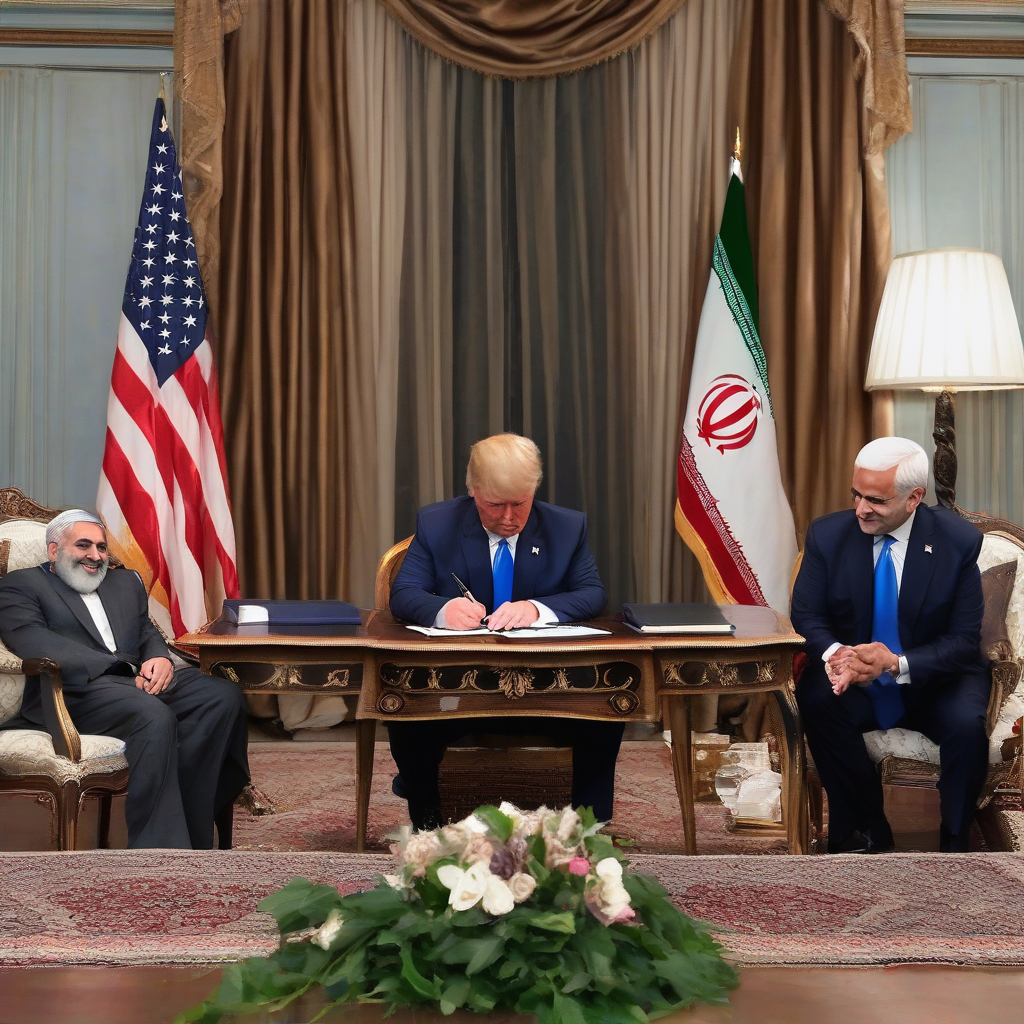
NEW YORK – The United States and Iran have entered into a Memorandum of Understanding (MoU) to extend a ceasefire, establishing a phased framework to terminate military hostilities and lift systemic economic sanctions.
The agreement sets a 60-day deadline for the two nations to negotiate a final, comprehensive deal, with the possibility of an extension based on mutual consent. The MoU focuses on immediate security guarantees, the restoration of maritime commerce, and a massive financial package for Iranian infrastructure. It builds on the previously announced ceasefire arrangement intended to halt months of clashes in and around the Strait of Hormuz and to de-escalate a confrontation that had drawn in US forces and regional allies.
Military Cessation and Maritime Security
Under the terms of the memorandum, both parties have agreed to the “immediate and permanent termination of military operations on all fronts, including in Lebanon.” To stabilize regional tensions, the US and Iran have pledged to “respect each other’s sovereignty and territorial integrity and to refrain from interfering in each other’s internal affairs.”
The language, while politically significant, is not yet legally binding in the way a ratified treaty would be, underscoring the interim nature of the MoU. US officials describe it as a bridge intended to lock in de-escalation while negotiators work toward a formal accord that could later be anchored in international law.
The agreement outlines specific timelines for the restoration of maritime access and the removal of military pressures in strategic waterways:
- US Naval Blockade: The US will begin removing its naval blockade immediately, with a mandate to fully end the blockade within 30 days, a step that would reopen key energy and shipping routes for global trade.
- Strait of Hormuz: Iran will employ its “best efforts” to ensure the safe passage of commercial vessels through the Strait of Hormuz for a period of 60 days, provided at no charge, effectively functioning as a security guarantee to shippers and insurers.
Diplomats say the maritime provisions are designed to reassure energy markets and coastal states that the security of the strait – through which a significant portion of the world’s seaborne oil passes – will no longer be used as leverage in the conflict.
Economic Reconstruction and Sanctions Relief
A central pillar of the MoU is the systematic removal of US economic pressure and the provision of development capital. The US has committed to “terminate all types of sanctions against” Iran, a pledge that, if fully implemented, would mark a decisive shift from the extensive sanctions regime built over more than a decade.
To facilitate immediate economic movement while permanent sanctions are being dismantled, the US Treasury will “issue waivers for the export of Iranian crude oil, petroleum products, and derivatives, and all associated services.” Additionally, the US will “make fully available for use the frozen or restricted funds and assets” belonging to Iran. Officials caution that any permanent lifting of sanctions would still have to navigate US domestic law and congressional oversight, as well as compliance obligations for banks and energy companies.
The agreement also introduces a large-scale investment framework for Iranian recovery:
- Development Fund: The US, working with regional partners, will develop a mutually agreed plan for the reconstruction and economic development of Iran, focused on critical infrastructure, energy, and public services.
- Minimum Investment: The plan will involve at least USD $300 billion, to be disbursed over multiple phases tied to verified implementation of security and nuclear commitments.
Economists note that the scale of the proposed investment would make Iran one of the largest recipients of coordinated post-conflict reconstruction support in recent history, with implications for regional supply chains and global energy markets.
Nuclear Commitments and Diplomatic Oversight
Regarding the Islamic Republic’s nuclear capabilities, Iran “reaffirms that it shall not procure or develop nuclear weapons.” However, the memorandum notes that other aspects of the nuclear program remain subject to negotiation, echoing earlier international efforts to separate civilian nuclear activity from any potential weapons pathway.
The two parties have agreed to “discuss the issue of enrichment and other mutually agreed matters related to the Islamic Republic of Iran’s nuclear needs.” Until a final agreement is reached, both nations agree to “maintain the status quo.” Negotiators say this clause is intended to prevent either side from using nuclear steps as leverage during the 60-day window.
To ensure compliance, an “executive mechanism will be established to monitor the successful implementation” of the memorandum. Diplomats involved in the talks say that mechanism is expected to coordinate closely with existing international monitoring structures created under prior arrangements with Iran, and to report regularly to participating governments.
Pathway to a Final Agreement
The transition from the MoU to a permanent treaty follows a strict sequence of implementation. The US and Iran will only begin negotiations on the remaining paragraphs of the agreement once the following conditions are met:
- Termination of military operations.
- Removal of the naval blockade.
- Provision of safe passage in the Strait of Hormuz.
- Issuance of oil export waivers.
- Release of frozen assets.
The sequencing is intended to create early, verifiable gains for both sides before they confront the most contentious unresolved issues, including the long-term structure of Iran’s nuclear program and the durability of US sanctions relief.
The final deal will be formalized and “endorsed by a binding UNSC (United Nations Security Council) resolution.” Such a resolution, adopted under the UN Charter’s Chapter VII framework, would give the agreement a formal place in international law and create reporting obligations to the Council. It would also sit alongside earlier Council resolutions on Iran’s nuclear file, including those that underpinned the 2015 Joint Comprehensive Plan of Action, providing a legal and institutional scaffold for what negotiators describe as a new phase in US-Iran relations.
Officials caution, however, that the MoU remains a roadmap rather than a destination. Its success will depend on rapid implementation of the initial security and economic steps, the willingness of national legislatures and regulators to translate commitments into enforceable policy, and the ability of both governments to manage domestic skepticism while they test whether this ceasefire can be converted into a durable peace.
