
BRUSSELS – A sharp escalation in long-range aerial warfare has coincided with a pivotal shift in Western diplomatic posture, as Ukrainian forces struck critical energy infrastructure in Moscow while Russian ballistic missiles targeted Kyiv.
The surge in hostilities comes as President Volodymyr Zelensky arrives in Brussels for a meeting of the Ukraine Defence Contact Group at NATO headquarters, following a G7 summit in France where allies signaled a coordinated effort to increase pressure on the Kremlin.
The current volatility reflects a strategy of coercive diplomacy; Kyiv is intensifying strikes on the Russian heartland to demonstrate Moscow’s vulnerability and shift the strategic leverage in favor of Ukraine before potential peace negotiations.
Escalation in the Russian Heartland
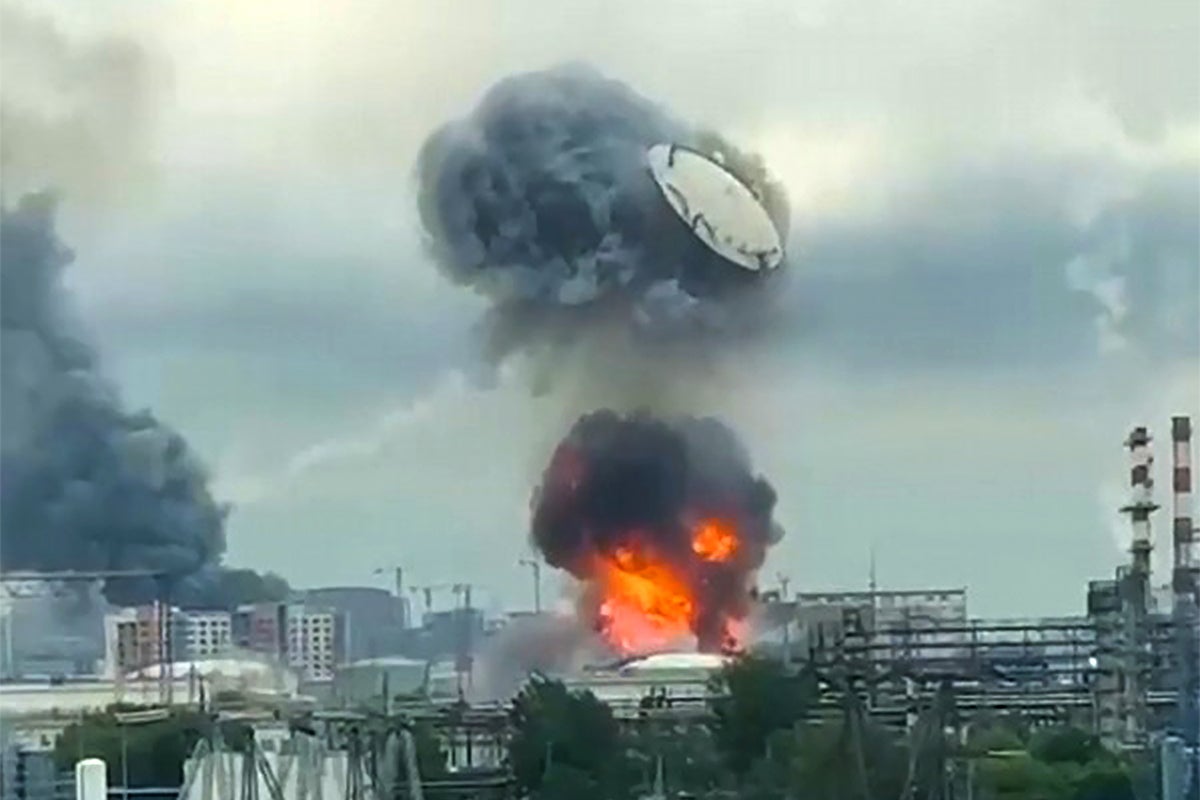
Ukrainian drones struck the Moscow oil refinery in Kapotnya for the second time in a single week, igniting large fires and blowing the lid off an oil tanker. Russian officials said the plant, one of the largest fuel facilities near the capital, lies just 15 kilometers from the Kremlin and is a key node in the country’s fuel supply chain. Regional authorities reported that 16 people were injured in the assault, which targeted facilities essential to the Russian state’s economic and military capacity.
President Zelensky characterized the strikes as “long-range sanctions,” framing the operations as a direct retaliation for Russian attacks on Ukrainian cultural heritage and as a way to erode the resources that underpin Russia’s campaign.
“Last night, our long-range sanctions once again reached the Moscow region – for the second time this week, the Moscow oil refinery was hit. Targets were also struck in the Rostov region and in temporarily occupied territories of Ukraine,” Zelensky said.
The Ukrainian president added that the operation was a “fully justified response to Russian attacks on our cities and communities” and specifically against infrastructure that “sustain Russia’s war machine.”
The strikes follow a Russian missile campaign that damaged a 1,000-year-old monastery in Ukraine, a site of immense spiritual and cultural significance protected under international humanitarian law on cultural property. The attack killed 10 people nationwide and drew widespread condemnation from Western capitals and international heritage bodies.
Ballistic Strikes on Kyiv
Simultaneously, Russia launched a series of ballistic missile attacks on the Ukrainian capital. Tymur Tkachenko, head of Kyiv’s military administration, warned residents via Telegram: “The enemy is attacking the capital with ballistic missiles. Stay in safe places until the air raid alert is over!”
The barrage contributed to a wider pattern of escalation, with air-raid alerts issued across most of Ukraine’s territory and reports of a drone attack in the northeastern city of Sumy that left one person dead. Ukrainian officials said the strikes were aimed at energy infrastructure and command-and-control nodes, underscoring Kyiv’s dependence on advanced air defenses supplied by Western partners.
The Kremlin has responded to Ukraine’s deepening strikes by distancing itself from immediate diplomacy. Yuri Ushakov, a Kremlin aide, told the Interfax news agency that the latest Ukrainian attacks are “pushing back the prospect of any direct contacts” between President Vladimir Putin and President Zelensky, even as intermediaries in Europe and the Global South continue to test openings for talks.
Shifting US Posture and G7 Dynamics
The military escalation occurs against a backdrop of evolving rhetoric from Washington and its allies. Speaking at a press conference during the G7 summit, French President Emmanuel Macron noted that President Donald Trump had “took notice” of the fact that Russia was not seeking peace, signaling less patience in Western capitals for Moscow’s current military course.
Macron observed that the G7 has “showed a real change in the approach from the US on Ukraine,” saying the American president had floated the prospect of additional economic sanctions and tighter enforcement of existing restrictions on Russian energy revenues should Moscow fail to take concrete steps to end the conflict.
This diplomatic shift is nuanced by Trump’s own assessment of the battlefield. While conceding that President Putin is currently “on the offensive,” Trump claimed that Moscow is losing more troops than Kyiv – a framing that allows Washington to argue that continued military and financial support is steadily degrading Russia’s ability to sustain the war.
NATO Support and the PURL Program
At the center of Zelensky’s agenda in Brussels is the urgent need for advanced air defense systems to mitigate the impact of Russian ballistic and cruise missiles on Ukraine’s cities and power grid. The Ukraine Defence Contact Group, a coalition of defense ministers and senior officials convened under NATO auspices, functions as the main clearinghouse for coordinating weapons deliveries, maintenance, and training.
Zelensky confirmed that the supply of air defenses through NATO’s PURL programme – a mechanism intended to pool and replenish allied stocks – alongside the development of a more integrated anti-ballistic missile network, will be the primary focus of the upcoming Ramstein talks. Western officials say decisions taken in the Contact Group ultimately need to align with national export controls and broader alliance policy set out in the North Atlantic Treaty, which commits members to collective defense while stopping short of making Ukraine a party to the alliance.
The Ukraine Defence Contact Group is expected to evaluate how quickly new systems can be brought online to protect both civilian centers and the logistical hubs sustaining the Ukrainian counter-offensive, including rail junctions, fuel depots, and ammunition stockpiles.
Regional Tensions Beyond the Front
The spillover of the conflict has extended into the English Channel, where the UK Ministry of Defence reported that Russian vessels fired warning shots off the Isle of Wight. British officials said no damage was reported but confirmed that Royal Navy assets were monitoring the situation closely.
While a Ministry of Defence spokesperson described the event as an “isolated incident” unrelated to the UK’s recent interception of the Russian shadow fleet tanker Smyrtos, the encounter has raised concerns among maritime insurers and shipping operators about Russian harassment of commercial traffic and critical sea lanes that link the UK to continental Europe, including routes serving the EU’s core transport network.
The G7 allies have maintained a joint position, stressing Ukraine’s battlefield resilience and asserting that Russian forces are sustaining record losses in personnel and armored vehicles. Leaders argue that tightening sanctions, coordinated export controls, and continued military assistance are necessary to convince the Kremlin that prolonging the war will only deepen Russia’s strategic isolation.
The Ukraine Defence Contact Group meeting continues at NATO headquarters in Brussels, with officials warning that decisions taken in the coming days on air defense, ammunition production, and energy resilience will shape the trajectory of the conflict into next winter.
Related reading
