
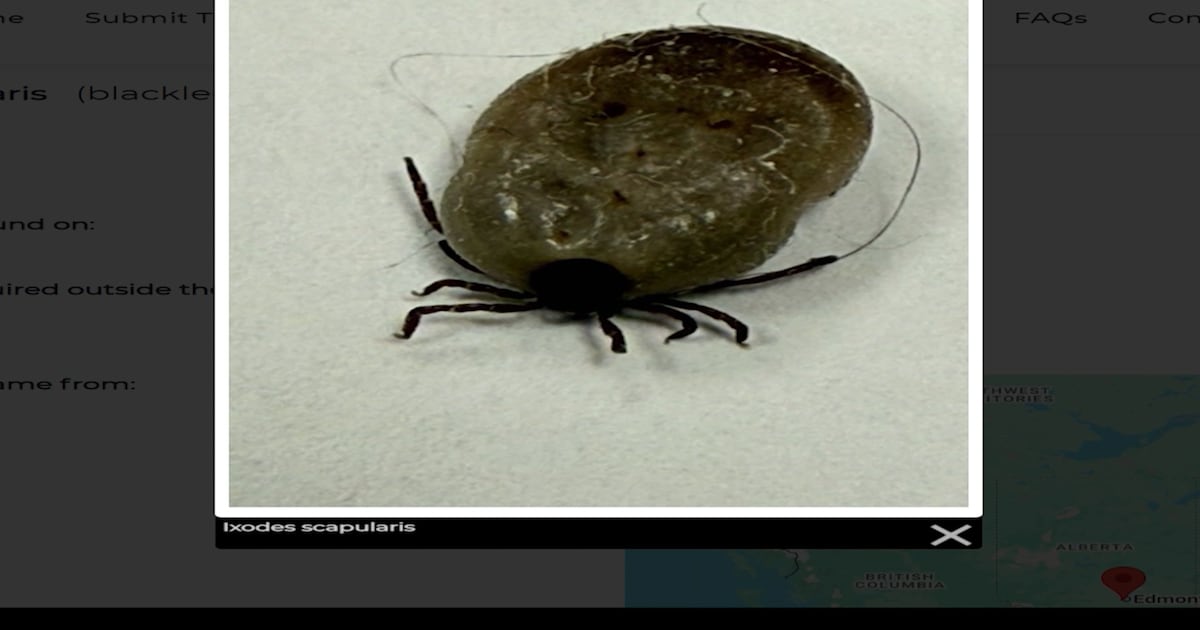
Regional Shifts in Tick Distribution
The geographical footprint of tick populations in Canada is undergoing a significant expansion, altering the risk profile for several provinces. Recent surveillance data indicates a marked increase in tick reports, with Alberta now recording the second highest number of reports in the country. This shift suggests that environmental changes, including milder winters and longer warm seasons, are enabling tick species to thrive in regions previously considered low-risk, moving beyond the traditional hotspots in Southern Ontario and Quebec.
Public health officials have issued warnings as cases of Lyme disease rise in tandem with the expanding tick population. The emergence of these vectors in new territories creates a challenge for early detection, as residents and healthcare providers in newly affected areas may not be historically attuned to the signs of tick-borne illnesses. The current trend has led some to observe that “2026 is the summer of ticks,” reflecting a peak in reported encounters and a heightened state of vigilance across the public health sector. For provincial governments, the change is no longer a localized nuisance but a national public health planning issue, with implications for budgets, workforce training, and cross-border coordination.
Epidemiological Risk Factors and Population Impact
The rise in tick-borne pathogens is not uniform across the population. The intersection of land use, climate variance, and human behavior dictates the level of exposure, and those factors are increasingly informing how provincial health ministries prioritize outreach and prevention campaigns. Public health infrastructure must account for these variables to optimize resource allocation, patient screening, and the placement of diagnostic services.
| Risk Category | Contributing Factors | Population Impact |
|---|---|---|
| Environmental | Warmer winters, expanded deciduous forest cover, and changing patterns of land fragmentation | Increased tick survival, northward migration, and establishment of new endemic areas |
| Occupational | Agricultural work, forestry, land management, and outdoor construction | Higher frequency of direct vector contact and growing relevance for workplace safety standards |
| Recreational | Hiking, camping, and outdoor sports in tall grass or wooded areas | Seasonal spikes in acute Lyme disease presentations and increased demand for urgent-care consultations |
| Zoonotic | Increased white-footed mouse and deer populations and closer human-wildlife interfaces at the urban fringe | Higher reservoir capacity for Borrelia burgdorferi and sustained transmission cycles across seasons |
For policymakers, these categories are more than academic: they map directly onto decisions about where to deploy public health nurses, how to design seasonal awareness campaigns, and which communities-particularly Indigenous and rural populations-require tailored risk communication.
Public Health Infrastructure and Surveillance
The surge in tick reports places an increased burden on primary healthcare systems, particularly regarding the diagnostic pipeline for zoonotic diseases. Because the early stages of Lyme disease can mimic other febrile illnesses, the accuracy of reporting depends heavily on the clinical awareness of practitioners in emerging risk zones. Public health agencies are currently focusing on enhancing surveillance systems to track the movement of black-legged ticks in real-time, combining field sampling with digital reporting tools to shorten the lag between local outbreaks and official advisories.
From a regulatory perspective, the increase in cases prompts a review of existing health warnings, school-based guidance, and the efficacy of public communication strategies. The federal Public Health Agency of Canada, operating under the national Federal Framework on Lyme Disease, is being pushed to coordinate more closely with provinces as risk maps are redrawn and surveillance definitions updated. The objective is to transition from reactive warnings to a sustained model of preparedness. This involves integrating environmental data with clinical reporting to predict “hot zones” before seasonal spikes occur, and ensuring that those forecasts translate into concrete actions-such as updating treatment algorithms, revising occupational health guidance, and adjusting stockpiles of diagnostic kits and first-line antibiotics.
Systemic Mitigation and Preparedness
Addressing the rise of tick-borne illnesses requires a multi-sectoral approach that bridges environmental science, labour regulation, and medical policy. Rather than focusing solely on individual prevention, institutional efforts are directed toward population-level risk reduction and the stabilization of healthcare capacity during peak seasons. That includes decisions by provincial cabinets on funding, by health authorities on staffing rural clinics, and by education ministries on how aggressively to integrate tick awareness into school curricula.
- Surveillance Integration: Coordinating data between veterinary services and human health agencies to monitor pathogen prevalence in wildlife, with results feeding directly into provincial risk maps and municipal land-use planning.
- Clinical Training: Updating diagnostic protocols and continuing medical education for general practitioners in provinces like Alberta to ensure rapid identification of erythema migrans and other early Lyme indicators, reducing delays to treatment.
- Policy Alignment: Standardizing public health guidelines across provincial borders to ensure consistent reporting, case definitions, and treatment standards, particularly for people who live and work across interprovincial corridors.
- Infrastructure Support: Increasing the availability of diagnostic testing in rural and remote clinics located in high-incidence corridors, supported by clear funding envelopes and contingency plans for laboratory surge capacity during peak months.
As ticks push into new parts of Canada, the story is no longer just about changing ecosystems. It is about whether public institutions can adapt at the pace of the vectors themselves-and whether the country’s patchwork of policies can be stitched into a coherent national response before “the summer of ticks” becomes the new normal.
Related reading
