
LONDON –
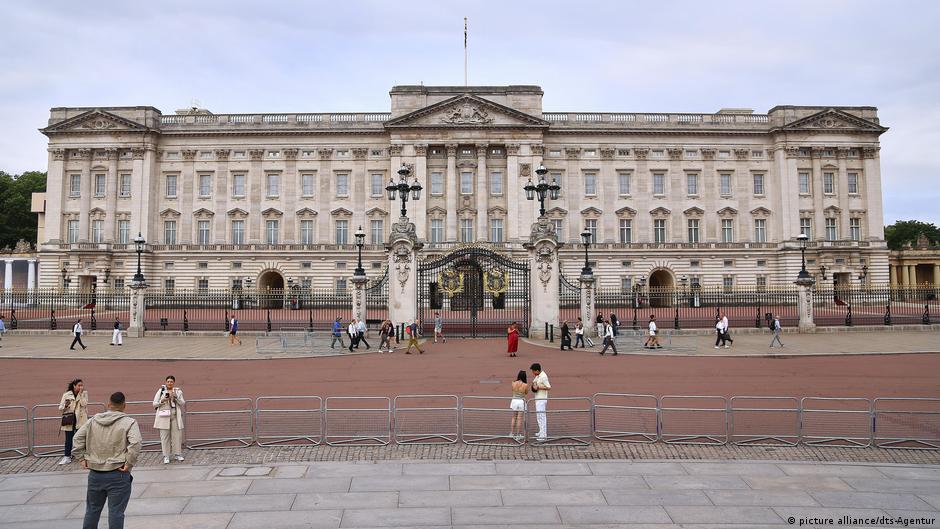
King Charles III will not relocate to Buckingham Palace upon the completion of its decade-long refurbishment program in 2027, royal officials announced June 25, 2026.
The king and Queen Camilla will instead maintain their residence at Clarence House, the king’s longstanding London home.
This separation of personal residence from the primary administrative seat of the monarchy clarifies the operational role of Buckingham Palace as a site for state governance and international diplomacy rather than a private home, reinforcing its function as an institutional asset rather than a royal family dwelling.
James Chalmers, the king’s treasurer and keeper of the privy purse, confirmed that the palace will continue to serve as the central hub for official functions and the reception of foreign dignitaries.
“It is and will remain monarchy HQ, the crown jewel of our national buildings,” Chalmers told reporters.
Institutional Infrastructure and Refurbishment Costs
Buckingham Palace has served as the primary London residence for the British monarch since 1837. The 775-room facility operates as both a residence and the primary office space for the royal bureaucracy, housing key departments that support the sovereign’s constitutional and ceremonial duties.
The current renovation project began in 2017 and is scheduled for completion in 2027. The total cost of the program is projected at 369 million pounds (€428.2 million, $486.7 million), funded via the Sovereign Grant mechanism rather than direct ad hoc allocations, framing the works as a long-term public infrastructure investment in a state-owned building.
Capital expenditures for the project are focused on the replacement of critical infrastructure, including heating systems, piping, and electrical wiring, in some cases dating back decades and considered at risk of fire and system failure. Officials argue that the works are necessary to keep the palace compliant with modern safety and conservation standards while preserving its role as a working seat of the head of state.
Officials stated that the project will result in greater public access for the approximately 700,000 people who visit the building annually, though specific details on the expanded access were not provided. Royal aides indicated that this could include longer opening periods and more areas being made accessible when the palace is not being used for state functions.
Tax Disclosures and Voluntary Payments
On June 25, 2026, the king released details of his personal tax payments to the government for the first time since his accession in 2022, in a move presented by the palace as part of a broader transparency agenda.
Official records show that the king paid 12.9 million pounds in tax for the 2024/25 period, a figure that places him among the top 100 taxpayers in Britain.
Under British law, the monarch is not required to pay inheritance, capital gains, or income tax. The current payments are voluntary, continuing a practice established by Queen Elizabeth II after 1993 and set out in a formal memorandum of understanding with the government that sits alongside the statutory framework governing royal finances, including the Sovereign Grant Act.
Additional disclosures revealed that Prince William, the heir to the throne, paid 7.76 million pounds in tax for the 2024/25 period. Palace officials emphasised that publishing both figures is intended to underline that senior members of the royal family contribute to public finances at a level comparable to the very wealthiest private citizens.
Revenue Streams and Governance
The financial operations of the monarchy are divided between government funding and private assets, a structure that has become a focal point for debates about value for money and accountability.
The Sovereign Grant is provided by the government to cover travel, staff, and the maintenance of royal palaces. It is calculated as a percentage of the profits from the independently managed Crown Estate and is scrutinised annually by Parliament and the National Audit Office, bringing the monarchy’s official expenditure into the same public-spending oversight framework as government departments.
Independent of the grant, the monarch receives private income from investments and the Duchy of Lancaster estate, a revenue stream available to the monarchy since 1399 and administered as a separate portfolio from the state-owned Crown Estate. Clarence House is maintained from this private income rather than from the budget assigned to Buckingham Palace as a working building.
These financial disclosures follow a period of institutional instability regarding the reputation of the royal family, specifically concerning the links between Andrew Mountbatten-Windsor and convicted sex offender Jeffrey Epstein. They also come amid renewed public scrutiny of how royal wealth, public subsidy and historic privilege intersect in a cost-of-living crisis.
The Buckingham Palace refurbishment program remains in its final phase of construction with a scheduled completion date in 2027. By confirming that the palace will operate primarily as a ceremonial and administrative headquarters while the monarch resides elsewhere, officials are signalling a more explicitly institutional and less domestic vision for one of Britain’s most recognisable public buildings, even as debates over its cost and symbolism continue.
For readers unfamiliar with the building’s status, Buckingham Palace is a state-owned royal residence in central London, distinct from the nearby private royal home of Clarence House in the city’s St James’s district, and has long functioned as the principal backdrop for national events such as jubilees, coronations and Trooping the Colour.
- Interactive Storytelling and Immersive Audio: How Next-Gen Gaming Engines Are Transforming Contemporary Television Production
- Independent Cinema’s New Distribution Paradigms: How Direct-to-Consumer Micro-Premiers Are Shifting Box Office Dynamics
- Sarah Zadrazil returns to official ÖFB team training ahead of play-offs (archysport.com)
