
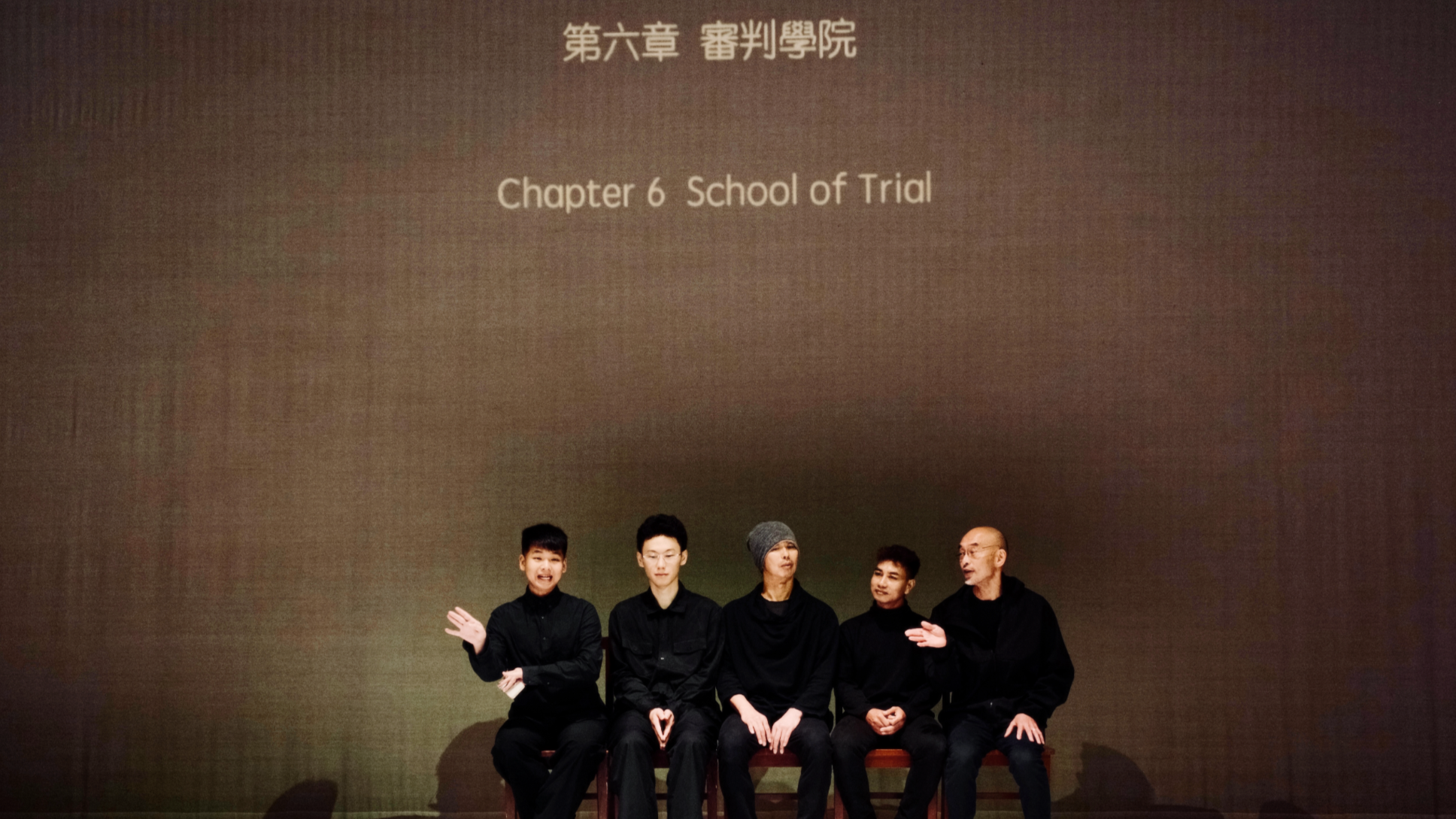
HONG KONG – “The Festival of Meeting of Gods” concluded on July 12 at the Hong Kong Institute of Contemporary Culture Lee Shau Kee School of Creativity’s multimedia theater. The event featured seven experimental theater productions from artists across Asia and Europe.
The festival serves as a case study in the structural tension between traditional performing arts lineages and the operational demands of experimental theater. By bringing together diverse disciplines, the event examined the transition from the preservation of inherited cultural forms to the establishment of independent creative authority, a question that sits increasingly close to the heart of how public cultural institutions allocate funding and define “heritage” under frameworks such as the UNESCO Convention for the Safeguarding of the Intangible Cultural Heritage.
Frameworks of Tradition and Experimentation
Co-organizer Danny Yung, artistic director laureate of Zuni Icosahedron and recipient of the Award for Outstanding Contribution in Arts from the Hong Kong Arts Development Council, identified a shared “universal frequency” across diverse performing arts lineages. For Yung, that shared frequency is where traditional repertories, institutional cultural policy and contemporary experimentation begin to intersect.
Yung noted that while Chinese Xiqu traditional operas, Cambodian Khmer classical dance, and Japanese Kabuki theater each maintain specific “grammar of breath, pause, and posture,” the objective for the traditional master is to breathe life into the ancestral spirit rather than merely mimicking characters. That responsibility, he suggested, extends beyond the stage to how education systems and publicly funded troupes transmit canonized roles to the next generation.
In traditional performance, actor movements are largely predetermined. Experimental art, however, seeks to remove these constraints or at least subject them to critical interrogation. Yung, who has spent over 40 years working with Xiqu, stated that this evolution forces creators to determine if they are custodians of a lineage, professional artists meeting the expectations of cultural bureaucracies, or independent creative forces prepared to take risks that may not conform to existing funding metrics.
Performance Deconstruction and Identity
To illustrate how that tension plays out onstage, Yung highlighted the 2004 production Flee by Night as an example of this transition. The experimental Kunqu performance was part of a cultural tour marking the 50th anniversary of diplomatic relations between China and Norway, performed at the Oslo Concert Hall. The tour, framed as official cultural diplomacy, also became a laboratory for testing how far a state-supported art form could stretch its own conventions.
The production featured Ke Jun, managing director of Jiangsu Province Arts Group Co Ltd and a deputy to the National People’s Congress. In the performance, Ke Jun portrayed Lin Chong from the novel Water Margin, embodying a role deeply embedded in China’s cultural canon and often presented in tightly codified stagings.
The production utilized a two-part structure. Following a traditional Kunqu sequence, a pre-recorded video showed Ke Jun systematically removing his opera facial makeup before he reappeared in modern attire. The gesture, staged within the context of an official cultural exchange, underscored how questions of artistic autonomy and personal identity are negotiated in real time inside state-linked institutions.
Yung recalled the impact of this “unmasking” on an audience of over 1,500 people. Ke Jun later stated that removing the external traditions and costumes forced a confrontation with his true identity and purpose – not only as a performer but also as a cultural representative operating within formal diplomatic frameworks.
Regarding his methodology, Yung said:
“I do not direct the actors; I ask them questions. What happens if this gesture is slowed down? Why choose this path across the stage over its counterpart?”
The line of inquiry, he added, is designed to push performers beyond inherited blocking toward a self-authored stage language that can still communicate across borders and policy agendas.
Industry Metrics and Artistic Exchange
Liu Xiaoyi, a Singaporean director and recipient of Asia Weekly’s “Global Outstanding Young Leader” award, argued that cultural exchanges often fail when they remain superficial, functioning as symbolic gestures that satisfy official itineraries but change little in practice.
Liu described “tourism-style appreciation” as a state where art is treated as a commodity or decoration – something to be consumed, photographed and ticked off a program list. He stated that establishing direct, sustained dialogue between artists, producers and local communities transforms these “exchanges from transaction to connection,” a shift that he believes should be reflected in how ministries and arts councils design bilateral cultural programs.
Yung added that true artistic exchange must move beyond “polite diplomacy” and instead rely on a “reflective dialectic” and deep witnessing of work. That approach, he suggested, is slower and less easily quantified, but more aligned with long-term cultural understanding than the fly-in, fly-out festival model.
Liu also identified a divergence in how success is measured between commercial and experimental theater. While the commercial sector prioritizes box office receipts, audience satisfaction, and critical consensus, Liu argues that experimental success is defined by:
- The boldness of creative risks undertaken within and against inherited forms
- Intellectual and physical collaboration between creators and performers across cultures and training systems
- The capacity to challenge and transform audience preconceptions, even at the expense of immediate consensus or commercial return
For city governments positioning culture as a pillar of the “creative economy,” that divergence raises a policy question: whether evaluation criteria and grant structures can accommodate work whose primary outcomes are inquiry, discomfort and long-term dialogue rather than short-term ticket sales.
Technological Integration and R&D
The festival also addressed the intersection of artistic research and the development of artificial intelligence, framing the theater as a kind of R&D lab where new human-machine relationships can be staged and stress-tested before they are normalized in broader society.
Liu stated that creativity is the primary driver in both the arts and technological advancement. He noted that “artistic practice fosters the lateral thinking and critical inquiry necessary to push the boundaries of scientific and technological advancement,” adding that interdisciplinary projects at the school increasingly pair performers with technologists working on machine vision, responsive soundscapes and generative text systems.
For regulators and education officials monitoring the cultural impact of AI, experiments such as those presented at The Festival of Meeting of Gods offer early evidence of how artists are reframing authorship, agency and ethics onstage – conversations that could, in time, inform guidelines on creative labor, intellectual property and the responsible use of training data.
The Festival of Meeting of Gods concluded its run on July 12, 2026, but organizers say the questions it surfaced – about who owns tradition, how institutions measure risk, and where AI sits inside the creative process – will continue to shape future collaborations at the Lee Shau Kee School of Creativity and across Hong Kong’s wider arts ecosystem, which is evolving under policy blueprints such as the city’s broader cultural and creative industries strategies and international positioning as an East-meets-West arts hub.
Keep reading
