
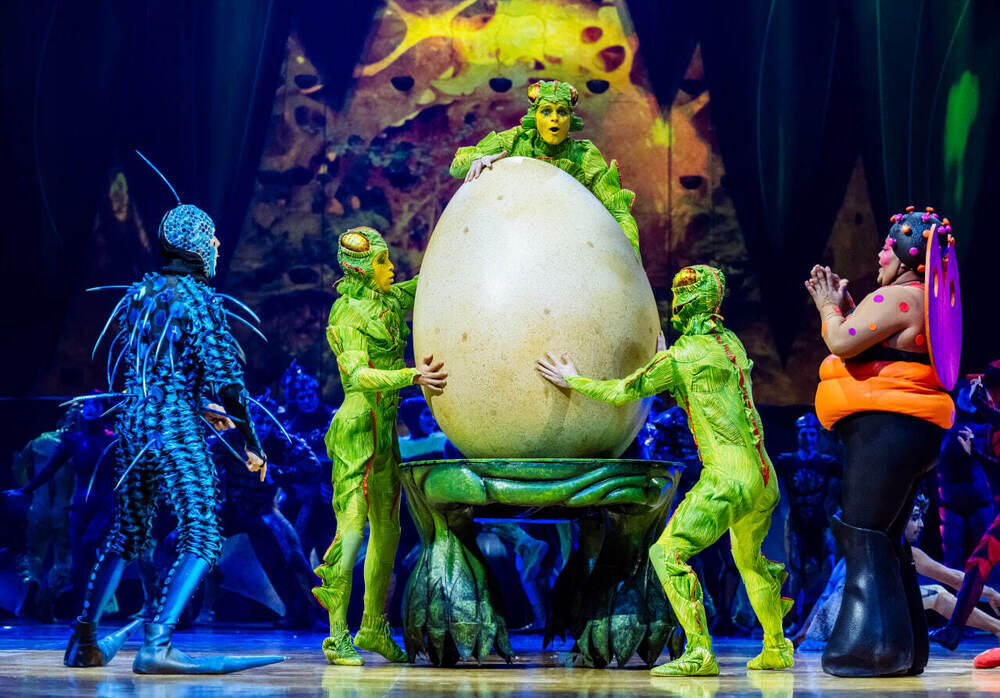
ASTANA – Cirque du Soleil has commenced a Kazakhstan tour with the production OVO, performing at the Barys Arena in Astana from June 4-7.
The engagement represents the company’s first major production tour in Central Asia since 2017. The operation highlights the intensive logistical infrastructure and human capital required to export high-specification live theatrical productions to regional markets, involving a multidisciplinary team of 100 personnel and close coordination with local authorities under Kazakhstan’s Law on Culture.
Logistics and Operational Scale
The transport of OVO requires either 21 trucks or two cargo aircraft to move the necessary equipment, including rigging, acrobatic apparatus, lighting, sound, and set components. To maintain these standards on tour, the production travels with an internal laundry facility comprising five washing machines and three dryers, enabling daily maintenance of costumes and textiles without reliance on external vendors.
The company’s costume operations are centralized in Montreal, Canada, where approximately 200 staff members manage design and production. For the Kazakhstan tour, five wardrobe specialists manage approximately 800 costume pieces used per performance, overseeing repairs, fittings, and compliance with safety specifications for aerial and high-impact acts.
Janie Mallet, Senior Touring Publicist on OVO, stated:
“All Cirque du Soleil costumes are created in Montreal, Canada, where approximately 200 people at the company’s headquarters work exclusively on costume design and production. Since the show features world-class performers, every costume is custom-made for a specific artist and act. Costumes for aerial acrobats, gymnasts, clowns, and other performers differ not only in appearance but also in construction, taking into account the specific requirements of each performance,”
The production utilizes a tiered make-up process where artists are trained to apply their own stage looks, a process that takes between 30 and 90 minutes depending on the character. This approach reduces on-site staffing needs while ensuring visual consistency across performances in different cities.
Production Design and Creative Direction
Directed and choreographed by Brazilian artist Deborah Colker, OVO utilizes a nonverbal narrative focused on an insect microcosm, relying on movement, color, and music rather than spoken dialogue. Set designer Gringo Cardia based the scenic elements on the structures of insect nests and colonies, translating organic forms into large-scale, tourable architecture that can be installed and dismantled within tight arena schedules.
The primary structural element of the set is a wall measuring 19.5 meters wide and nine meters high, featuring 13 movable leaves that function as both scenic backdrop and performance apparatus. The design is supplemented by oversized floral installations, including hibiscus, tulips, and nasturtiums, which frame the acrobatic sequences and reinforce the sense of entering a magnified natural environment.
According to Mallet, the production is centered on the symbol of the egg, which is the meaning of “ovo” in Portuguese, and is treated as a metaphor for origin, transformation, and renewal that can be read without translation by audiences across Kazakhstan and the wider region.
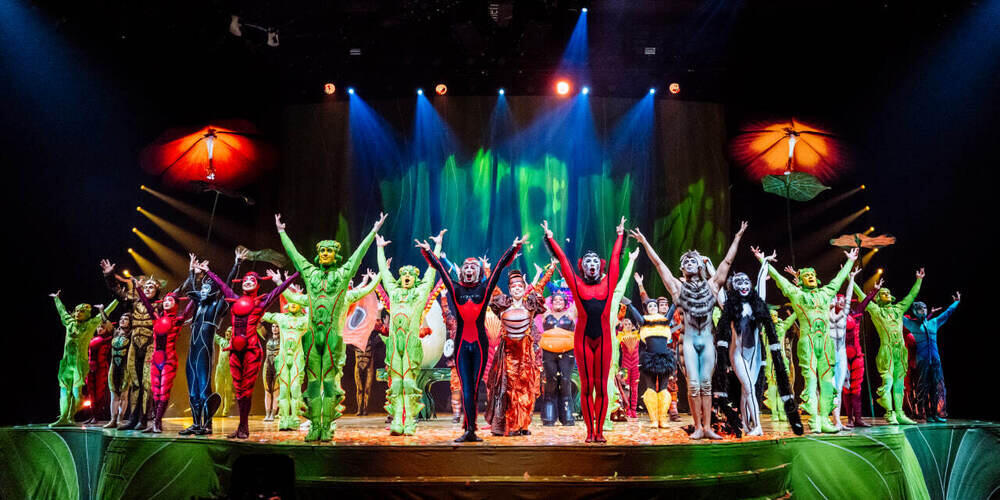
Photo credit: Freedom Events
Human Capital and Performance
The production employs 53 performers representing 25 different countries and speaking 17 languages, in addition to technical and support staff. Performer Arthur Dudov noted that the use of nonverbal storytelling is what makes the production accessible to diverse nationalities, aligning with Kazakhstan’s positioning of Astana and Almaty as regional cultural hubs capable of hosting large-scale international events.
The physical requirements of the show are high, particularly for aerial acrobats such as Esmira Kuliyeva, who stated that the butterfly act relies on precise physical conditioning and strength. Performers train daily in the arena to maintain safety and consistency, operating within strict internal protocols that govern rigging checks, warm-up routines, and medical support.
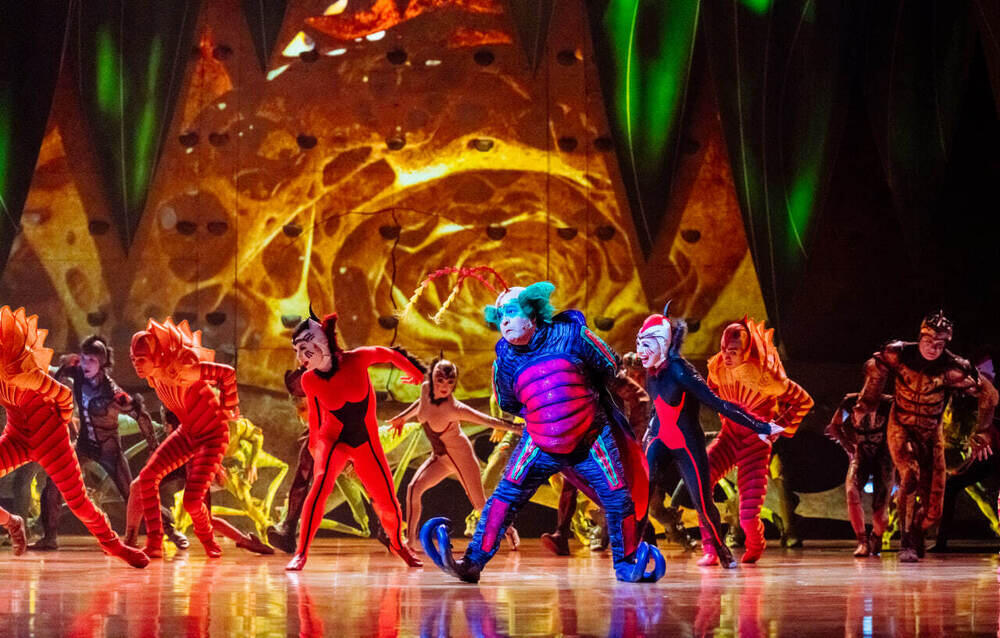
Photo credit: Freedom Events
Musical Architecture
Composer Berna Ceppas developed the score by integrating bossa nova and samba with funk and electronic music, incorporating recorded insect sounds into the keyboard arrangements to mirror the visual language of the production. The musical palette is designed to be immediately legible to audiences without translation, reinforcing the show’s cross-border appeal.
The live ensemble consists of eight members: a vocalist and seven musicians, including a bandleader/drummer, bassist, percussionist, violinist, woodwind player, keyboardist, and guitarist. The music is synchronized with live action via headsets and microphones, allowing the score to adapt in real time to the timing of the performers on stage and to any adjustments required by local venue conditions. For readers unfamiliar with Cirque du Soleil’s format, this places OVO within the broader category of arena-scale touring productions that combine circus arts, dance, and original live music rather than relying on pre-recorded tracks.
Tour Schedule and Cultural Policy Context
The production is scheduled for a total of 14 performances across Kazakhstan, with an expected attendance exceeding 70,000 spectators. Following the Astana engagement, OVO will move to the Almaty Arena for performances from June 11-14, reinforcing both cities’ strategies to attract international creative industries and diversify local entertainment offerings alongside domestic cultural programming.
The tour operates within Kazakhstan’s broader effort to expand access to international cultural content, a policy direction reflected in national programs that encourage partnerships between state-owned venues and global producers. For Kazakhstan’s cultural authorities, hosting a complex touring production on this scale serves as a practical test of arena infrastructure, regulatory procedures, and city-level event management capacity, with potential implications for securing future large-format shows from producers such as Cirque du Soleil and other international companies.
Related reading
