
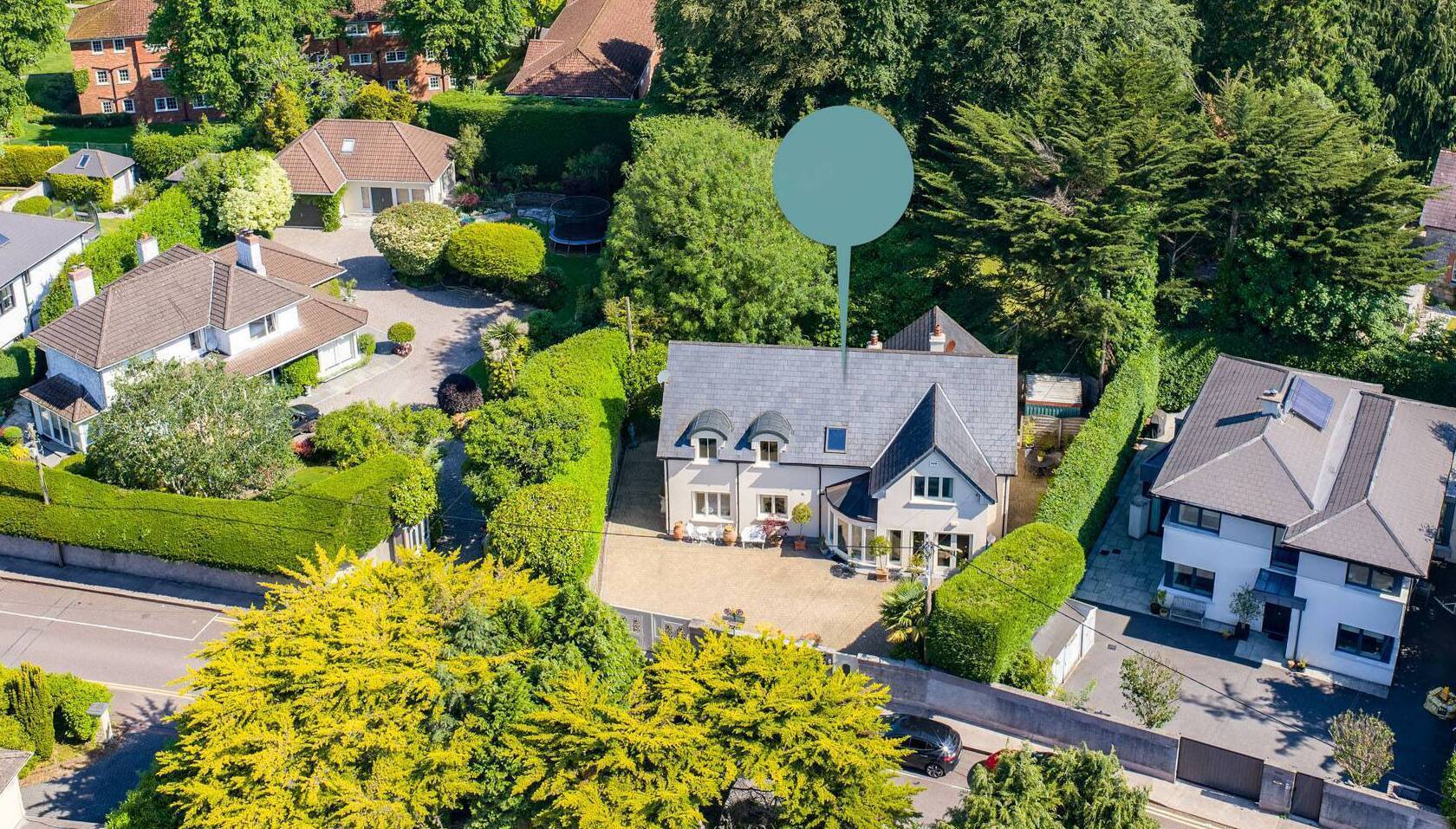
CORK – The luxury residential market in Cork’s inner western suburbs is seeing a recalibration of buyer demographics as high-value assets near major medical and academic institutions enter the market.
The introduction of Primrose Cottage, a 2,700 sq ft architect-designed home on Orchard Road, marks a significant data point for the area’s prime real estate sector. Guided from €1.3m as an executor sale, the property is positioned within a high-demand corridor characterized by its proximity to University College Cork (UCC) and the Bon Secours hospital.
This specific geography creates a concentrated pocket of high-net-worth demand, traditionally driven by medical consultants. However, recent transaction data suggests a broadening of the buyer profile, moving beyond the healthcare sector into a wider professional class, including senior legal, financial and technology executives seeking access to the city centre and key institutions.
Institutional Influence on Valuation
The valuation of properties on Orchard Road is heavily influenced by the surrounding institutional infrastructure and by planning policy that effectively caps the supply of comparable detached homes. The area is adjacent to the University College Cork Medical Sciences Centre, situated on a 3.5-acre site formerly known as Brookfield House, anchoring one end of the corridor.
The transition of this land from the Jennings family’s agricultural orchards to prime residential and institutional use reflects a broader trend of urban densification and the premium placed on proximity to the city’s “medical mile,” which includes CUH, CMUH, and the Bon Secours. For higher-earning professionals, this clustering reduces commute times, supports dual-career households and reinforces the willingness to pay a substantial location premium.
Recent activity in the Property Price Register indicates a recovery and stabilization of the €1m-plus bracket in this district:
- Ecklinville Development (2024-2025): Nine detached new builds sold for between €1.28m and €1.64m, totaling €12m in gross sales and setting a new benchmark for contemporary stock on the road.
- San Paula (2018): Sold for €1.9m, though the transaction was driven primarily by site value for redevelopment rather than existing housing quality.
- Mapleholme (2023): An older-era detached property that sold for €1.19m, underscoring the floor now established for legacy homes in need of upgrade.
Collectively, these deals frame Primrose Cottage’s guide price as part of a coherent pricing arc rather than an outlier, suggesting that €1.3m-plus values are now an accepted feature of the local market rather than a post-pandemic spike.
Asset Specifications and Energy Compliance
Primrose Cottage was designed by architect Tom Coughlan of Coughlan De Keyser approximately 20 years ago, at a time when Orchard Road was beginning to pivot from traditional detached houses towards more consciously designed, energy-aware homes. The property features four en suite bedrooms, including a ground-level suite designed for accessibility and “future-proofing,” catering both to downsizing professionals and to multigenerational families.
The home has achieved a B energy rating under the simplified BER system introduced in May 2026. Under the framework set out in the Building Energy Rating regulations, this rating is critical for modern valuations, as energy efficiency now directly impacts financing terms, compliance with landlord standards and buyer premiums in the Irish luxury market. In practice, a B-rated home in this bracket can command more favourable mortgage conditions and reduce the capital outlay required for retrofit works.
The interior configuration includes:
- Underfloor heating beneath marble flooring across the ground level.
- A double-height entrance hall with glass balustrading that amplifies natural light.
- A professional-grade kitchen equipped with a creamy Aga range and ancillary storage.
- Dedicated study and home office space, reflecting the post-pandemic shift towards hybrid working patterns.
“It’s bright, with spacious and well-balanced accommodation, designed to meet the needs of modern family living,”
said auctioneer Brian Olden of Cohalan Downing Associates, noting that interest to date has come from both medical and non-medical professionals seeking long-term primary residences rather than pure investment plays.
Planning and Land Use Trends
The Orchard Road corridor has been the subject of protracted planning disputes, particularly regarding the tension between low-density luxury residential use and high-density student accommodation. Those debates have played out against the backdrop of national housing and student-accommodation targets, leaving local residents, developers and planners to negotiate how intensively the road should be built out.
The site of the former San Paula residence serves as a case study in this conflict. While student housing was initially proposed due to the proximity of UCC and Brookfield, the site was eventually developed into the nine-unit Ecklinville scheme. This outcome preserved the detached residential character of the road while maximizing the land’s financial yield within the constraints of local planning policy.
That balance – between intensification and preservation – is increasingly being tested as Cork’s core neighbourhoods absorb population and institutional expansion. Planning decisions taken on sites such as San Paula effectively signal to the market how far higher-density uses will be tolerated along Orchard Road, shaping land values and investment horizons for years ahead.
The current market condition for Orchard Road remains characterized by a price premium, supported by a limited supply of detached homes and sustained demand from the professional medical and academic sectors. With new-build opportunities constrained by planning and policy, assets like Primrose Cottage are likely to be read by both buyers and policymakers as indicators of how Cork’s inner western suburbs are managing the competing pressures of institutional growth, housing need and neighbourhood character.
