
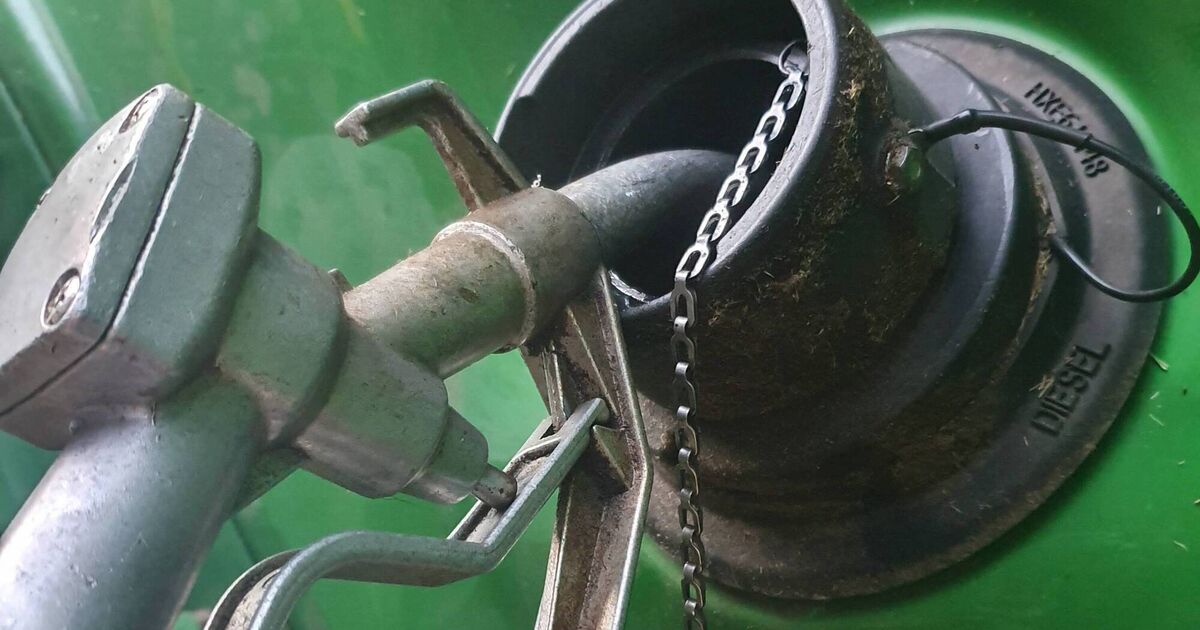
DUBLIN – A combined tax liability of €1.55 million has been upheld against an agricultural contractor, haulier, and farmer following a dispute with the Revenue Commissioners over the misuse of marked gas oil.
The Tax Appeals Commission (TAC) ruling affirms a 2018 assessment involving excise duty, income tax, and VAT, centered on the acquisition and redistribution of lower-tax “green diesel.” The decision underscores the willingness of tax authorities to pursue large retrospective liabilities where they believe subsidised fuel has been diverted into the commercial transport market.
The case highlights the strict enforcement of fuel excise regimes in Ireland, where marked gas oil (MGO) is legally restricted to off-road agricultural and industrial use to prevent tax leakage in the transport sector. Under the EU Excise Directive, member states apply specific markers to fuel so that customs and tax authorities can distinguish between taxable road diesel and subsidised agricultural fuel and impose significant penalties where misuse is detected.
The financial breakdown of the assessment is as follows:
- Excise Duty: €1.29 million
- Income Tax: €214,663
- VAT: €54,072
- Total Liability: €1.55 million
Appeals commissioner Conor O’Higgins found that the appellant purchased 3.44 million litres of ultra-low sulphur MGO during 2014 and 2015, totaling an expenditure of €2.47 million.
The commission determined that the volume of fuel acquired far exceeded the stated requirements of the appellant’s farming and contracting operations. Mr O’Higgins concluded that the farmer was engaged in the supply of green diesel to other parties, “presumably for profit,” and treated the undeclared activity as a taxable trade for the purposes of both income tax and VAT.
During the proceedings, the appellant challenged the excise duty assessment, describing the volume of fuel as an “absurd” amount for a maize farm or agricultural contracting business. He denied supplying fuel to other farmers and stated that his annual fuel consumption typically ranged between €300,000 and €350,000.
“I would burn in my business a year would be €300,000-€350,000.”
The Revenue Commissioners presented evidence including a supplier’s statement confirming the delivery of the 3.44 million litres between April 2014 and July 2015. This documentation had been provided to the authorities in 2016 by the appellant’s own agent.
Revenue counsel further asserted that the appellant’s agent had previously admitted the farmer operated an arrangement to purchase agri-diesel in large quantities at a favourable rate and resell it to other farmers for cash, outside normal invoicing and tax records. The appellant dismissed the agent’s correspondence as “lunacy” and claimed it did not reflect reality.
Mr O’Higgins ruled that the appellant’s oral evidence lacked credibility, noting a complete absence of corroboration for the claims regarding fuel usage, stock levels, or storage capacity. The commissioner also noted that the appellant failed to provide the names of any farmers he may have supplied, despite multiple requests during the investigation and hearing, and drew adverse inferences from that refusal.
The dispute occurred against a backdrop of significant volatility in energy markets. The price of green diesel rose from €0.97 per litre in February to €1.80 in subsequent weeks, a spike that contributed to widespread blockades at oil depots and ports in Dublin, Cork, Limerick, and Galway as hauliers and farmers protested rising costs.
The legal process faced several delays, reaching a conclusion only on the fourth attempt. The hearing was postponed twice due to the appellant’s reported poor mental health and a third time following a road traffic accident that required the appellant to be transported to a hospital by ambulance.
The appellant argued that enforcement of the €1.29 million excise bill “would result in the inevitable collapse of his business,” pointing to tight margins in agricultural contracting and existing borrowings.
While the TAC has now confirmed the assessment, the case may not be concluded. The commission has been requested to state and sign a case for the opinion of the High Court, a step that could clarify how Irish law applies to large-scale discrepancies in marked fuel purchases and shape future enforcement of excise rules across the sector.
Keep reading
