
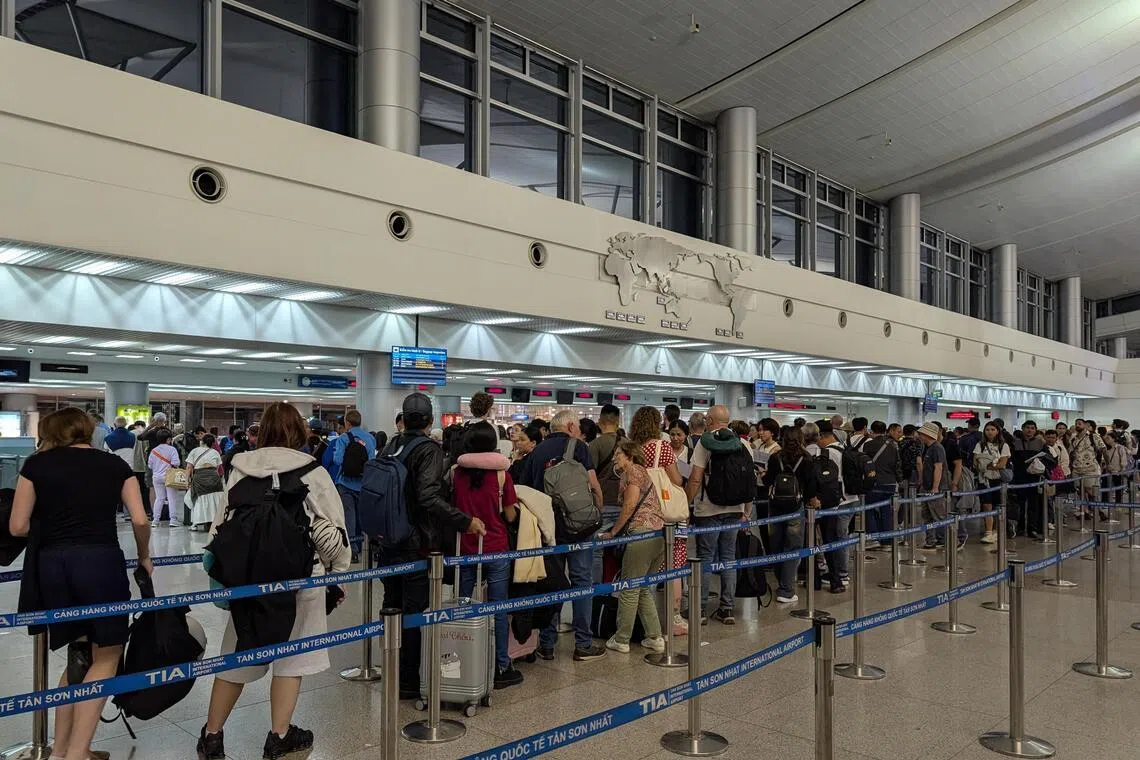
HO CHI MINH CITY – Ho Chi Minh City has implemented a mandatory pre-arrival digital declaration system for foreign nationals and overseas Vietnamese at Tan Son Nhat International Airport to mitigate chronic congestion and streamline entry procedures.
The operational shift, which took effect on April 15 under a directive from the Ministry of Public Security and the immigration authorities, introduces a requirement for eligible travelers to submit personal and travel data through an online portal before landing. This move is part of a broader effort to modernize border management at the southern air hub, which frequently operates beyond its designated passenger capacity.
The transition to digital pre-clearance is a critical step in maintaining the flow of international business travelers and tourists into Vietnam’s commercial center. As the gateway to the country’s industrial heartland, Tan Son Nhat’s efficiency directly impacts the ease of doing business for foreign firms and the operational costs of airlines and logistics providers.
The new system requires travelers to provide specific data points to secure entry clearance:
- Full identification and passport details
- A digital passport photograph
- Detailed travel itineraries and accommodation addresses
In some cases, travelers may also be asked to declare contact details in Vietnam and emergency contacts abroad to support follow-up by border and public health authorities.
Upon successful submission, passengers receive a QR code that must be presented to immigration officers to facilitate entry. The mandate applies to all foreign nationals and overseas Vietnamese utilizing visas, though it excludes Vietnamese citizens holding national passports and transit passengers who do not clear immigration.
Regional Implementation and Infrastructure Pressures
The current regulation is isolated to Tan Son Nhat International Airport. Other major gateways, including Noi Bai International Airport in Hanoi, have not yet adopted the measure, leaving a fragmented regulatory environment for arrivals into Vietnam and requiring passengers to navigate different procedures depending on their port of entry.
The reliance on such measures highlights the ongoing infrastructure challenges facing the Civil Aviation Authority of Vietnam as it manages surging traffic volumes. The southern hub’s congestion has long been a bottleneck for regional economic integration, prompting the government to seek software-based efficiencies while long-term physical expansions, such as the construction of the Long Thanh International Airport project, remain underway.
The administrative burden of this rollout has been shifted partially to the private sector. Airlines and travel agencies are now tasked with ensuring that passengers are informed of the requirement prior to departure to prevent bottlenecks at the arrivals hall and reduce the likelihood of travelers being turned back to complete forms on arrival-area kiosks.
Authorities have also encouraged carriers to integrate links to the declaration portal directly into booking confirmations and online check-in journeys to normalize compliance as part of standard pre-flight procedures.
The authorities cautioned that failure to complete the declaration in advance may result in longer processing times at immigration counters, and warned that repeated non-compliance could trigger closer scrutiny of both passengers and carriers.
Economic and Regulatory Context
Vietnam’s push toward digital border management aligns with national strategies to attract higher volumes of foreign direct investment and increase the velocity of trade. By reducing physical processing times, the government aims to improve the passenger experience for corporate executives and technical specialists essential to the country’s manufacturing sector, from electronics and textiles to emerging high-tech supply chains.
The shift toward QR-based entry is consistent with a wider trend in Southeast Asian aviation hubs to reduce manual data entry, enhance security screening and meet international standards on the use of advance passenger information and passenger name records. Such digital frameworks are often prerequisites for the broader integration of travel corridors and the optimization of World Bank-cited infrastructure goals for the region.
The new system is anchored in Vietnam’s evolving e-government and border-control framework, including the national immigration management regime overseen by the Ministry of Public Security and the country’s Law on Entry, Exit, Transit and Residence of Foreigners, which has been progressively amended to allow for electronic visas and online procedures.
Passengers can currently access the declaration system via the official government portal or through QR codes distributed via official institutional channels such as airport signage and airline communications. The government has indicated that additional language options and interface improvements will be phased in as usage increases.
The regulation remains in effect exclusively at Tan Son Nhat International Airport, with no confirmed date for national expansion. Officials, however, have signaled that lessons from the Ho Chi Minh City rollout will inform any future nationwide digital entry framework, making the southern hub an early test case for Vietnam’s next phase of border modernization.
Keep reading
