
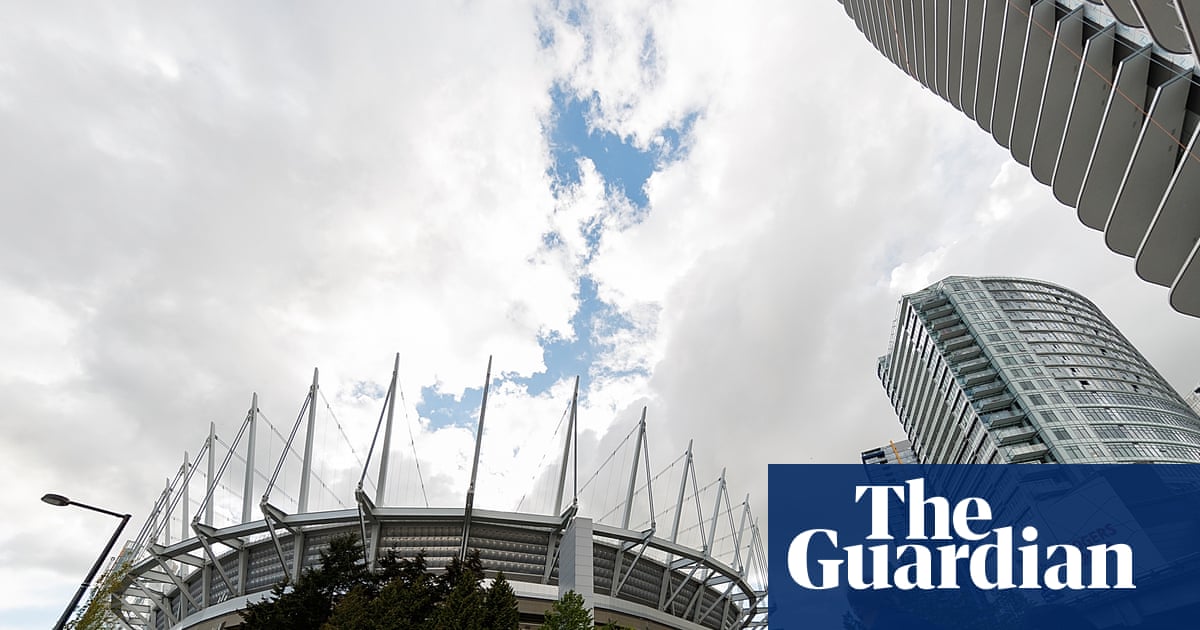
The Cost of Brand Protection: Vancouver’s Security Surge Ahead of 2026 World Cup
As Vancouver prepares to welcome the global football community to BC Place for this summer’s World Cup, the city is implementing an unprecedented security operation. While the tournament promises international prestige, the operational requirements mandated by FIFA are reshaping the governance and policing of the Downtown Eastside (DTES), one of the city’s most vulnerable neighborhoods.
The tension centers on a conflict between the tournament’s “brand protection” obligations and the public health crisis gripping the area adjacent to the host stadium. For the roughly 20,000 residents of the DTES, many of whom rely on nearby shelters, social services, and harm reduction programs, the arrival of the world’s biggest sporting event has coincided with a marked increase in aggressive law enforcement practices.
The ‘Clean Environment’ Mandate
Central to the city’s strategy is a temporary bylaw in effect from 13 May to 20 July, specifically timed to coincide with the World Cup. Passed under the authority of the Community Charter, British Columbia’s primary framework for municipal powers, the legislation is designed to ensure Vancouver meets its obligations to FIFA regarding “operations, safety, security, branding and brand protection.”
The mandate requires the presentation of a “clean and welcoming environment,” granting the city expanded authority over public spaces within two kilometres of the stadium. This includes heightened control over noise, graffiti removal, street vending, and the general management of the sidewalk corridors that lead to the venue. In practice, that places much of the DTES-already a focal point of debates over policing and public space-inside a high-security footprint designed first and foremost around the needs of a global mega-event.
Community researchers with Police Oversight With Evidence and Research (Power) have documented an uptick in aggressive enforcement since the start of 2026. Reports include officers detaining and handcuffing individuals during bag searches, issuing $250 fines for smoking cigarettes in areas designated as sensitive to “nuisance” behaviour, and escalating ID checks. In April 2026, a senior resident was issued a $1,000 street-vending ticket weeks before the formal restrictions even took effect, raising concerns that enforcement patterns were being reshaped in anticipation of the World Cup rather than in response to immediate public safety risks.
Infrastructure of Control
The scale of the deployment is the largest in the city’s history. To manage the intersection of public safety, traffic management, and stadium logistics, Vancouver has allocated significant financial and human resources that will sit on the city’s books long after the final whistle:
- Total Budget: Estimated between $685m and $729m for integrated public safety, traffic, and stadium management tied to the World Cup period.
- Security Allocation: At least $242m dedicated specifically to the integrated safety and traffic framework around the stadium and fan zones.
- Task Force Barrage: A $5m integrated deployment of police, firefighters, bylaw officers, and sanitation crews concentrated on high-visibility corridors.
- District 5: A new policing district created in January, consisting of 88 dedicated officers covering the DTES and surrounding areas on a permanent basis.
Deputy police chief Don Chapman has indicated that this represents the city’s most significant police deployment to date. While the Vancouver Police Department (VPD) denies that its approach has changed specifically because of FIFA, the department acknowledges a 50% increase in officer presence through Task Force Barrage and District 5, citing high crime rates and public disorder calls in the DTES as the primary drivers.
City officials frame these investments as necessary to protect spectators and local businesses and to meet international expectations for a safe tournament. Civil liberties advocates, however, argue that the integrated model effectively fuses public safety, sanitation, and bylaw enforcement into a single, quasi-permanent “infrastructure of control” that normalizes intensive surveillance and displacement of poor and racialized residents.
Public Health and Judicial Implications
The “red-zoning” practice-imposing geographic restrictions to exclude individuals from specific areas as a condition of bail, probation, or bylaw compliance-has created critical risks for a population already facing a severe health crisis. In 2023, the DTES recorded a death rate from toxic drugs more than 12 times the provincial average, in a province that has formally recognized the overdose emergency as a public health crisis.
With the drug supply increasingly contaminated with sedatives like benzodiazepines, harm reduction experts warn that displacing individuals from supervised consumption sites, overdose prevention services, and known peer networks can be fatal. Tyson Singh Kelsall of the Power project has documented instances where police roughly moved sedated individuals from sidewalks without checking their breathing or providing medical assistance, a practice that contradicts standard overdose response protocols and frustrates provincial guidance on harm reduction.
The diversion of resources toward the tournament has also extended into the legal system. The BC supreme court chief has stated that the demand for police resources to support FIFA’s requirements has made it nearly impossible to maintain normal court proceedings for nearly a month. This creates a legal vacuum for those ticketed or detained during the security surge, as the capacity for judicial processing is severely limited and delays compound existing backlogs in the provincial courts.
Legal scholars point out that this combination of red-zoning, intensified ticketing, and constrained court access risks sidelining due process norms. People living in poverty and unstable housing-who are already more likely to be stopped, searched, or fined-face an even steeper climb to contest sanctions imposed in the name of keeping the city “event-ready.”
A Pattern of Mega-Event Displacement
The current environment mirrors previous instances where Vancouver hosted global events and reconfigured public space in the process. In 2008, leading up to the 2010 Winter Olympics, a ticketing blitz targeted bylaw infractions like jaywalking and loitering, with 95% of tickets issued within a four-block radius of the DTES. This was preceded by the 1986 Expo, which saw the eviction of over a thousand low-income residents from single-room-occupancy hotels, reshaping the downtown housing landscape.
Urban planners and housing advocates note that these cycles of heightened enforcement around mega-events have tended to leave lasting marks on city policy. Temporary security perimeters, additional police units, and new bylaws introduced to satisfy short-term international commitments often evolve into enduring tools that shift how public space is governed and who feels permitted to occupy it.
For those managing the city’s social infrastructure, the concern is that the “clean environment” required for the World Cup creates a permanent shift in policing and public policy. As the tournament concludes and the fans depart, the expanded policing districts and the precedent of geographic exclusion may remain, fundamentally altering the accessibility of vital health resources in Canada’s most overpoliced community. The choices Vancouver makes once the World Cup ends-whether to roll back, entrench, or reform these measures-will determine whether this security surge is remembered as a one-off spectacle or a lasting rewrite of how one of the country’s poorest neighbourhoods is governed.
Keep reading
- New Zealand Kiwis Unveil Strong Rugby League World Cup Squad Featuring Ponga, Gagai, and Key Debutants
- Aidan Forker Retires: Armagh’s All-Ireland Winning Captain Ends 15-Year Inter-County Career
- Is Russia’s UN Security Council Seat Legal (archyde.com)
- Bahrain GP in Malaysia 2026: Verstappen on pole ahead of Hamilton (globallypulse.com)
