
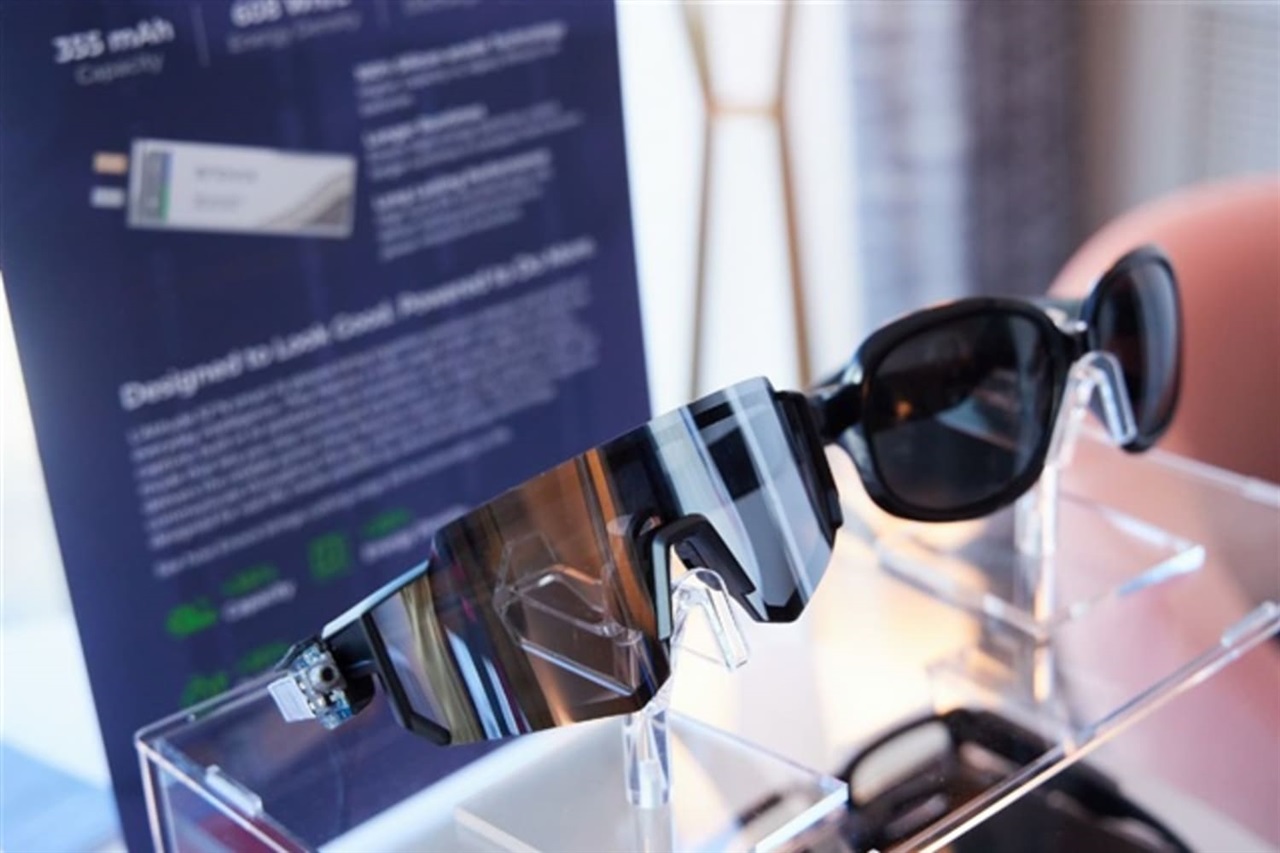
Engineering the Curved AR Interface
The transition from flat-panel displays to high-curvature optical systems represents a significant leap in wearable technology. While traditional augmented reality (AR) glasses rely on relatively flat waveguides to project data, snow goggles require a wrap-around geometry to maintain protective integrity and peripheral vision. This shift necessitates a fundamental redesign of how light is steered and projected to prevent image distortion at the edges of the lens.
To solve the limitation of conventional flat panels, engineers are implementing advanced optical molding and precision coating techniques. The goal is to maintain a consistent focal plane across a curved surface, ensuring that navigation data, speedometers, and environmental alerts remain legible regardless of the user’s eye position. This involves complex calculations in refractive indices to ensure that the AR overlay aligns perfectly with the physical world seen through the lens. For manufacturers, getting this right is more than an ergonomic upgrade: it is the technical foundation that determines whether AR goggles feel like a safety device with added intelligence or a distracting screen strapped to the face.
Taiwan’s Strategic Pivot in Optical Manufacturing
Taiwan has long dominated the global lens and sensor market, but the move into smart sports equipment signals a diversification of the supply chain. By integrating AR capabilities into specialized eyewear, manufacturers are moving up the value chain from component suppliers to architects of integrated systems. This evolution leverages existing expertise in micro-optics and precision plastics to capture a high-margin niche in the “Sportstech” sector, while also giving Taiwanese firms greater influence over device standards, firmware ecosystems, and long-term service contracts.
This infrastructure shift is not limited to winter sports. The capacity to combine waveguide technology with curved protective surfaces has immediate applications in industrial safety visors, pilot and soldier head-up displays, and next-generation automotive HUDs. For regulators and procurement agencies in these sectors, the ability to maintain image stability on a non-linear surface is becoming a threshold requirement for certifying equipment in high-motion environments, from ski patrol units to factory-floor supervisors.
Technical Constraints and System Architecture
Integrating electronics into a lens designed for extreme environments introduces several points of failure. The hardware must operate in sub-zero temperatures while remaining impervious to moisture and condensation, all while maintaining a form factor that does not compromise the wearer’s safety or comfort. That design envelope increasingly includes on-board processing, short-range connectivity, and power management logic, turning what was once a passive visor into a distributed computing node on the wearer’s face.
| Technical Challenge | Engineering Solution | Impact on User Experience |
|---|---|---|
| Optical Aberration | Aspheric lens profiling and refractive correction | Eliminates “fish-eye” distortion in AR overlays, supporting accurate depth and speed perception |
| Thermal Degradation | Low-temperature tolerant battery chemistries and insulated housing | Prevents rapid power loss in alpine conditions and avoids sudden blackouts mid-run |
| Luminous Flux | High-brightness micro-LEDs with auto-dimming | Ensures visibility against high-reflectivity snow while reducing eye strain over long sessions |
| Fogging/Moisture | Hydrophobic nanocoatings and active venting | Maintains clear AR projection and natural vision in rapidly changing weather |
Behind these hardware decisions sit system-level trade-offs that policymakers and standards bodies are beginning to scrutinize: how much on-device processing is required to keep latency low for safety-critical alerts, and when data should be transmitted off the mountain to cloud services for analytics, coaching, or insurance claims.
Regulatory Compliance and Data Integrity
As smart goggles evolve from passive displays to active data hubs, they fall under increasingly stringent data protection and product safety regimes. Devices equipped with sensors or cameras for environmental mapping collect biometric and spatial data that must be secured against interception. In jurisdictions covered by the General Data Protection Regulation, for example, continuous tracking of a skier’s location, gaze patterns, or fall history can qualify as personal or even sensitive data, reshaping how manufacturers design consent flows, default settings, and data retention policies.
The integration of these devices into public ski resorts and mountain infrastructures also introduces new requirements for spectrum management and wireless interference standards, so that AR systems do not disrupt ski patrol communications or emergency beacon frequencies. Resort operators, insurers, and regulators are beginning to view AR goggles not simply as consumer gear but as part of a broader safety infrastructure that must interoperate with lift systems, avalanche warning networks, and emergency services.
Furthermore, eye safety standards are paramount. The intensity of the light projected into the user’s eye must be strictly regulated to prevent retinal fatigue or permanent damage, particularly when the device is used in high-glare environments where the pupil’s reaction time varies. Manufacturers are now implementing algorithmic brightness controls that adjust in real-time based on ambient light sensors to maintain compliance with international safety benchmarks, and to provide an auditable trail of how the device behaved before and after an incident. For regulators, that level of granularity is likely to become a prerequisite for certifying the next generation of curved AR eyewear for both recreational and professional use.
Worth a look
