
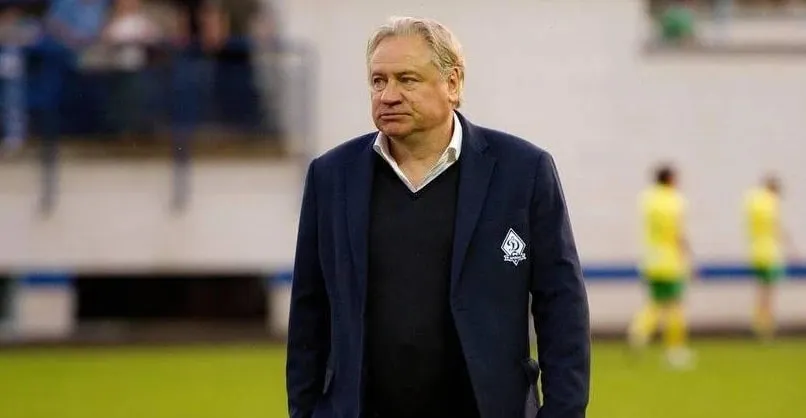
Andriy Kanchelskis Resigns as Bryansk Dynamo Head Coach After Relegation Season
Andriy Kanchelskis has stepped down as head coach of Bryansk’s football club Dynamo after a season that ended in relegation from the “Gold” division of Russia’s Second League. The club is now set to compete in the “Silver” group from the spring of 2027, a shift that reshapes its sporting and financial outlook for the coming campaign.
Short Tenure Ends with Drop to Second League “Silver” Group
Kanchelskis had been in charge of Bryansk Dynamo since December 2024, overseeing the team through a difficult season that concluded with relegation from the Second League’s higher “Gold” division. Under the competition’s structure, clubs placed in the “Gold” section contest promotion and higher prize pools, while those relegated to the “Silver” group play at a lower competitive and commercial tier within the same national pyramid.
For Dynamo Bryansk, moving into the “Silver” group means facing reduced visibility, a different calibre of opposition and, typically, tighter financial conditions. For players and coaching staff, such a drop can affect future contracts, pathways to higher divisions and the club’s ability to retain emerging talent.
The decision by Kanchelskis to resign in the immediate aftermath of relegation leaves Bryansk with the task of appointing a new coaching team before the next Second League cycle begins under the auspices of the Russian Football Union, which organises and regulates professional competitions in the country’s football system.
Crimea Visit and Ongoing War Context
The coaching change comes against the backdrop of Kanchelskis’s controversial travel to occupied Ukrainian territory. In March 2025, the former Dynamo Kyiv player made an illegal visit to Crimea, a region of Ukraine that has been under Russian occupation. Ukraine classifies such entry as unlawful under its national legislation and border regime, particularly for visits that bypass Ukrainian control.
That trip placed Kanchelskis within a wider group of Russian-linked sports figures whose movements and public positions have drawn scrutiny since the start of Russia’s full-scale invasion of Ukraine. The Main Intelligence Directorate of Ukraine (GUR) has updated its list of Russian athletes who support the war, highlighting how elite sport has become entangled with the conflict and with questions of international law and accountability.
The article’s source notes that Kanchelskis has not publicly condemned Russia’s aggression against Ukraine, even though his mother was living in Kropyvnytskyi-his native city in central Ukraine-at the outset of the full-scale invasion. The city, known as Kirovohrad at the time of his birth in 1969, has been directly affected by the security realities of the war, adding a personal dimension to the wider geopolitical backdrop around his career choices.
The report also recalls that after his illegal Crimea visit, the Russian coach travelled to Italy for a training stint, underlining his continued efforts to remain engaged in professional development and coaching networks outside Russia despite the controversy surrounding his movements.
From Dynamo Kyiv to Manchester United and the Russian National Team
Before moving into coaching, Kanchelskis built a high-profile playing career that spanned both Soviet and post-Soviet eras. He played for Dynamo Kyiv from 1988 to 1990, during a period when the club was one of the most successful sides in European football, regularly supplying players to the Soviet national team and competing deep into UEFA competitions.
In 1991, he joined Manchester United, where he remained until 1995. During that spell, he was part of a squad that won:
- the English Premier League twice,
- the UEFA Super Cup,
- the FA Cup,
- the League Cup, and
- the English Super Cup (twice).
These honours established him as one of the leading wingers of his generation, with a reputation built on pace and direct attacking play. After the collapse of the Soviet Union, Kanchelskis represented the Russian national football team, reflecting the complex national affiliations of players whose careers bridged the end of the USSR and the emergence of new independent states.
Political Pressure Around Russian Sport
The intersection of Kanchelskis’s club role and his activities off the field illustrates the pressure points now surrounding Russian sport. Since the start of the full-scale invasion, governing bodies at international and domestic level have had to navigate sanctions, eligibility rules and reputational risks involving Russian clubs, athletes and officials.
Ukraine’s GUR list of athletes who support the war has become one of several tools used by state institutions to track public positions taken by prominent sports figures. Being named on such lists can influence how athletes and coaches are perceived by clubs, leagues and supporters across Europe and beyond, even in cases where there is no formal disciplinary action from sports authorities.
For Bryansk Dynamo, the resignation of a coach with a globally recognised playing past now coincides with a reset in the Second League’s “Silver” group. For Kanchelskis himself, the combination of relegation, travel to occupied territory and ongoing international scrutiny underscores how managerial careers in Russian football now unfold within a tightly interwoven sporting and geopolitical landscape.
The Main Intelligence Directorate has recently refreshed its register of Russian sports figures deemed to support the war, reflecting how state and security institutions continue to monitor the role of sport in the broader conflict environment.
Worth a look
