
Flexed to Primetime, Browns-Raiders Becomes a Measuring Stick on Lake Erie
If someone had told you at the beginning of the season that the Week 12 game between the Cleveland Browns and Las Vegas Raiders would be flexed into Sunday Night Football, healthy skepticism would have been a reasonable reaction.
Yet the way the season has unfolded has pushed this matchup into one of the NFL’s marquee national windows. With the Browns at 6-4 and the Raiders at 4-6 – and now starting the league’s No. 1 overall draft pick at quarterback – the game has become one of the most intriguing fixtures of the Thanksgiving weekend that was not already isolated in a standalone slot.
For the Browns, it is a tangible sign of relevance in the broader landscape of the National Football League. For the Raiders, it is a chance to showcase a new franchise quarterback and test themselves in one of the league’s more demanding road environments.
Monken Welcomes the Spotlight
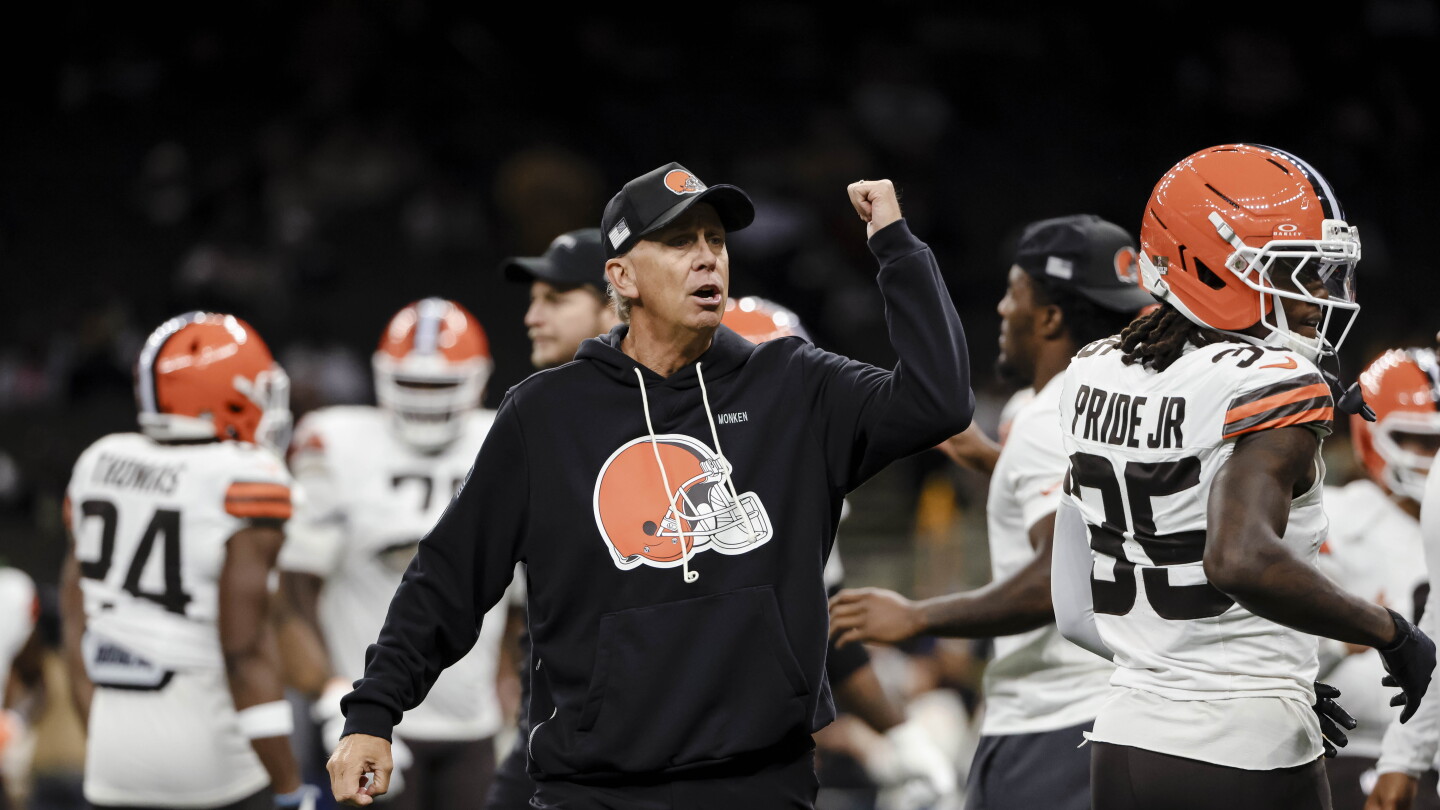
Browns head coach Todd Monken made clear this week that the move into primetime has been embraced inside the building.
Monken told reporters on Wednesday that getting flexed is “really cool for our players.” It is not just about television exposure, in his view, but what that exposure represents in competitive terms.
“I said it at the beginning of the year. I mean, you want to be on Thursday Night, Sunday Night, Monday Night – you want to be flexed, means you’re having a good year,” Monken said, via transcript from the team. “As nice as it is to have a one o’clock schedule every week, I mean, I said that, early in the [year]. I mean, you’re on a trajectory to be fired at some point because you’re at one o’clock every week. So, you’re fighting like hell to get to where you’re on national TV. So, if people are going to watch football, and more importantly than that, an opportunity to get to seven [wins].”
His comments underline how the league’s flexible scheduling model has become an informal barometer of status. Games that matter in the playoff picture, or that feature compelling storylines for a national audience, are the ones moved into evening slots.
Flex Scheduling and Competitive Stakes
Under the NFL’s flex scheduling rules, games can be shifted into the Sunday night window to highlight more competitive or consequential matchups later in the season. For both franchises this year, that mechanism has elevated what might previously have been a standard early-afternoon kickoff into a broadcast showcase with wider implications.
At 6-4, the Browns enter their bye having built a platform that makes every remaining game significant in the postseason race. Monken alluded to that broader context directly.
“I think you earn where you’re at in the present moment, and that only lends itself to what’s in front of you and how important that’s going to become,” he said. “You know, getting the bye at 6-4 and putting yourself in position where the rest of the games matter, and especially the one coming up.”
For the Raiders, a 4-6 record coupled with the decision to start the No. 1 overall pick at quarterback gives this trip to Cleveland a different kind of significance. It is an away test for a young signal-caller in an environment that can be both loud and weather-affected at this stage of the season, with every snap scrutinized on a national broadcast.
Young Browns Side Faces a New Type of Examination
Monken has consistently framed this season as part of a broader development arc for a relatively young Browns roster. Moving into Sunday night, with the entire league watching, adds an extra layer of scrutiny that can accelerate that learning process.
Monken agreed that it is an important benchmark for his group.
“I think you earn where you’re at in the present moment, and that only lends itself to what’s in front of you and how important that’s going to become,” he said. “You know, getting the bye at 6-4 and putting yourself in position where the rest of the games matter, and especially the one coming up.”
For a young team, the combination of playoff-relevant stakes and a primetime stage can shape how players are evaluated internally and around the league. Performances in these windows often inform perceptions of which core pieces are ready to carry a franchise into January and which areas still require reinforcement.
First Home Sunday Night Since 2019
The setting adds further context. This will be the Browns’ first Sunday night game at home since 2019, a substantial gap in primetime exposure on the shores of Lake Erie.
For the organization, returning to a national night game in front of its own supporters signals progress. For the fan base, it offers a rare chance to turn a standard late-season fixture into an event evening in Cleveland’s downtown stadium district.
Monken expects the environment to reflect that sense of occasion.
“Oh, it’s a huge advantage. Huge advantage,” he said of the anticipated atmosphere. “Making it hard for the opposing offense, cadence-wise, being able to function, and making an advantage for us when we’re on offense. I mean, it’s a huge advantage, and it should be playing at home.”
On a practical level, noise at the line of scrimmage can force the visiting offense to simplify communication and adjust snap counts, placing extra emphasis on discipline along the offensive line and at quarterback. Those are precisely the areas that test a young passer starting on the road in a nationally televised game.
Key Match Facts and Competitive Context
- Fixture: Cleveland Browns vs. Las Vegas Raiders
- Week: 12 of the NFL regular season
- Venue: Browns’ home stadium on the shores of Lake Erie
- Kickoff slot: Flexed into Sunday Night Football national window
- Current records: Browns 6-4, Raiders 4-6
- Quarterback note: Raiders starting the No. 1 overall draft pick at quarterback
- Historical note: First Browns home Sunday night game since 2019
For an international audience less familiar with the league’s structure, the context is straightforward: the NFL’s regular season is relatively short, and a 6-4 record at this stage typically places a team firmly in the mix for postseason qualification, while 4-6 leaves little margin for error. Each result can swing tiebreakers and shape how remaining games are viewed in terms of playoff scenarios.
More Than a Showcase
Beyond the broadcast billing, the flex into Sunday night underscores how both clubs fit into the current competitive narrative of the league. The Browns, emerging from their bye, are seeking a seventh win that would strengthen their push toward the postseason and validate the progress under Monken’s leadership.
The Raiders, with a No. 1 overall pick entrusted with the offense, use this stage to measure the development of their most important player against a road environment that Monken expects to be hostile and engaged.
For both sides, the game is no longer just another entry on the schedule. It is a national examination of where each franchise stands in a season that has given this matchup far more meaning than many anticipated when the fixtures were first released on the league calendar.
Related reading
